
/images/ppid_59c68470-image-177820253420921286.webp)
/images/ppid_59c68470-image-177824756920544526.webp)
/images/ppid_59c68470-image-177821505651934054.webp)
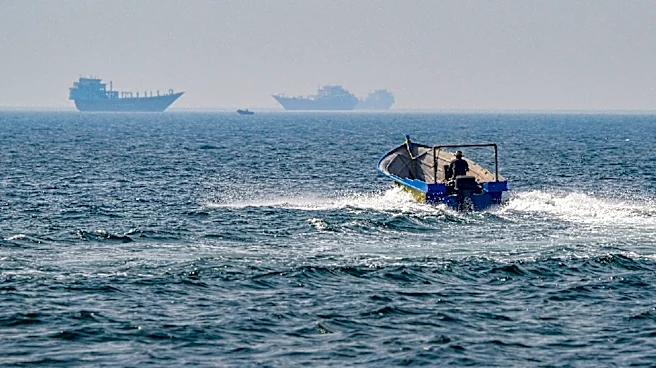
The United States and Iran are once again talking peace on one hand but clashing in the water. Even as the United States and Iran publicly signal that they may be inching towards a diplomatic breakthrough, the waters of the Strait of Hormuz are once again looking like a battlefield.
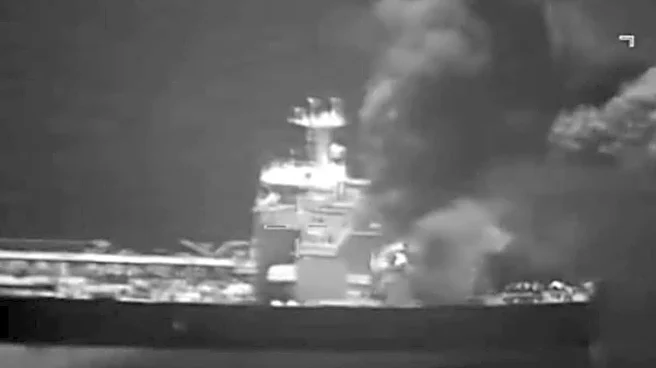
On Thursday, US and Iranian forces exchanged fire in the Strait of Hormuz after three American destroyers came under attack while transiting the Strait of Hormuz. According to US Central Command, Iranian forces used drones, missiles and fast attack boats targeting the USS Truxtun, USS Mason and USS Rafael Peralta. The US retaliated with strikes on Iranian military facilities and launch sites along the coast. Iran, meanwhile, has claimed that it was the US that fired
first and Tehran retaliated.
US President Donald Trump downplayed the exchange as “just a love tap” and insisted that the ceasefire with Iran was still effectively holding. At the same time, he warned Iran that if talks collapsed, America would “knock them out a lot harder”.
That contradiction, talking peace while exchanging fire, may sound bizarre. But in the case of the US and Iran, it is actually part of a familiar pattern. The closest historical parallel lies in the 1980s, when the US and Iran were simultaneously fighting at sea and quietly engaging each other through backchannels.
The 1980s Tanker War
The backdrop then was the long and devastating Iran-Iraq War. By the mid-1980s, both Iran and Iraq had begun attacking oil tankers and commercial ships in the Persian Gulf in an attempt to choke each other’s economies. The conflict soon spilled beyond the two countries and threatened global energy supplies. The phase became known as the “Tanker War”.
Iraq first targeted Iranian oil exports and tankers using fighter aircraft and missiles. Iran responded by attacking vessels linked to Iraq’s Gulf allies, especially Kuwait and Saudi Arabia. Soon, the Persian Gulf had become one of the most militarised waterways on earth.
The United States stepped in directly in 1987 after Kuwait asked Washington to protect its oil tankers. Under Operation Earnest Will, American warships began escorting reflagged Kuwaiti tankers through the Gulf. That decision brought the US Navy into direct confrontation with Iran.
Iranian forces increasingly relied on asymmetric tactics that today feel strikingly familiar: naval mines, drone-like swarm attacks using small fast boats, and harassment operations aimed at larger American vessels.
Then came the turning point.
In April 1988, the USS Samuel B Roberts struck an Iranian mine in the Gulf and was nearly sunk. The US responded with Operation Praying Mantis, launching massive retaliatory strikes against Iranian naval assets and oil platforms being used for military operations. Several Iranian ships were sunk or damaged in what became the largest American naval battle since World War II.
And yet, even at the height of that confrontation, diplomacy never completely stopped.
While US and Iranian forces were clashing in the Gulf, officials from both sides were also involved in covert contacts that later became part of the Iran-Contra scandal. The Reagan administration was secretly engaging Iran through intermediaries, partly to secure the release of American hostages in Lebanon and partly to maintain channels with factions inside Iran.
What’s Happening Today
That same dual-track approach appears visible again today, the only difference being that the talks are as public as the fight. No secrets here.
Even before Thursday’s exchange in the Strait of Hormuz, there had been increasing talk of a possible interim understanding between Washington and Tehran. Reports suggested mediators were working on a framework involving sanctions relief, maritime access and de-escalation in the Gulf. But neither side wants to appear weak while negotiating.
For Iran, showing strength in the Gulf is a way of demonstrating leverage. Iran knows that disruption in the Strait of Hormuz immediately rattles global oil markets and reminds the world of Iran’s strategic importance. For the United States, retaliatory strikes serve a different purpose: reassuring allies, protecting shipping routes and showing that American naval power still dominates the region.
That is why diplomacy and confrontation are unfolding side by side.

/images/ppid_59c68470-image-177838257088626244.webp)



/images/ppid_59c68470-image-177838752945811847.webp)
/images/ppid_59c68470-image-177820257992577071.webp)
/images/ppid_59c68470-image-177822009587538389.webp)
/images/ppid_59c68470-image-177821502660934437.webp)