


Laptops are the worst category to buy on impulse during a sale, because the specification that decides whether a machine is still usable in three years is never the one in the headline.
Discounts on laptops are also unusually misleading. Old inventory gets cleared with steep percentages, refurbished units are listed against original launch prices, and entry-level chips get sold at mid-range money. Below is what to check, in the order that matters, with real listings from this sale as examples.
1. The Processor Generation, Before Anything Else
This is the check that decides everything and takes ten seconds.
Windows 11 requires Intel 8th generation or newer, or AMD Ryzen 2000 or newer, plus TPM 2.0 and Secure Boot. Microsoft has repeatedly confirmed it will not relax this, calling TPM 2.0 non-negotiable
for the future of Windows.
Anything below that line cannot officially run Windows 11. Not with a workaround, not later, not ever.
How to read it: on Intel, look at the digits straight after the dash. An i5-5300U is 5th generation. An i5-8265U is 8th generation. On AMD, a Ryzen 5 2500U is 2000 series and qualifies; a Ryzen 5 1600 does not.
Example to skip: refurbished Lenovo ThinkPad T450 at ₹25,995
A 5th generation Core i5, which means 2015 hardware, listed against an MRP of ₹49,990. It ships with Windows 10 Pro and cannot upgrade to Windows 11 under any supported path. You would be spending ₹25,995 on a machine with no future.
2. Whether The Operating System Is Still Supported
Windows 10 reached end of support on 14 October 2025. No security updates, no bug fixes, no technical assistance. Any machine running it today has been unpatched for ten months against everything discovered since.
Refurbished listings are full of them, because the sellers bought corporate fleet stock that shipped with Windows 10.
Microsoft’s Extended Security Updates programme runs until 12 October 2027 and costs roughly $30 a year, but it is a stopgap that delivers critical patches only, with no feature updates and no support.
Example to check carefully: refurbished Dell Latitude 5300 at ₹28,000
This one is borderline rather than disqualified. An 8th generation Core i5 clears the Windows 11 bar, so the machine has a path forward. But it ships with Windows 10, which means your first job after unboxing is the upgrade. Buy it knowing that, or do not buy it.
3. Whether The Chip Class Matches The Price
Processor families matter as much as generation. Intel’s Celeron and N-series, and AMD’s Athlon line, are entry-level parts designed for browsing and documents. They are fine at entry-level prices.
The problem is when they are sold at mid-range money.
Example to skip: Acer Aspire One A114-45 at ₹33,990
A Celeron N4500 is a 2021 budget chip with two cores. The listing pairs it with 12GB of RAM and an SSD, which sounds generous, but RAM cannot compensate for a processor that struggles with a dozen browser tabs.
At ₹33,990 you are in Ryzen 5 and Core i5 territory. The MRP of ₹59,999 on a Celeron machine is not a price anyone has paid.
4. Whether The MRP Is Real
Laptop listings are among the worst offenders for inflated list prices, because buyers have poor intuition about what components cost.
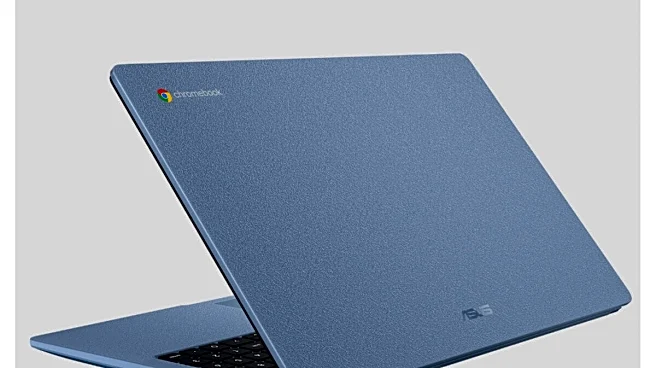
Run the sense check: does this configuration plausibly retail at that MRP? A Chromebook with an Intel N50, 8GB of RAM and 128GB of storage does not sell for ₹51,990 anywhere. A Celeron laptop is not a ₹59,999 machine.
The Central Consumer Protection Authority has been penalising platforms for exactly this. FirstCry was fined over misleading discounts, Zepto ₹7 lakh in December 2025 for dark patterns and misleading price disclosures.
The rule: ignore the percentage. Ask only whether the selling price is fair for the specification.
5. What Refurbished Actually Means Here
Refurbished can be a genuinely good buy. Ex-corporate ThinkPads and Latitudes are better built than most new consumer laptops at the same price, with better keyboards and better serviceability.
But the grading is seller-defined. “A+ condition” is not a regulated term and means whatever the listing wants it to mean.
What to establish before buying:
- Who provides the warranty, the seller or the manufacturer, and for how long
- Whether the battery has been replaced, since a seven-year-old cell holds very little charge
- Whether the Windows licence is genuine and transferable
- What the return window is if the machine arrives in worse condition than described
A seller warranty from a marketplace vendor is worth considerably less than manufacturer cover, and on a used machine that is the whole risk.
6. Whether The Storage And RAM Can Be Upgraded
Most thin-and-light laptops now solder the RAM to the board. If a machine ships with 8GB soldered, it has 8GB forever.
That matters more than it used to. Windows 11 with a browser and Teams open will use most of 8GB, and Microsoft now recommends 32GB as a no-worries configuration.
Check before buying: whether RAM is soldered or in a SODIMM slot, and whether there is a spare M.2 slot for storage. On budget laptops, an upgradeable machine at 8GB beats a soldered machine at 12GB.
The Checklist
| Check | Walk away if |
|---|---|
| Processor generation | Below Intel 8th gen or AMD Ryzen 2000 |
| Operating system | Windows 10, with no upgrade path |
| Chip class versus price | Celeron, Athlon or N-series above ₹25,000 |
| MRP credibility | List price is implausible for the configuration |
| Refurb warranty | Seller warranty only, no battery replacement stated |
| RAM upgradeability | 8GB soldered with no spare slot |
| Display panel | TN rather than IPS, or HD rather than FHD |
| Ratings | Under 100 reviews on a new listing |
Where Chromebooks Change The Maths
One category deserves separating out, because the usual rules do not apply.
A Chromebook with a modest processor is a legitimately different proposition from a Windows laptop with the same chip. ChromeOS is far lighter, still fully supported, and updates automatically for years from launch. There is no Windows 10 problem because there is no Windows.
So an Intel N50 Chromebook at ₹23,990 can be sensible where a Celeron Windows machine at ₹33,990 is not. The constraint is what you do with it: Chromebooks handle browsing, documents, email and streaming well, and are poor at desktop software, heavy Excel work and anything creative.
Judge them on the price, not the MRP. A ₹51,990 list price on an entry Chromebook is as fictional as anywhere else.