



When thoughts turn to nightlife and clubs, an image that often comes to mind is one of vibrant and pulsating scenes; the crowd gathered under flashing lights, enjoying the loud beats with drinks in hand and an atmosphere charged with energy.
For years, this vision of nightlife stood in sharp contrast to India’s spiritual world, where faith unfolded in temples packed with incense, in satsangs resonating with harmoniums, and in jagrans that carried on through the night.
These two worlds existed on parallel tracks, rarely intersecting. Yet beneath the surface, a cultural shift has been taking shape, gradually blurring the thin lines between devotion and the dance floor. Across Indian cities, particularly among Gen Z and millennials, spirituality
is taking a different turn, where a phenomenon widely referred to as “Bhajan Clubbing” has made a mark.
This is a response to digital saturation, emotional fatigue, and a growing desire for meaning and connection. In blending devotion with social spaces, this new trend is slowly shaping what spirituality, community, and even nightlife look like for India’s young urban generation.
What Is Bhajan Clubbing?
Bhajan clubbing is a viral Indian nightlife trend where Gen Z and millennials are blending devotional music with modern high-energy vibes packed with techno beats and DJ remixes. Alcohol is replaced by chai, buttermilk, and traditional snacks, ensuring a safe, inclusive environment.
According to Psychologist Raksha Rajesh, M.Sc., M.Phil. in Clinical Psychology, “Young Indians are overstimulated and mentally exhausted. Their daily lives are filled with internal pressures of being successful, comparison and constant stimulation from the digital world. This current trend of gravitating towards bhajans over intense Bollywood rhythms is more about regulation than anything religious.”
Devotion In The Age Of The Screen
Unlike earlier generations who encountered spirituality primarily through family rituals or temple visits, Gen Z often meets devotion through a screen. Smartphones and social media platforms have altered how sacred content circulates. Bhajans, mantras and chants are no longer confined to early morning radios or temple loudspeakers; they now appear as live streams, reels and music videos.
One of the most striking examples of this digital revival is the popularity of the Hanuman Chalisa. The emotionally charged verses and visually rich videos have made it one of the most-streamed devotional compositions online. For young audiences who are accustomed to short, impactful content, such devotional pieces fit seamlessly into digital consumption habits.
This digital-first engagement has played a crucial role in the rise of Bhajan Clubbing. A single viral clip from a kirtan session not only mobilised individuals but also created an urge to attend the next gathering. Devotion becomes visible – something to be experienced collectively and shared publicly.
Conscious Alternative To Conventional Nightlife
While devotion lies at the heart of Bhajan Clubbing, its popularity also reflects shifting social habits. An increasing number of young Indians are embracing sober or low-alcohol lifestyles, driven by concerns around mental health, emotional clarity and burnout. This new trend, Bhajan clubbing, offers a substitute without challenging the excitement of a night out.
The energy remains high, the music immersive, and the sense of community palpable, what changes is the intention. Chaos is replaced with conscious awareness, and these gatherings also satisfy the human need for connection while aligning with the values of mindfulness and authenticity. In many ways, bhajan clubbing has become a social refuge for a generation weary of overstimulation. It provides a space to feel uplifted without feeling drained.
From Niche Gatherings To Cultural Movements
The scale at which Bhajan clubbing has spread suggests it is far more than a passing fad. India’s spiritual and devotional economy, already valued at over USD 58 billion, continues to grow at a steady pace, with young people increasingly driving demand. Shlokas, kirtans, and devotional music are now competing with, and sometimes replacing, conventional nightlife choices.
Bhajan clubbing fuses two seemingly opposite worlds: ancient devotional traditions and the collective energy of club culture. The ethos is consistent across cities: no alcohol, no drugs. Instead, chai and buttermilk circulate freely. The goal is not formal worship but shared joy, emotional release, and a sense of belonging.
Tracing The Origins
Bhajan Clubbing did not emerge in isolation. Its roots can be traced back to traditional bhajan sandhyas, informal gatherings where families and neighbourhoods came together to sing devotional songs accompanied by harmonium, dholak, and tabla. Over time, young musicians and organisers began experimenting with these formats, introducing contemporary arrangements, relaxed settings, and a more social atmosphere.
Metropolitan cities like Mumbai, Hyderabad, and Kolkata became early incubators for this evolution. Social media amplified its reach, turning intimate sessions into viral spectacles. Videos of young people singing with closed eyes, clapping in unison, or filming collective moments of joy resonated widely. What once felt private and domestic transformed into something open, cool, and culturally aspirational.
Why Gen Z Embraces Bhajan Clubbing
The trend represents a quiet rebellion against Westernised nightlife models. Many young Indians feel that conventional club culture is repetitive and disconnected from their lived realities. Bhajan Clubbing offers something culturally rooted and emotionally meaningful.
Bhajan clubbing also fulfils a longing for community. Years of pandemic isolation, digital burnout, and relentless hustle culture have intensified feelings of disconnection. Collective singing and shared rhythm recreate a sense of belonging that many feel is missing.
The trend is reframing spirituality.
For Gen Z, faith is less about rigid rituals and more about experience. Bhajan Clubbing is spiritual without being preachy, traditional without feeling outdated. The absence of substances creates inclusive spaces that feel emotionally and physically secure, appealing particularly to those seeking cleaner forms of social engagement.
Dr Rajesh elaborates, “The rise of bhajan clubbing is connected to emotional fatigue and anxiety. During stress, people gravitate toward experiences that regulate the nervous system. Rhythmic music, repetition, and shared participation lower physiological arousal, creating a sense of stability. Traditional nightlife often overstimulates; spiritually rooted music offers a predictable, comforting alternative.”
Inside a Bhajan Clubbing Event
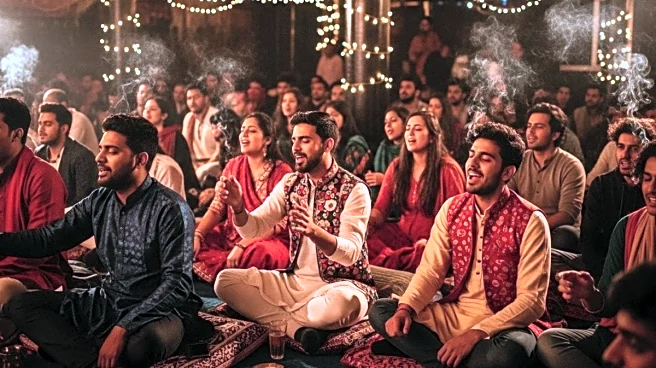
A typical event is designed to feel immersive yet grounded. Mats replace bar stools, warm lighting replaces strobes, and incense sets the tone. Music may be live or DJ-led, blending classic bhajans with contemporary arrangements. Attire leans towards ethnic fusion.
Phones appear briefly for group photos, but once the music begins, most participants remain present. Chai and buttermilk circulate instead of cocktails. Some sessions include short meditations or reflective pauses, but music remains central.
Dr Rajesh notes, “Repetitive chanting reduces activity in brain areas linked to overthinking and anxiety. It encourages steady breathing, stimulating the vagus nerve, which supports calmness and relaxation. Spiritual music feels safer during emotional vulnerability because it is familiar and predictable—it allows people to feel supported without demanding active emotional engagement.”
The Future Of Bhajan Clubbing
Since its emergence in Mumbai around 2021, Bhajan Clubbing has spread across India’s urban landscape, with events in Hyderabad, Bengaluru, Delhi, and Kolkata. Organisers are professionalising the format, offering ticketed events, curated musical sets, and immersive audiovisual experiences.
“Bhajan clubbing reflects a shift in values more than novelty,” says Dr Rajesh. “People continue choosing spiritually oriented music because of awareness and understanding of what their mind and body need. The practices have always existed; young people are now adapting them to their contemporary context.”
Bhajan Clubbing is more than a fleeting trend; it is a reflection of a generation redefining spirituality, social life, and emotional well-being. Through devotional music, sober participation, and communal energy, young Indians are reclaiming ritual and ritualising joy.
The movement blends centuries-old traditions with urban sensibilities, offering both a reprieve from overstimulation and a pathway to connection, presence, and spiritual resonance.
As Dr Raksha Rajesh observes, “Spiritual music, including bhajans, provides a safe, familiar, and emotionally supportive environment. It allows young people to release and process emotions, build social bonds, and regulate stress, all while participating in something culturally rooted and deeply meaningful. Bhajan Clubbing is not just a party; it is a mindful cultural movement for modern India.”
For a generation seeking balance, meaning, and belonging, the nightclub has found a new rhythm, one set to the beat of bhajans rather than EDM, but no less exhilarating or transformative.