
Corporate travel is entering a new era, defined not by how frequently professionals travel, but by why, how, and with what impact. While global business travel spending is projected to reach US$1.48 trillion
in 2024 and exceed US$2 trillion by 2028, the composition of that spending is changing fundamentally.
Organisations are no longer optimising travel programmes purely around volume or cost. Instead, they are redesigning them around carbon accountability, AI-driven intelligence, and elevated traveller experience, creating a future where sustainability, efficiency, and comfort coexist as strategic priorities rather than trade-offs.
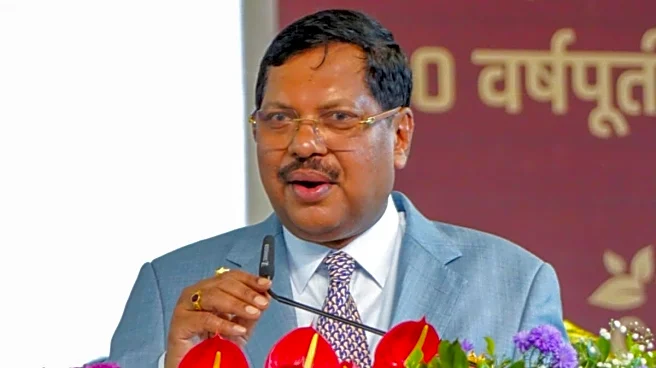
Deepak Nangla, Managing Director of Premier by Brightsun, shares with us what changes people who travel for their professions can look forward to this year:
Sustainability Sets the New Rules of Corporate Travel
Sustainability is the most immediate and disruptive force reshaping corporate travel policies. Business travel contributes an estimated 15–20% of global aviation emissions, placing it among the most scrutinised components of corporate carbon footprints.
Despite this, only a minority of global enterprises currently have formal travel-emissions reduction targets. The difference between companies that do and those that don’t is significant. Organisations with structured reduction goals have achieved average emissions cuts of 48%, compared with 28% among companies without defined targets.
Regulation is accelerating this shift. From July 2024, companies above certain workforce thresholds in parts of Europe are required to report business-travel emissions and demonstrate measurable progress toward reductions by 2030. This marks a broader move toward mandatory transparency and signals that sustainability in travel is no longer optional; it is becoming a compliance requirement.
Fewer Flights, Smarter Decisions, Real Impact
While technological solutions are advancing, near-term sustainability gains will come less from breakthrough innovations and more from structural and behavioural change. On busy regional corridors, switching from air to rail can reduce emissions by up to 97%, yet adoption remains limited. Sustainable aviation fuel (SAF) offers lifecycle emission reductions of up to 85%, but supply constraints and higher costs mean it cannot carry the burden of decarbonisation alone.
In practice, meaningful progress will rely on fewer flights, modal shifts where feasible, and, most importantly, rigorous measurement and accountability. Sustainability in corporate travel is becoming less about offsets and more about smarter planning and restraint.
Intelligence Becomes the Operating System of Travel
As sustainability defines the boundaries of corporate travel, intelligent systems are emerging as its engine. A 2024 study of large enterprises found that 90% of travel managers now use AI or generative AI in some part of their travel programmes. These tools are optimising itineraries, predicting pricing, enforcing policy compliance, analysing carbon impact, and providing real-time traveller support through automated assistance.
More than half of travel managers report that AI has already exceeded expectations, particularly in reducing inefficiencies and improving programme visibility. Corporate travel is shifting from reactive booking behaviour to predictive, data-led decision-making, where insights guide both cost and sustainability outcomes.
From Expense Management to Digital Governance
Corporate cards linked to mobile wallets are now widely used, while virtual cards, restricted by budget, time window, or merchant category, are rapidly becoming standard for trips, events, and group travel. As a result, corporate travel is evolving from a loosely monitored expense category into a digitally governed ecosystem.
The financial layer of business travel is undergoing a parallel transformation. Every booking, payment, and adjustment now feeds into smarter policies, stronger compliance, and improved visibility, without increasing friction for travellers.
Comfort Returns as a Strategic Priority
Perhaps the most unexpected shift in corporate travel is the renewed focus on comfort and well-being, once assumed to conflict with sustainability goals. In a 2024 global survey across 28 countries, 43% of business travellers ranked maximising comfort as their top priority, slightly ahead of minimising cost. This shift is influencing airline seating strategies, hotel offerings, and the overall design of the business-travel experience.
Premium travel demand is rising worldwide. In some regions, premium cabins accounted for nearly 15% of passengers in 2024, with growth outpacing economy travel. Airlines are responding by expanding premium seating, enhancing privacy, introducing wellness-oriented services, and integrating high-speed connectivity across long-haul fleets.
While research suggests that eliminating premium cabins could reduce per-passenger emissions by 8–21%, it would also trigger 4.9–23% revenue losses, leading to price increases of up to 30% across the board, underscoring the complexity of balancing sustainability with commercial realities.
The Future: Leaner, Smarter, and More Human-Centric
The future of corporate travel is not about returning to pre-pandemic volumes or abandoning travel altogether. It is about travelling with intent. Organisations will take fewer trips, plan them more intelligently, track emissions more transparently, and invest in better experiences for journeys that truly matter. Sustainability sets the direction, technology provides the control system, and elevated comfort ensures that essential travel remains productive, humane, and worthwhile.