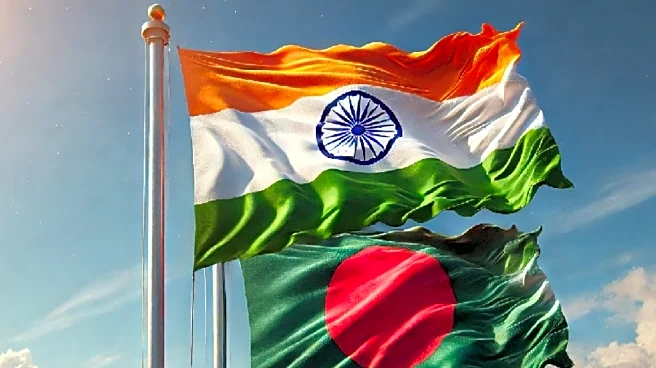

In nations where religious fanaticism and extremism become rampant, societies grow increasingly chauvinistic, fragile, and decadent, causing the collapse of efforts to build a sustainable human society.
A recent example of this decline can be seen in Bangladesh, where a spurt of violent arson highlights this grim reality. Where science, knowledge, and reason prevail, religious bigotry cannot dominate society. Thus, Bangladesh, with its legacy of struggle against Pakistan’s military rule, should not be experiencing this wave of reactionary jingoism. This sensitive issue has caused widespread concern in Bangladesh, neighbouring India, and abroad, tarnishing the country’s image 54 years post-liberation.
Realist theorists argue that national interest should guide a country’s foreign policy. Consequently, India might adopt this approach, but could also consider moving beyond conservative perspectives. The situation requires situational awareness, subjectivity, and patience rather than a rigid approach, especially when state behaviour is influenced by societal pressures and non-state actors.
What is surprising is the rapid change in relations between India and Bangladesh. A country that shares cultural, dietary, and geographical similarities with India is now drifting away. The post-July rebellion Bangladesh is increasingly iconoclastic and anti-India. This hostile environment in Bangladesh will impact India’s internal politics and society. The footage of the mob torching Dipu Das on false blasphemy charges has inflamed public sentiment in West Bengal, Assam, and Tripura. India must handle this matter with caution, alerting Bangladesh through diplomatic channels.
This change, particularly after the announcement of the forthcoming election schedule, suggests that the unrest in Bangladesh stems from a complex mix of domestic politics, foreign interference from countries like Pakistan and China, and possibly other nations aiming to destabilise India’s neighbourhood. India’s challenge is whether to treat the unrest casually, remain silent, or strategically position itself, ramp up intelligence and border security, and maintain a humanitarian stance until the situation stabilises. This is a litmus test for India’s foreign policy.
Different narratives have emerged from the Bangladesh crisis:
1) Hadi’s murder masterminded by fugitives led by Hasina from India.
2) Indian perception of mob violence stoked by ISI with right-wing fundamentalists.
3) Possible provocation from Atlantic oligarchies.
4) Md Yunus and Jatiyo Nagarik Party (NCP) attempting to prolong their power by postponing elections.
5) The attack on Chhayanaut seen as a bid to Islamise Bangladesh’s cultural foundation.
6) China’s strategy to encircle India by penetrating Bangladesh further.
7) Narrative concerning India’s Chicken Neck corridor and the threat to sever India’s seven sisters.
8) Brutal lynching of a Hindu man for alleged blasphemy turning the events into communal unrest.
These narratives show a tendency to rush to conclusions without deeper sensitivity to the situation. Ordinary people on both sides of the border are suffering, and traders are in severe difficulty. Bangladesh’s economy is in shambles, and the country faces a potential debt crisis. During Yunus’s visit to Beijing in March 2025, China pledged $1.2 billion in loans and investment, but it is uncertain how Bangladesh can utilise this assistance amid the instability.
All eyes are on India’s response. This is a moment of critical negotiation for Indian foreign policy. The situation has worsened with the rejection of the request to extradite Sheikh Hasina to Dhaka, although India might consider it if the proposal comes from an elected government in Dhaka. Some in Indian foreign policy believe in offering asylum to Hasina until the situation stabilises.
India must act wisely, refraining from exploiting Bangladesh’s vulnerabilities or engaging in diplomatic manoeuvres. Instead, India should extend a helping hand with caution. This is an opportunity for India to connect with the Bangladeshi people who look up to India, proving that India is a benevolent partner committed to their well-being, as it was during the 1971 liberation war.
The lesson for India is to rise above faith-based perspectives and work for humanity’s well-being. India’s grand civilisational legacy surpasses petty tactics. While political ecosystems can’t separate doctrinal lenses from politics, India’s civil society prefers statesmanship and enduring amity over antagonism that strains historic relationships.
Dr Gouri Sankar Nag is Professor and Head, Department of Political Science, Sidho-Kanho-Birsha University, West Bengal. Dr Ajay Majumder is an Independent Researcher and formerly Guest Faculty in Political Science, Department of Humanities and Social Sciences, Mahatma Gandhi Chitrakoot Gramodaya Vishwavidyalaya, Madhya Pradesh. Views expressed in the above piece are personal and those of the authors. They do not necessarily reflect News18’s views.
/images/ppid_a911dc6a-image-177103504309993710.webp)

/images/ppid_a911dc6a-image-177103508492594205.webp)



/images/ppid_59c68470-image-177102753183257032.webp)


/images/ppid_a911dc6a-image-17710264327998831.webp)
/images/ppid_a911dc6a-image-177102646607765106.webp)