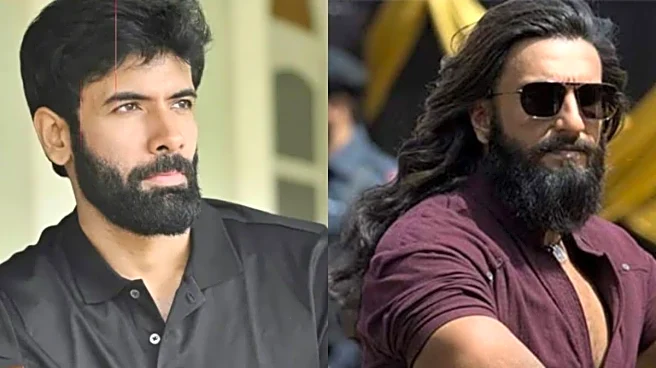

Since its release, Dhurandhar has ignited conversations that go far beyond box office numbers. From fan theories about the sequel to heated debates around the moral trajectories of Hamza and Uzair, the film
has become a talking point across social media and cinephile circles alike. Alongside the praise, certain sections have also accused the film of carrying a political agenda. Actor Danish Pandor, who plays a pivotal role in the film, offers a measured response to the sharp divide in opinion. “The Film Was Made From A Storytelling Perspective”
Addressing the accusations head-on, Pandor is clear that Dhurandhar was never conceived as a vehicle for messaging or propaganda.
“Honestly, the film was made purely from a storytelling perspective, not to push a message or agenda,” he says. According to him, the strength of contemporary audiences lies in their ability to interpret cinema independently. “Audiences today are very smart. They can agree, disagree, question, or even reject something, and that is completely fair.”
Letting Go Once The Film Meets The Audience
Pandor believes that once a film is released, the interpretation no longer belongs to its makers.
“Once a film is presented to the world, we lose control over how it is viewed,” he explains. “Some people may see it politically, others emotionally. Filmmaking is subjective by nature. You might agree with a perspective, I might not, and that’s okay.”
For him, this plurality of interpretation is not a flaw but an inherent part of cinema.
“At Its Core, Dhurandhar Is About Narrative”
Reiterating the intent behind the film, Pandor stresses that Dhurandhar never tries to dictate what the audience should think or feel.
“At its core, the film is about narrative, not messaging. We are not forcing an opinion on anyone. We are simply telling a story and allowing viewers to feel what they feel.”
He adds that the discourse surrounding the film has, in fact, been largely positive.
The Audience Response Speaks Louder Than Labels
Nearly three weeks after the film’s release, Pandor says the dominant emotion he has encountered is appreciation, not outrage.
“I personally haven’t encountered accusations of propaganda in any meaningful way,” he notes. “The overwhelming response has been love, and that itself speaks volumes.”
According to him, audiences can instinctively sense honesty in storytelling. “People know when something is dishonest and when it comes from sincerity.”
Trusting Aditya Dhar’s Vision
Pandor also credits director Aditya Dhar for grounding the film in research and realism rather than rhetoric.
“The fact that the film is being embraced so strongly tells me that viewers are connecting with the storytelling, the realism, and the cinematic experience Aditya sir has crafted after years of research and writing,” he says. “That, to me, is truly commendable.”