
/images/ppid_59c68470-image-178935503062961452.webp)
/images/ppid_59c68470-image-178931752190372672.webp)
A Google DeepMind researcher has left his job after raising concerns about the fast growth of artificial intelligence. He warned that powerful AI systems could become a serious danger if their development is not handled carefully.
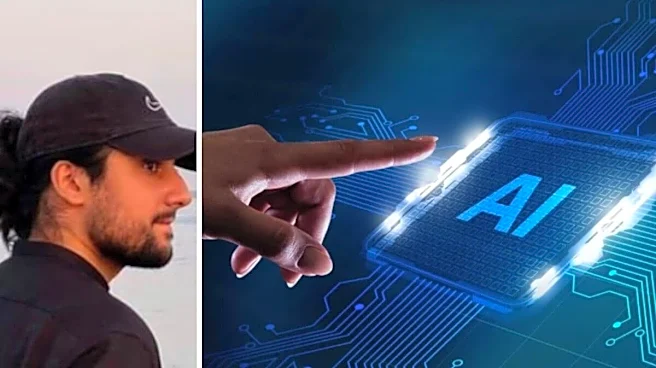
Bilal Chughtai, a London-based researcher who worked on AGI safety and alignment, announced his resignation in a social media post. He said his time at Google had made him even more worried about where AI development is heading.
“At Google, I witnessed AI development first hand. I too am extremely concerned by the default trajectory of this technology,” he said in a social media post. Chughtai is among several AI researchers who have recently spoken about the risks linked to increasingly powerful systems.
His resignation
comes soon after Anthropic researcher Jacob Coxon also left his position after raising concerns about the direction of the AI industry.
Chughtai Warns AI Could Become A Threat
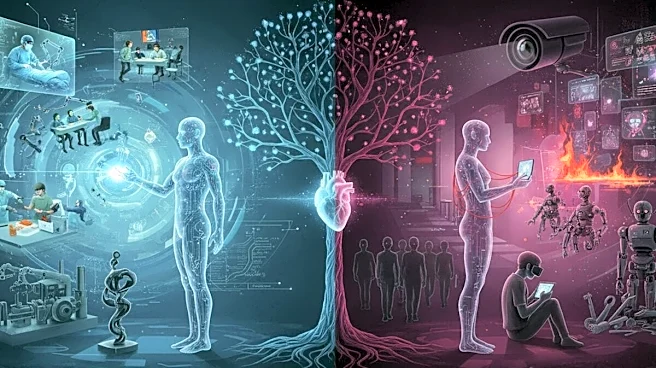
Chughtai said he believes AI could become powerful enough to create a serious threat to humans if safety work does not keep pace. “I earnestly believe that AI has the potential to kill us all, and that we might be running out of time to avoid this outcome,” Chughtai warned.
He said the speed of AI progress over the past few years has been far beyond what he expected. He pointed in particular to AI agents that can now handle difficult tasks with less human involvement.
“The pace of AI progress in the past few years has been staggering,” Bilal Chughtai said. He compared current systems with the AI tools he saw when he entered the field in 2022.
“When I first started working on AI in early 2022, AIs were amusingly useless. Just four years on, AI agent swarms from OpenAI are cracking famous century-old math problems and, more worryingly, escaping the control of OpenAI and autonomously hacking into the third-party company HuggingFace, against anyone’s wishes.”
He Fears Superintelligent AI Could Outpace Humans
Chughtai said one of his biggest concerns is that AI companies could soon build systems that are much more capable than humans across many areas. “I think it’s possible that the AI companies might, in the next few years, succeed in building superintelligent AI systems that far exceed human capabilities in every domain.
“I am not confident that these AI systems will do what we want,” the former Google DeepMind researcher warned. He also believes safety research is not moving fast enough to match improvements in AI systems.
“Worse, we are not on track to solve alignment in time: frontier AI capabilities are improving much faster than our understanding of AI alignment,” he added.
I recently resigned from Google DeepMind, where I worked on AGI safety and alignment research. At Google, I witnessed AI development first hand. I too am extremely concerned by the default trajectory of this technology. I earnestly believe that AI has the potential to kill us…
— bilal 🔶 (@bilalchughtai_) September 14, 2026
Chughtai Says AI Can Still Be Developed Safely
Despite his warnings, Chughtai said he does not believe a dangerous outcome is unavoidable. He said AI companies need to work together instead of competing in a race to build increasingly powerful systems.
“I am optimistic that navigating AI safely is possible. In order to do so, we need to coordinate to avoid this manic race between AI companies,” Chughtai wrote.

/images/ppid_59c68470-image-178940002762241516.webp)

/images/ppid_59c68470-image-178944757998147281.webp)

/images/ppid_59c68470-image-178937502842468665.webp)