




Mahira Khan is going to be a mother again. At 41, the Pakistani actor is expecting her second child with husband Salim Karim and shared the news amid the buzz of the Toronto International Film Festival. It is a deeply personal moment for the actor, but one that also brings a larger question into focus: what does having a baby in your 40s actually mean?
And Mahira is not alone. Anne Hathaway became a mother for the second time at 39 and is now expecting her third child at 43, while Katrina Kaif welcomed her first baby at 42. Fertility naturally shifts with age, as do some of the considerations around pregnancy.
We spoke to obstetrics and fertility specialists to understand what pregnancy in your 40s really looks like.
Is pregnancy at 40 becoming more common?
Pregnancy at 40 is certainly
more visible today, and according to Dr Mannan Gupta, Chairman & HOD, Obstetrics & Gynaecology, Elantis Healthcare, New Delhi, it is also more common and accepted than it was in previous years in many parts of the world.
“Pregnancy at 40 is now more common and accepted than in years gone by in many parts of the world,” he says. “It seems that women today want to focus on their education, careers, financial stability and personal desires before they enter parenthood.”
“With improvements in fertility treatments, egg freezing and maternal health practices, it is easier for women to consider having children later in life,” Dr Gupta adds.
What happens to fertility as a woman enters her 40s?
The most significant changes involve the number and quality of eggs. “As a woman ages, her fertility decreases largely due to a reduction in both the quantity and quality of eggs,” says Dr Gupta. “After the age of 35, the situation worsens and especially in the 40s.”
A lower ovarian reserve means there are fewer eggs available. But Dr Gupta points out that quantity is only part of the equation.

“More importantly, egg quality is a major issue in itself due to the fact that age contributes to the chances of chromosomal defects,” he explains.
Can women still conceive naturally in their 40s?
Yes. Natural conception is possible in the 40s, although the likelihood is lower than it is in the 30s.
“The likelihood of having a natural conception drops in the age range of 40s compared to the age range of 30s, because of the eggs lose their quantity and quality,” Dr Gupta says.
“Many of women may have a natural conception but it either requires more time or increases risk of miscarriage,” he adds.
It is also important not to turn an age-related statistic into a prediction about an individual woman. Dr Gupta stresses that the chances “may vary significantly depending on other factors” and that “age alone does not suggest the fertility of particular woman.”
That is why a fertility assessment can be useful rather than trying to guess what your chances might be based on age alone.
What should women consider before trying to conceive?
If pregnancy is something you are considering in your 40s, Dr Gupta recommends speaking to a gynaecologist or reproductive specialist beforehand.
“Women who intend to become pregnant at the age of 40 are advised to keep in mind that fertility is likely to be lower and achieving pregnancy may require a longer time,” he says.
Dr Gupta suggests checking ovarian reserve and menstrual cycles, while also assessing the woman’s health and that of her partner.
“Additionally, it is important to review any medication taken, vaccination status, mother’s nutrition and health status,” he says.
Does being healthy offset some of the age-related risks?
Being healthy can make a difference to pregnancy, but it does not remove the biological changes associated with ageing.
“Health overall influences the results of a pregnancy. If a person is healthy, the complications of the pregnancy will be minimized,” says Dr Astha Gupta, Senior IVF Consultant & Infertility Expert, Obstetrics & Gynaecology, Delhi IVF, New Delhi.
But there is an important qualification. “Nevertheless, health cannot reverse all the age-dependent changes in the quality of the eggs and in the chromosomal risk,” she says. “Age of the mother is still an independent factor.”
What are the biggest risks of pregnancy after 40?
Pregnancy after 40 can bring a higher likelihood of certain complications.
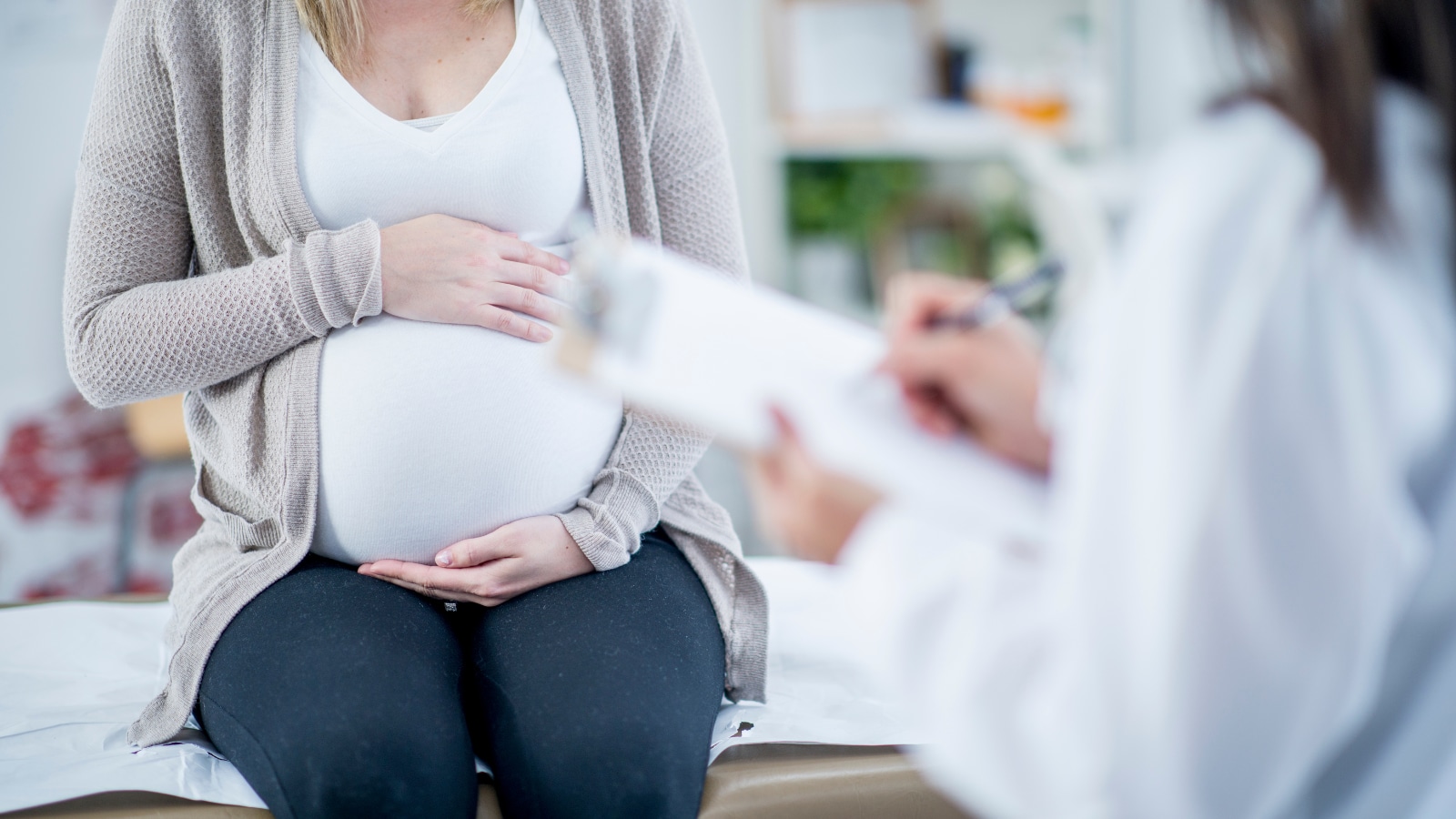
“Getting pregnant after the age of 40 can raise the odds of having a miscarriage, developing gestational diabetes, high blood pressure, during pregnancy, or facing other issues related to pregnancy,” Dr Gupta says.
“It is also possible for the risk of chromosomal conditions such as Down’s syndrome increase since egg quality declines with age,” he explains.
Other concerns include placental problems, premature birth and the possibility of needing a caesarean delivery.
“At the same time, there is a chance of the woman experiencing problems related to the placenta, giving birth prematurely and having to undergo a caesarean delivery,” says Dr Gupta.
But these are increased risks, not inevitable outcomes. “The risks can be managed through careful monitoring,” he adds.
What does “advanced maternal age” actually mean?
The phrase can sound rather intimidating, particularly when it is presented without context. Medically, however, it refers to pregnancy at an older maternal age and the statistical increase in certain risks.
“The term advanced maternal age refers to pregnancy at an older age; however, this does not mean that every case must be considered a high-risk pregnancy,” says Dr Astha Gupta.
“Although the risk does rise statistically, the outcome can differ from case to case,” she adds.
That individual variation is important. “Therefore, women should make sure that they are evaluated carefully and screened properly during their pregnancy, rather than rely solely on their age,” Dr Gupta says.
How should women prepare for pregnancy in their late 30s and early 40s?
A preconception consultation is a good starting point. “The best practice for women who are considering getting pregnant is to have a preconception consultation,” says Dr Astha Gupta.
The woman’s medical history will help determine which checks are needed. These may include blood pressure and blood sugar assessments, thyroid function, vaccination status and reproductive health.
“It is generally advisable for women to take folic acid prior to getting pregnant,” she says.
Lifestyle also matters. “Other important factors include achieving a healthy weight, exercising regularly and avoiding drugs and alcohol.”
None of this guarantees a smooth pregnancy, but it gives doctors an opportunity to identify and address concerns before conception rather than after pregnancy has begun.
Can freezing your eggs help if you want children later?
For women who know they may want children later, fertility preservation can be worth discussing.
“For women who wish to postpone motherhood, egg freezing may be advantageous due to the fact that younger eggs have better quality and lower instances of chromosomal defects,” Dr Astha Gupta explains.
“Freezing eggs at an earlier stage will help to preserve fertility,” she says. “However, it does not imply that they will be able to conceive in the future.”
The eventual outcome depends on several factors, including the age at which the eggs were frozen, the number of eggs retrieved and the woman’s reproductive condition when she later wants to use them.
When should a woman over 40 seek medical help?
Dr Astha Gupta recommends that women over 40 speak to a gynaecologist or fertility expert before trying to conceive, or early in the process.
“For women over 40, a gynaecologist or fertility expert should be consulted before attempting to conceive or at the early stages of the process, instead of postponing the check up,” she says.
A fertility assessment can help identify issues that may need treatment and explain what options are available.
“If the conception is not successful after several months, specialist should be consulted immediately as the chances of fertility decrease with an increase of age,” she adds.
So, what should women know about having a baby in their 40s?
Dr Astha Gupta says, “Pregnancy at 40s is neither impossible nor without risks,” says Dr Astha Gupta. She also points out that both extremes can be unhelpful. “Stories of celebrities can create an impression that woman’s age does not matter on the other hand, messages that rely on fear of getting pregnant in older age can lead to unnecessary worries.”
“The truth lies somewhere in the middle,” she says. “The individual’s health, fertility, checks performed in time and the right prenatal care are important.”
There is no universal answer to those questions. But there is plenty of value in asking them early.