
/images/ppid_59c68470-image-178835502393169614.webp)
/images/ppid_59c68470-image-178844002471242650.webp)

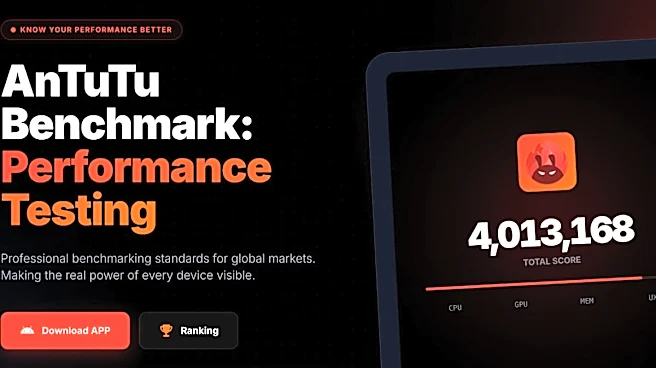
AnTuTu has changed the rules for smartphone performance testing. The popular benchmarking platform has released the public beta of AnTuTu V12, introducing major changes to the way smartphones are tested across CPU, GPU, memory and user experience.
The most important change may not be the redesigned graphics or new tests. AnTuTu has confirmed that scores generated using V12 cannot be directly compared with scores from AnTuTu V11. In other words, the familiar benchmark rankings are effectively entering a new generation.
The AnTuTu V12 public beta was released on September 4 and is being made available through the company’s website and app stores. AnTuTu says the new V12 version is designed to move beyond the idea of simply producing a bigger score
and instead aims to give users a better indication of how a phone performs under more realistic workloads.
AnTuTu V12 Makes Everyday Performance A Bigger Priority
AnTuTu continues to divide its overall benchmark into four major areas: CPU, GPU, MEM and UX. However, the company has revised the workloads and algorithms used across these sections.
For CPU testing, AnTuTu says the new workloads are designed to better represent the way smartphone processors operate during everyday use. Modern mobile chips constantly switch between high-performance and lower-power states, depending on what the user is doing.
V12 therefore takes greater account of this balance rather than focusing only on peak processing performance. The aim is to make the resulting score more representative of how a phone handles different types of workloads.
This could become particularly relevant as smartphone makers increasingly promote performance, efficiency and sustained usage rather than just maximum benchmark numbers.
GPU Testing Gets More Demanding
The graphics portion of AnTuTu V12 has also received a significant upgrade. The new GPU workloads use more detailed and realistic graphics, with improvements to elements such as lighting and shadows.
AnTuTu says the updated scenes are intended to better simulate the kind of graphics workloads expected from demanding mobile games and future high-end applications.
Another notable addition is a Cooperative Matrix test based on Vulkan technology. It is designed to evaluate the matrix-computing capabilities of different GPU computing units, adding another demanding workload to the overall graphics evaluation.
That means phones with powerful graphics hardware could face a tougher test under V12 than they did under previous versions.
Memory Testing Gets A Major Overhaul
The memory section has arguably received one of the most interesting changes in AnTuTu V12.
The new benchmark adds a dynamic latency stress test that examines memory behaviour while the device is handling mixed workloads. This is intended to show how well a phone maintains performance when multiple memory-intensive operations are happening at the same time.
AnTuTu has also added a memory fragmentation test. This looks at how the device behaves as memory becomes more heavily utilised, giving the benchmark another way to assess performance under demanding conditions.
Existing sequential and random read/write tests have also been refined. The company says the changes are intended to minimise outside factors that can affect results and provide a more accurate representation of the underlying hardware.
Application-level I/O testing has been improved as well, with the goal of measuring real-world reading and writing performance more accurately.
UX Testing Is Being Redesigned Around Responsiveness
The UX portion of AnTuTu V12 has not been left untouched. The company says it has upgraded its existing tests and introduced new algorithms that more closely follow the way modern operating systems render content and respond to user input.
This is important because a phone with a powerful processor is not necessarily going to feel faster in every situation. App launches, animations, scrolling, rendering and system responsiveness can all affect the experience.
AnTuTu says its revised UX testing is intended to map more closely to this perceived smoothness, rather than treating performance as a collection of isolated hardware numbers.
Why AnTuTu V12 Scores Cannot Be Compared With V11
This is the part smartphone buyers and enthusiasts need to pay the most attention to. Because AnTuTu has changed the workloads, test items and scoring methodology, a V12 score should not be directly compared with a V11 score.
That means if a smartphone scores significantly higher or lower under V12 than another device scored under V11, it does not automatically mean that one phone is faster or slower. The two scores belong to different benchmark generations.
AnTuTu has effectively created a new baseline for smartphone performance testing. Future rankings based on V12 will need to be viewed within the V12 ecosystem.
The company has also warned that the public beta may contain bugs or other issues, as the software is still being tested.
The AnTuTu App Gets A New Look Too
The changes are not limited to benchmark workloads. AnTuTu V12 introduces a redesigned interface with a cleaner visual layout and a new card-based information feed.
The information section can now be organised by category, making it easier for users to find relevant content within the app.
AnTuTu has also paid attention to larger devices. The new interface has been adapted for tablets and foldable smartphones, allowing more information to be displayed on larger screens while making navigation better suited to those form factors.
Another technical change in AnTuTu V12 is support for Android devices using 16KB memory page sizes. This is becoming increasingly relevant as Android hardware and software configurations evolve. Supporting newer memory architectures should help AnTuTu remain compatible with upcoming smartphones and devices using newer system configurations.


/images/ppid_59c68470-image-178849002620598667.webp)




/images/ppid_59c68470-image-17884150241617330.webp)