
The International Cricket Council (ICC) has released an updated schedule for the upcoming 2026 T20 World Cup to be co-hosted by India and Sri Lanka from February 7. The changes were necessitated after
the ICC were forced to eject Bangladesh from the tournament after their refusal to travel to India, citing security concerns for their players and officials.
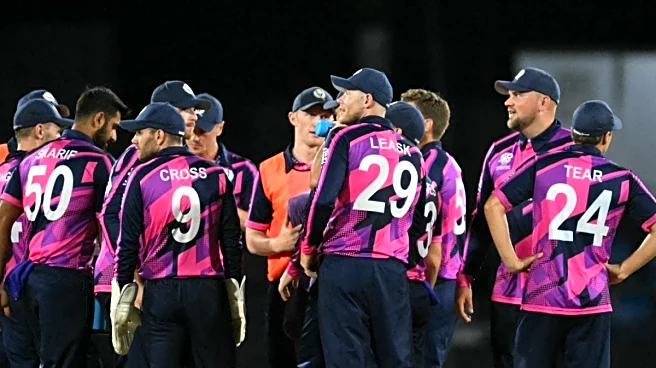
The ICC sent an invitation to Scotland to take part in the World Cup, which they’ve accepted.
Why Has The T20 World Cup Schedule Been Changed?
Scotland have replaced Bangladesh in Group C, where they join England, Italy, West Indies and Nepal. Bangladesh were originally set to face West Indies (February 7), Italy (February 9) and England (February 14) in Kolkata, while Nepal (February 17) in Mumbai.
However, the fixtures will now see Scotland facing the four opponents instead.
How Have The Fixtures Been Impacted?
Only the teams have been swapped – the date, start timing, groups, etc. remain unchanged.
Have any other fixtures been impacted?
No, the remainder of the fixtures will go ahead as per the original schedule.
Here’s the updated ICC Men’s T20 World Cup 2026 Schedule:
Why Have Bangladesh Been Ejected?
The decision was taken after the Bangladesh Cricket Board (BCB) refused to travel to India, despite the ICC rejecting their concerns over security threats. The BCB requested the ICC to move their matches out of India.
“Independent security assessments were conducted from internal and external experts” found no credible threat to the Bangladesh cricket team in India.
The BCB, though, remained adamant and hence the ICC took the call.
How Did The ICC Arrive At The Decision?
Here’s the official statement from the ICC:
The decision follows an extensive process undertaken by the ICC to address concerns raised by the BCB regarding the hosting of its scheduled matches in India.
Over a period of more than three weeks, the ICC engaged with the BCB through multiple rounds of dialogue conducted in a transparent and constructive manner, including meetings held both via video conference and in-person.
As part of this process, the ICC reviewed the concerns cited by the BCB, commissioned and considered independent security assessments from internal and external experts, and shared detailed security and operational plans covering federal and state arrangements, as well as enhanced and escalating security protocols for the event.
These assurances were reiterated at several stages, including during discussions involving the ICC Business Corporation (IBC) Board.
The ICC’s assessments concluded that there was no credible or verifiable security threat to the Bangladesh national team, officials or supporters in India.
In light of these findings, and after careful consideration of the broader implications, the ICC determined that it was not appropriate to amend the published event schedule.






/images/ppid_59c68470-image-177105753591587522.webp)