

/images/ppid_a911dc6a-image-17850326289777094.webp)
/images/ppid_a911dc6a-image-178505442183443014.webp)
Barely days after Generation Z, under the banner of the Cockroach Janta Party (CJP), shook the Centre with a 36-day nationwide agitation that culminated in the resignation of Dharmendra Pradhan from the post of Union Education Minister, it was now the turn of Generation Alpha to take to the streets.
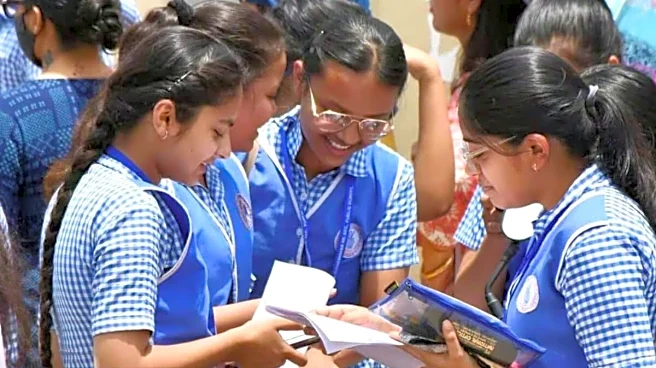
In Uttar Pradesh’s Fatehpur district, students of a government-aided school staged a demonstration that forced the administration to respond to their demands, highlighting the growing confidence among school students to collectively challenge institutional decisions.
The protest broke out at Sarvodaya Inter College in Kishanpur area of Fatehpur, where scores of students assembled on the campus and raised slogans against the school administration. Videos
of the demonstration quickly went viral on social media, prompting district education officials to rush to the school and hold talks with the agitating students.
The students maintained that the protest was triggered by poor infrastructure and the absence of basic amenities. Their demands included uninterrupted electricity supply, installation of four fans in every classroom, repair of faulty electrical wiring, an RO water cooler to ensure access to clean drinking water, desks and benches for students, better implementation of the mid-day meal scheme, clean toilets and an overall improvement in school infrastructure.
Some students also alleged that those raising these issues had been threatened with being failed in examinations by the principal, a charge denied by the school administration. “Our classrooms become extremely uncomfortable without electricity and fans. We only wanted the basic facilities every student deserves,” one protesting student said.
Another student said repeated complaints had gone unheard, leaving students with no option but to demonstrate peacefully. “We had raised these issues several times, but nothing changed. The protest was our way of making the authorities listen,” the student said.
Following the demonstration, officials from the district education department intervened and held discussions with the students and school authorities. According to officials, written assurances were given that four fans would be installed in every classroom within 24 hours, faulty electrical wiring would be repaired, an RO water cooler would be installed and desks and benches would be provided within a month. The students subsequently withdrew their protest after receiving the assurances.
The school administration denied allegations of intimidation and said it remained committed to resolving students’ grievances through dialogue. “Our objective is to ensure that students receive quality education in a conducive environment. The concerns raised by the students are being addressed in coordination with the education department,” a senior school official said.
However, another version of the episode also emerged. According to the locals, the protest was triggered by a directive allegedly asking students to purchase uniforms from a designated vendor. Students reportedly objected to being forced to buy uniforms from a particular shop despite already possessing uniforms matching the prescribed pattern. Following the protest, the school administration reportedly allowed students to purchase uniforms from any vendor, provided they complied with the prescribed specifications.
“The institution has decided that students may purchase uniforms from any vendor as long as they conform to the prescribed specifications. Our objective is uniformity, not compulsion,” a senior school official said.
District education officials said the matter had been resolved amicably and normal classes had resumed. No disciplinary action was taken against the students who participated in the demonstration.
The Fatehpur episode comes just days after the CJP-led nationwide agitation over alleged examination irregularities and paper leaks energised student politics across the country. Led largely by Generation Z, the movement ended with the Centre accepting several demands, including examination reforms and the withdrawal of cases against protesters.
Political observers believe the success of that movement has instilled confidence among younger students as well. Political analyst Prof. Shashikant Pandey said the significance of the Fatehpur protest lay not merely in the demands but in the confidence displayed by the students.
“After witnessing a nationwide movement succeed, students now believe peaceful and organised collective action can compel authorities to reconsider their decisions. That confidence is now visible even among school students,” he said.
Whether the immediate trigger was the lack of basic infrastructure, as maintained by the students and school administration, or the uniform policy reported by a few, the Fatehpur episode seems to be a clear sign of growing student activism in UP.
/images/ppid_a911dc6a-image-178524295309056347.webp)



/images/ppid_a911dc6a-image-178504310791685788.webp)
/images/ppid_a911dc6a-image-178500402684590954.webp)