





Nagaur, Jul 1 (PTI) Budharam, 54, a farmer from Dhamaniya village in Nagaur district of Rajasthan, has sown three rainfed crops this kharif season across his six hectares of land – groundnut, green gram and bajra.
Of this, groundnut occupies three hectares, green gram two and bajra the remaining one. All three crops were sown on time in June, taking advantage of pre-monsoon rains triggered by a western disturbance.
Now, with no irrigation to fall back on, Budharam is anxiously awaiting the southwest monsoon to arrive on schedule. Groundnut, which occupies the largest share of his land, is also the most water-intensive of the three crops he has planted.
Despite the risk, he chose to expand groundnut acreage. “It fetches more returns than the other
two crops, even if yield drops due to less rainfall,” he told PTI, explaining his bet.
“Groundnut pays more than green gram. In one hectare, I get 10 quintals of yield. Its crop residue (hay and shells) is highly nutritious and used as animal feed,” Budharam said.
Green gram, in comparison, can survive on less water, but the produce often turns black and yields suffer.
Sukharam, 50, from Balawas village in the same district, has made a similar calculation on a larger scale. Of the 12-13 hectares he has sown this kharif season, seven are under groundnut, three under green gram, and two split between bajra and guar. He, too, opted for higher groundnut acreage despite anticipating a weaker monsoon this year.
“Among the three crops, groundnut generally provides the highest and most stable economic returns due to strong market demand, high edible oil value and government support,” he said.
Though more labour is required for groundnut, the yields are higher than those of other crops, he added.
STATE-WIDE TREND ———————– The preference for groundnuts is not limited to these two farmers. “After cotton, groundnuts are a major cash crop in the state. Due to better returns, many farmers have sown it,” said Surendra Singh Shekhawat, Additional Director of Agriculture (Extension) at the Commissionerate of Agriculture, Rajasthan.
According to state data, the area sown to groundnut has increased 23.57 per cent to 7.13 lakh hectare as on June-end, compared to 5.76 lakh hectare in the year-ago period.
Shekhawat said the early sowing was made possible by rains from the western disturbance in June, with Nagaur district alone recording over 60 per cent above-normal rainfall for the month, ‘enough to encourage farmers to go ahead with kharif sowing’.
Notably, the shift towards groundnut has come even though green gram offers a higher minimum support price (MSP). For the 2026-27 crop year (July-June), MSP for groundnut has been fixed at Rs 7,517 per quintal, against Rs 8,780 per quintal for green gram and Rs 2,900 per quintal for bajra.
This suggests farmers are weighing overall market demand and returns, rather than MSP alone, when deciding on cropping patterns.
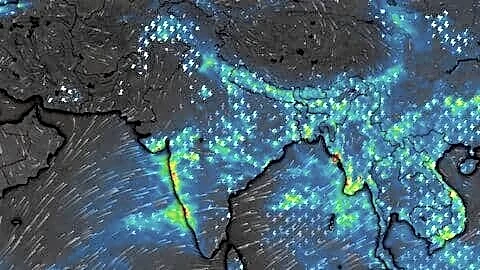
MONSOON WATCH CONTINUES ———————————– “Southwest monsoon has not yet advanced here. The next ten days are crucial for the state. We are keeping a watch,” Shekhawat said.
So far, kharif crops have been sown across 29 per cent of the state’s average cultivable area of 164.13 lakh hectare, aided largely by western disturbance rains. However, overall kharif sowing remains 7.66 per cent lower at 48.04 lakh hectare as of June, compared to 52.03 lakh hectare in the corresponding period last year.
“So far, the lag in sowing is less than 10 per cent, not much. No need to panic, we are keeping a close watch,” Shekhawat said.
Of Rajasthan’s 41 districts, 26 have been identified as high agricultural risk zones that could be impacted by El Nino conditions. The state government said it has contingency plans in place and has been advising farmers to adopt short-duration, climate-resilient crop varieties.
Experts note that groundnut’s appeal goes beyond price: it is a cash crop that also improves soil fertility by fixing atmospheric nitrogen, requires only moderate upfront investment in seeds and inputs, and ‘despite needing careful pest management’ typically delivers a high benefit-cost ratio.
For now, farmers like Budharam and Sukharam are watching the skies, having already placed their bets on groundnuts. PTI LUX SHM









/images/ppid_a911dc6a-image-178300206163866815.webp)
