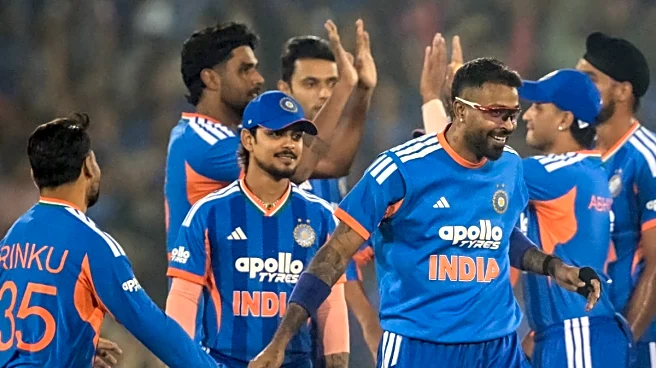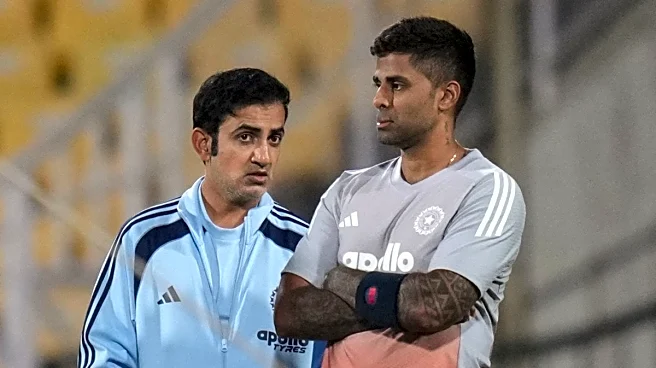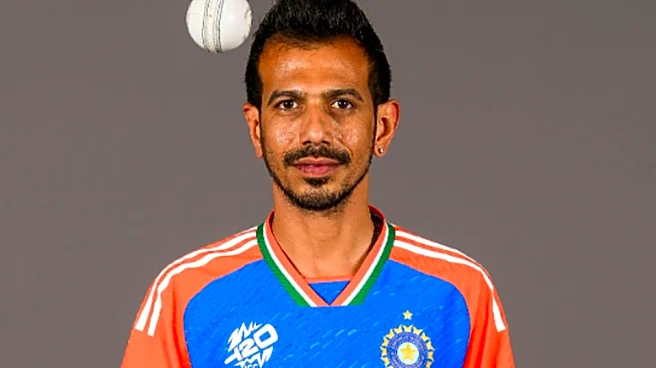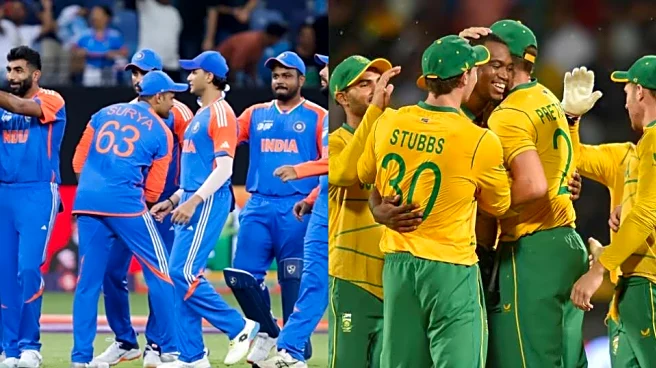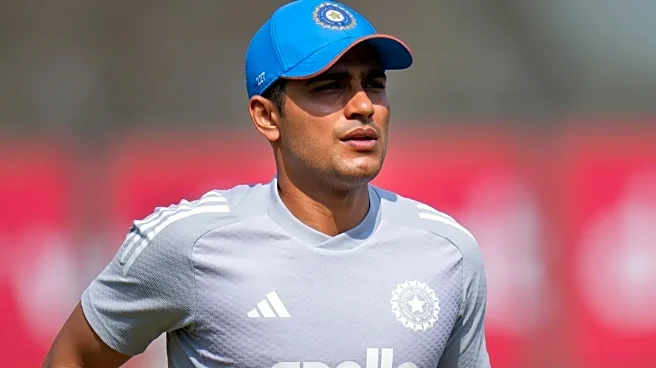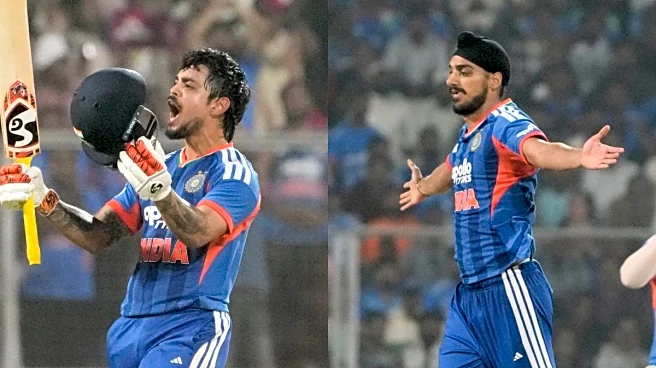

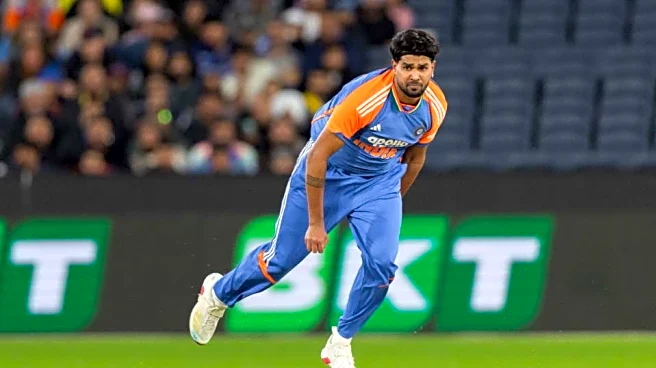
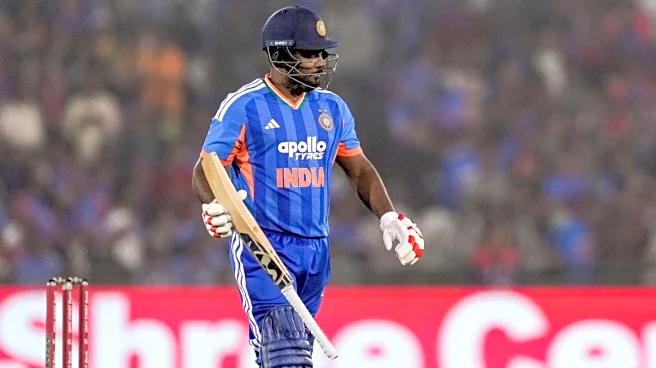
With four days to go to the beginning of India’s title defense, here’s everything you need to know about their 15-member squad:
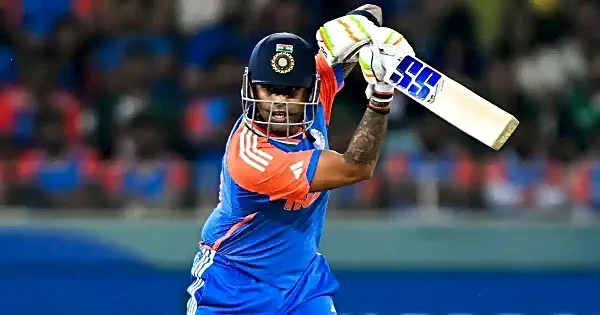
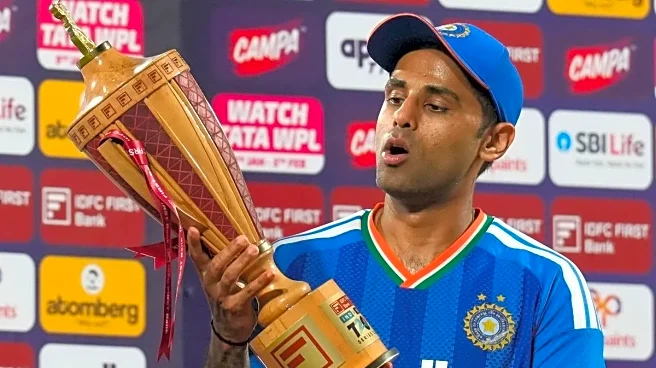
Suryakumar Yadav (Captain): India’s captain has many names: Surya, Mr. 360 (for his ability to hit the ball all around the park), SKY… some might even call him the ‘long-on’ man.
Suryakumar is the definition of a late-bloomer. Growing up playing the sport in Mumbai’s Bhabha Atomic Research Centre, he’d often stand out for his audacity, improvisation, and ignoring his coaches’ directions.
Now, it won’t be wrong to say that he was ahead of his time, for he showed the same things under the current India coach Gautam Gambhir’s tutelage at Kolkata Knight Riders. A switch to the Mumbai Indians allowed him to show his talents
at the top of the order, and he has never looked back since.
At 31, he made his T20I debut and soon became the number one batter in the world, helping the team win the 2024 T20 World Cup with a special catch of David Miller in the final against South Africa. A recent dip in form raised questions about his importance to the team, but he has quickly managed to brush them aside.
It’s likely his last ICC tournament, and he’d be raring to make it count.
Abhishek Sharma: An Amritsar boy through and through, cricket was a matter of faith before a profession for Abhishek. He started in his father’s academy, making the lives of older boys miserable — they just couldn’t get him out. Everyone with a bit of cricket knowledge around him said he’d play for India one day; his talent of hitting the ball through the lines and even taking wickets with spin was just too natural.
Under-19 World Cup selections were a formality, most of it alongside his best friend and now India Test and ODI skipper Shubman Gill. Then there was a phase in the IPL where both of them struggled to make their name and thus grew mature. A partnership with Travis Head at Sunrisers Hyderabad unlocked his full potential, for it allowed him to be who he always was — a technically brilliant pinch hitter.
India couldn’t ignore him for too long, and his quick learning allowed him to continue developing, becoming the highest-rated T20I batter ever. He has a reputation to hold this World Cup, and don’t be surprised if he beats that.
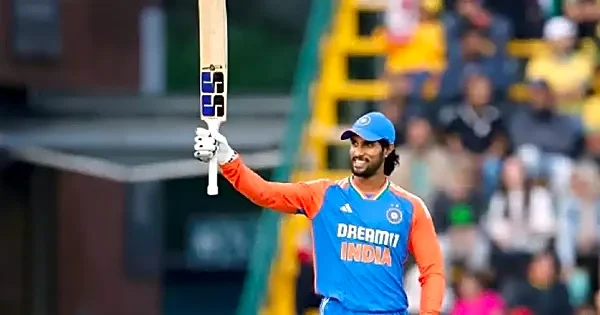
Tilak Varma: Born to an electrician father who’d sometimes work 20 hours/day to keep his family afloat, hard work is all Tilak Varma has seen. His family wanted him to study, but Tilak wanted to play cricket and make his name around the world. Consistent returns in Hyderabad made him stand out easily, and the Mumbai Indians didn’t need a second invitation to take a punt on him.
It was extremely successful, and Tilak emerged as a genuine match-winner, a really smart big-hitter capable of batting anywhere between number three and six. As the importance of left-handers grew in Gautam Gambhir’s system, so did Tilak’s. He had the moment of his career in the 2025 Asia Cup final, with a sensational match-winning innings.
Sanju Samson: Samson’s story has been one of frustration. An extremely talented, superstar material prodigy, his father forced him to score big or go home. He made his India debut early and perhaps too early for his own good. It brought too many expectations and way too much pressure — he’d often sizzle in a match or two, showing off his gift of timing, in the IPL and then go on a lean run.
That youngster’s image became a tag — ‘inconsistent’. Even when he’d find consistency, it’d be ignored. A bit of bad luck, a bit of injury troubles, and Samson became the perennial squad player despite having three T20I centuries. Gambhir’s management seemed to bring refreshing backing and brought out Samson’s best, but it didn’t last long. It’s unlikely he’d start matches here, considering his poor New Zealand series.
Shivam Dube: Dube drew similarities with Yuvraj Singh from quite early in his career. A big hitter who could bowl and stand out in excellent Mumbai teams, Dube didn’t find it too difficult to get into the Indian team — there is always an opening for an all-rounder in this circle.
He was found out with equal ease and was soon dropped. Like with most around him, a change of IPL environment, role clarity of becoming a spin-hitter was just what he needed. Consistency was unlocked, his strike-rates skyrockted and he became an India regular again — this time, the only change is he has improved overall and is now making an impact across the board.
Ishan Kishan: Ishan Kishan was always a fighter. Idolising MS Dhoni while growing up in Jharkhand, his coaches remembered him as someone who would just never cry, no matter how the ball would hit him. Superb off the backfoot, Kishan made his name with huge knocks in the Ranji Trophy, including run-a-ball double centuries — which showed that his real calling lay in white-ball cricket.
He was made the Under-19 World Cup captain for doing the same things at that level that Dhoni was doing for the first team. In limited opportunities at both the Gujarat Lions and the Mumbai Indians, he impressed with his hard-hitting skills. He went a step ahead by smashing sixes on both his ODI and T20I debuts and soon a double century in the 50-over format.
After controversially losing his central contract, Kishan has made his comeback to the national team on sheer will, leading Jharkhand to the Syed Mushtaq Ali Trophy and then making the best of his chances in Tilak’s injury-enforced absence. He’s likely to open the innings alongside Abhishek.
Hardik Pandya: There’s only one player in India for whom comparisons with the great Kapil Dev work and that’s Hardik Pandya. With a classic rags-to-riches story of early struggle and determination, someone who’d hitch rides to earn a few bucks by playing tennis-ball tournaments, Pandya was one of the first real finds of the Mumbai Indians’ scouting network.
Those matches shaped him and his game, and he showed the IPL an undeniable ability to hit any ball for a six. He was the one-man answer to all of India’s worries of balance that had plagued the white-ball sides for decades — and after 234 internationals and ten years, he remains equally unique and important.
Jasprit Bumrah: What can anyone say of Jasprit Bumrah that hasn’t already been said before? If someone doesn’t know him yet, they don’t know Indian cricket.
Not many would have expected Bumrah to become the greatest ever fast-bowler to grace the Indian team when he broke through the domestic system with that famously slingy action. In fact, he was doubted every step of the way, given one year, or if someone was gracious, two years before he’d disappear.
He built himself up by seeing fast bowlers on TV and has now broken all of their records. It didn’t need proving, but the last T20 World Cup proved that till the time he even has an over left, the game is not lost.
It would need some stopping to prevent him from winning a second trophy.
Arshdeep Singh: Left-arm pacer Arshdeep Singh is the character of this team, someone for whom media training doesn’t matter, who doesn’t shy away from making jokes or teasing his teammates on camera. He’s the least celebrity of celebrities, but that doesn’t take away from his character on the field.
It’s not by fluke that Arshdeep is India’s highest-ever wicket-taker in the format. He has a ball for every moment, honed after thousands of hours in the nets. When Punjab Kings gave him his chances five years ago, he would play as a leader of a team despite being the youngest in the bowling attack, and now, he has developed a stellar partnership with Bumrah with consistency to offer in every phase.
Harshit Rana: Growing up, Harshit Rana didn’t have any friends. Zero.
His father, an athlete, would sleep with him, wake him up at 4 am, take him to cricket practice, and then fight his mother to stop him from going to school, just so he could get some sleep and practice again.
It took a long time for that dedication to bear fruit, for it didn’t come through U19 World Cup matches or flashy scorecards. Someone at Kolkata Knight Riders spotted him, and that was it. After showing glimpses of his talent for two years, he put up a sensational 19-wicket season in his first full edition in 2024, which KKR won.
Under Gambhir’s trusted coaching, he’s one of the few all-format players on the team. His natural high release point and hit-the-deck skills, along with smart variations, make him the real deal. Also, watch out for his ability to smack the ball from the lower order.
Axar Patel: India’s vice-captain, Axar grew up playing tennis ball cricket and would often sleep with a ball and bat on his bed. But he wanted to be an engineer and had to be pushed and prodded to play cricket by his friends. He was still not serious until one day, when during his age-group years, his grandmother passed away, and his father told him that her last wish was to see Axar play for India. So that’s what he did.
Making his debut in 2015, Axar has spent the last 11 years chipping away at his chinks to become a reliably economical bowler and, somehow, an even more reliable middle-order batter.
Varun Chakaravarthy: A Tamil actor, an architect, an interior designer, and a scriptwriter — Chakaravarthy broke through the cricket scene with similar variety, as a mystery spinner. It was an excellent entry point, but it wasn’t sustainable without pace and bounce on the orthodox balls; he was easy to hit, even if not to pick. Getting the blame for India’s 2021 T20 World Cup blunder changed that for him.
Going back to his roots, he improved and reinvented himself to become the best and most consistent spinner in the IPL. Gambhir saw him from close quarters in 2024 and knew he had to bring him back to the team, where he’s doing the same thing.
Kuldeep Yadav: The Kanpur man just loved playing cricket. He wanted to be a seamer, but his coach rejected the idea, so he accepted spin and spent hours and hours on it just to get a chance in the matches. It resulted in a rare commodity, a left-arm wrist spinner, so unique for India’s history that his very existence made him difficult to pick across levels, and drew attention to him.
KKR gave him the break, too, and he became their most important spinner for a good few years, partnering Sunil Narine with aplomb. However, just like with Chakaravarthy, he got found out eventually and got benched at KKR, losing his place to the Tamil man with a newer mystery. He went back to Kanpur, added vigor, pace, and zip to his bowling, and now gives lesser time to batters with similar skills.
Chakaravarthy has gone ahead of him in the pecking order in the Indian T20I team too, but on spin-friendly wickets, he could form the best partnership of the tournament.
Washington Sundar: Named after an ex-Army man who used to help his father, Sundar, in his early years, Washington was simply a consistent prodigy of age-group and under-19 cricket, never standing out too much but never being completely out of the limelight either. Coaches knew of his all-round ability, making him the early obvious heir to Ravichandran Ashwin in the circles.
He replaced an injured Ashwin in an IPL squad in 2017 and used the same consistency to jump levels. Since then, he has seen many highs, like the famous 2020-21 Border-Gavaskar Trophy win, and lows like missing World Cups due to injury. He almost missed this one, too, and is now close to returning to full fitness. He’s a squad player who might not play every match, but his reliability will again stand out whenever he does.
Rinku Singh: Growing up in Aligarh, the son of an LPG cylinder delivery man, Rinku learned early that survival came before sport. Cricket was his escape, honed on dusty grounds with borrowed gear.
Picked by Kolkata Knight Riders after years of impressive performances in domestic cricket, he beat injuries and doubts, waiting patiently for his moment, then seized it unforgettably with five sixes in five balls in 2023. becoming the go-to mainstay for any kind of finishing duties.
After a year of lull and time spent on benches, he has again become a regular starter in the team and will be their spine for the tournament.