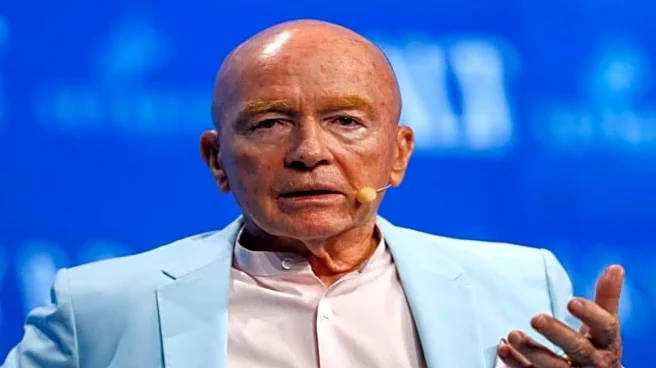


Mark Mobius, the veteran fund manager credited with bringing emerging markets into mainstream global investing, remained one of the most consistent international bulls on India over the years. He died on April 15 at the age of 89.
Across decades of market cycles, Mobius’ message on India barely changed: strong long-term potential, but recurring execution risks.
The ’50-year rally’ view
One of his most widely discussed comments came in 2021, when he said India was entering a ’50-year rally’, reflecting his belief that the country was in the early stages of a prolonged economic and market expansion.
Mobius had compared India’s position at the time to where China had been years earlier, arguing that reforms, formalisation of the economy, and efforts to build a unified domestic
market could lay the foundation for sustained growth.
For him, India was never a short-term tactical bet. It was a structural story built on demographics, entrepreneurship and deepening capital markets.
From China shift to India favourite
As many global investors began reducing exposure to China amid regulatory uncertainty, Mobius increasingly identified India as a major beneficiary of shifting capital flows. He said in 2021 that India, along with the US, was attracting money as investors reassessed China risk.
By 2025, his stance had become even stronger. He described India as his “top market” and, in another interaction, called it the most important market within the emerging markets universe.
Strong conviction backed by allocation calls
Mobius did not stop at broad praise. He also spoke in terms of portfolio positioning. In a 2025 interview, he said he would like to have as much as 50% of his portfolio invested in India, citing economic growth, reform momentum and healthy returns on capital.
Earlier disclosures had also shown his funds already carried significant India exposure, making the country one of his largest investment themes.
Big market targets: Sensex at 1 lakh
Mobius was also willing to make bold long-range calls on Indian equities. In late 2023, he said the BSE Sensex could reach 100,000 within five years, pointing to India’s improving global position, expanding investor base and continuing reforms.
His market calls were generally linked to structural changes rather than near-term momentum.
Exports and manufacturing opportunity
Mobius believed India’s next growth phase could come from exports and manufacturing. He said India was approaching a period of stronger exports, not only in software services but also in manufacturing. He also suggested that currency competitiveness could help export-focused sectors.
Over time, he expected India to move further up the value chain, including into advanced manufacturing areas such as semiconductors.
The recurring concern: bureaucracy
Despite his optimism, Mobius repeatedly flagged bureaucracy as one of India’s biggest constraints. He spoke about delays in approvals, administrative friction and regulatory complexity that could slow investment decisions and capital deployment.
His concerns went back years. Even in earlier phases, he had criticised retrospective taxation and policy unpredictability, saying such moves could weaken investor confidence.
Why his India view stood out
What made Mobius’s India commentary notable was its balance. He remained one of the strongest global advocates of India’s long-term rise, citing population trends, reforms and growing domestic participation in markets.
At the same time, he consistently warned that unless policy execution improved and red tape eased, the full scale of that opportunity could take longer to unlock. Across market cycles and changing global narratives, his core view remained steady: India had the ingredients for a multi-decade growth story.




/images/ppid_a911dc6a-image-177652024543929006.webp)



/images/ppid_a911dc6a-image-177650913494111577.webp)