
/images/ppid_a911dc6a-image-17705275376518005.webp)
/images/ppid_a911dc6a-image-177052056227442750.webp)
There are facts, then there are truths, and then there is Dhurandhar. In this era of rushed lives and short attention spans, it is rare to find a cinema that retains greater rewatching value than the first time. Also, in this post-COVID era of hypercritical social media scrutiny, where most filmmakers are still figuring out what is working in theatres, if one filmmaker decides to go for a three-hour, thirty-four-minute release, it shows nothing but the conviction of a filmmaker in his ideas, research, presentation, and a hold over the audience’s pulse.
‘Dhurandhar’ is the product of one such filmmaker, named Aditya Dhar, a filmmaker who has dared to challenge the stereotypes, break norms, take on the inertia of the Hindi cinema industry, and write,
direct, and produce a cinema that is eternal in its impact. ‘Dhurandhar’ as a cinema is above par excellence. It is a prime example of how a cinema can become a visual spectacle if all those involved in the creative process share the director’s conviction and ideas.
To understand this further, I’ll dwell more on the brilliance of all the artists and the creativity on display, the attention to detail of the filmmakers, and the narratives that the cinema touches upon. So, let’s begin.
‘Dhurandhar’, the cinema as a spy thriller, beats its predecessors in the same genre by a mile. It focuses on displaying a close-to-reality portrayal of a spy’s life. The struggles, the tactics, the moral dilemmas, and the brute realities of making hard choices are all displayed without too much sugar-coating. It breaks away from the stereotypes of shoddily executed spy thrillers that find little resonance with reality. The authenticity of the cinema sets it apart. I can’t praise the director, Aditya Dhar, enough. The direction in this three-hour, thirty-four-minute spectacle is so brilliant that it allows no room for the audience to be distracted for even a second. The cinema is high-paced and sleek. The plot twists keep the audience on the edge of their seats. I won’t go into details of the writing, cinematography, production design, make-up, costume, and casting, as it has been appreciated millions of times till now. The best of words have already been spent and exhausted. Every frame is a master class for any cinema student. When we say world-class, then this is it.
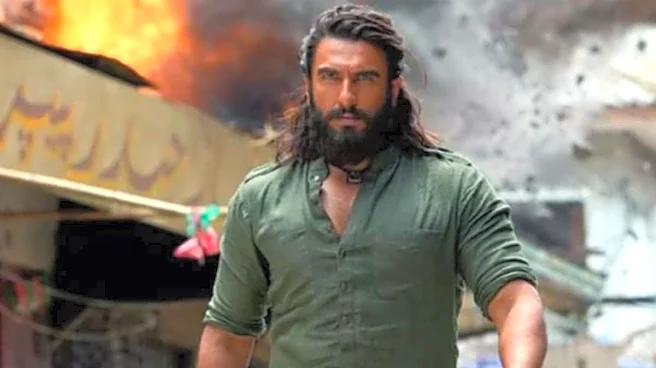
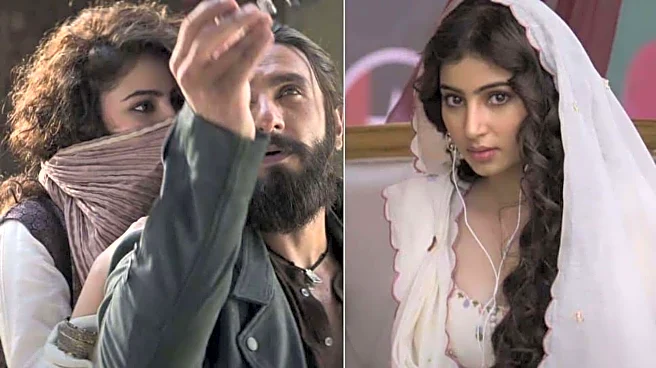
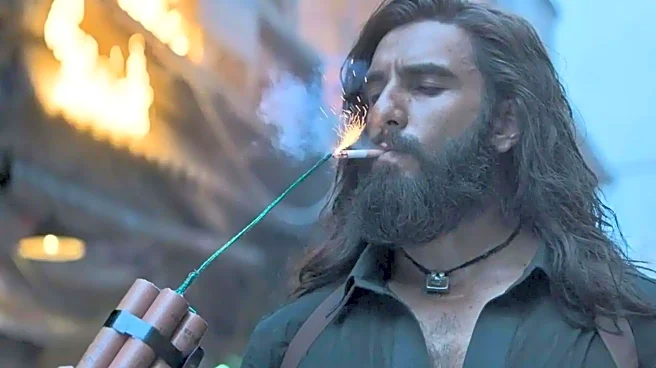
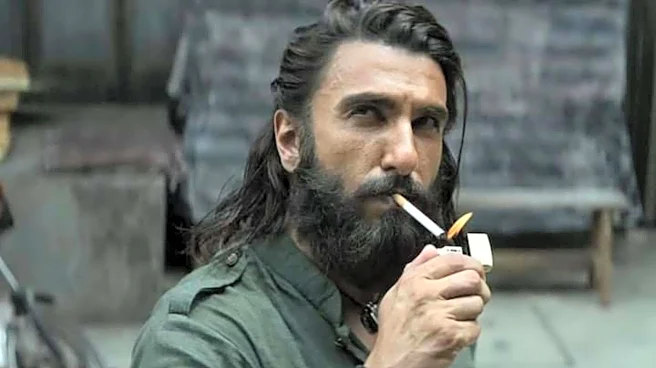
But I can’t resist speaking about the actors. We have been grooving on the Flipperachi rap and gone crazy over every expression and move of Akshaye Khanna, praising him with tones of adjectives, but for me, the winner is Ranveer Singh, who has given his career-best performance after Padmaavat. His silence is also a brilliant performance. The way he has given space to Akshaye Khanna, despite being a current Superstar, is commendable. It has proved his commitment towards the role and his depth as an actor.
Words cannot suffice for the brilliance of his performance. I am in no way downplaying the stellar performance of Akshaye. His dialogue delivery, screen presence, and character grasp of an antagonist leave one mesmerised. The greatness of his craftsmanship can be gauged from the fact that he might go down in history as the most loved antagonist in Hindi cinema history. The surprise package was Rakesh Bedi. We have grown up laughing on his comic timing and unique mannerism of dialogue delivery, but here he was in a completely new avatar, delivering his best ever performance, scary yet witty, leery yet lovable. The performances of Arjun Rampal as Major Iqbal, R Madhavan as Ajay Sanyal, and Gaurav Gera leave the audience in awe of their depth as actors. The makeover of these three is phenomenal. Also, impactful performances by Sara Arjun, Manav Gohil, Naveen Kaushik, and Saumya Tandon deserve a mention. Sanjay Dutt brings in the ruthlessness of the ‘Jinn’ he is portraying. His presence on screen is unmatched.
Apart from the actors, one of the most pivotal aspects of Dhurandhar that sets it apart from other cinemas is its eye for detail. The filmmakers have done extensive research in knitting together all possible details. The involvement of Aditya Raj Kaul, as research consultant, says it all. The sets created to mimic Karachi are a prime example of this. The creation of Lyari, along with references to ‘Bihar Colony’, referring to historical migration from Bihar, clearly depicts the depth of research in the filmmaking process. Last but not the least, if direction is the soul of the cinema and performance its body, the music is the heart! Take a bow, Shashwat Sachdev, for your musical brilliance and choice of songs to bring the different sequences & periods alive. Each song just lands brilliantly and carries the cinema forward. Be it the introduction of characters or pivotal action sequences, the music adds to the overall flavour of the cinema.
For Dhurandhar, the filmmakers have tried to put across a cinema that stays with the audience long after it finishes. There are subtle undertones that one also realises on rewatching it. Aditya Dhar has put across a cinema that is likely to change the filmmaking of Bharatiya cinema forever. The cinema-cum-documentary style of cinema, interweaving real-life incidences into filmmaking, is a very novel approach. Also, making chapters as a part of the cinema is an alien concept to the Bharatiya cinema, which is seldom used. But ‘Dhurandhar’ excels in presenting the cinema through chapters with meaning. The cinema, divided into eight chapters, has a direct correlation between the name of the chapter and the main theme it covers. This correlation reaches a pinnacle in the final chapter named ‘Et Tu Brute’, a quote from Julius Caesar, when Brutus, one of Caesar’s most trusted persons, betrays him and stabs him to death as a part of the larger conspiracy. The same betrayal and deceit are shown in the last chapter, named ‘Et Tu Brute’, when Ranveer Singh, even while being a close confidant of Akshaye Khanna, kills him. The ghost of Rehman Dakait (Akshaye Khanna) staring at Hamza (Ranveer Singh) is also symbolic of the ghost of Caesar seen by Brutus post his betrayal. The placement of the tune and shloka of ‘Om asato ma sadgamaya’ in this very scene is one of the best song and shloka placements in Hindi cinema.
Furthermore, the characters in the cinema are also very well researched. This is to the extent that even David Headley is shown with heterochromia iridis, which is his real-life condition as well. The cinema is also a perfect example of thread closure. All different subplots reach a justifiable end. This thread closure starts with the death of a goon from the gang of Babu Dakait, trying to sexually assault Hamza while eating an apple, ending with his death by Hamza with an apple wrapped around his mouth. Similarly, the brutal death of Rehman Dakait through betrayal, while he himself is seen betraying his own Baloch community, is also a justifiable end. The cinema also digs deep into exploring the terrorist psyche and the real-life incidents. One of the most haunting scenes using the red screen was the actual conversation between terrorist handlers and terrorists of the 26/11 attacks. This brought to life the actual psyche of terrorists. The scene just after the red screen scene, where Major Iqbal (Arjun Rampal) leads the sloganeering while seeing the success of the 26/11 attacks, makes one realise the true intention and design of such an organised crime. Humanity is sacrificed at the altar of religious fanaticism and the enemy country’s goals. This is one of the biggest impacts of the cinema, bringing to light the true nature of Pakistani intelligence agencies and the deep state.
The uncomfortable narratives explored by the cinema also need to be called out. The first part of Dhurandhar dives deep into the non-retaliatory and conflict-avoiding nature of the Bharatiya state, even when being constantly challenged by Pakistan’s ISI and terrorist organisations. Even when we faced grave terrorist attacks on the nation, like the Parliament attack, the Kandahar Hijack, or even the 26/11 attack, Bharat chose not to retaliate in proportion to the gravity of the attack. This is explicitly showcased in the cinema. What is also showcased is the efforts of our intelligence agencies during the times when Bharat didn’t retaliate against many terrorist attacks. It does send a sense of belief amongst the public that our intelligence agencies were continuously strategising during the testing times from 1999-2008. The fruits of such a strategy are bearing fruit currently. The points of making friends with the Middle East and isolating Pakistan financially are a true testament to it.
Moreover, the theme of some ministers and civil servants colluding with the enemy to harm the nation while seeking benefit touches upon the uncomfortable truth of the Bharatiya political and bureaucratic spectrum, where, for a few, service to self is above service to the nation. The fake currency saga touched upon in the cinema tries to highlight this uncomfortable truth. Also, the intelligence agencies being unable to take action against criminals spreading fake currency due to political patronage and fear of violence also exhibits the living reality of Bharat, where national interest is sacrificed for political gains. Moreover, the cinema explicitly shows the hijacking of IC 814 and the trauma caused to the passenger rather than glorifying and humanising the terrorists like other depictions in some OTT series. The cinema shows the correlation between the hijacking of IC 814 and the Parliament attack through a terrorist who was part of both acts. The cinema also traverses some uncomfortable truths around rape and molestation of men in Pakistan.
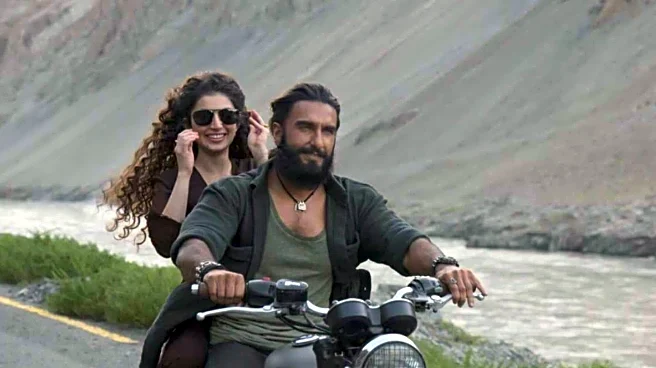
Furthermore, it is also highlighted how ISI is poisoning the children of the Baloch people while Baloch gang leaders are not being true to their brethren, focusing on profits. Apart from all this, the cinema excels in depicting strong women characters who are not afraid to voice their opinions even against warlords. Strong women depicted as wives who stand beside their husbands in tough times and are not afraid to slap their partners or be intimidated by them. The scenes between Akshaye Khanna and Saumya Tandon or Ranveer Singh and Sara Arjun show in full glory the strength of powerful women.
All in all, ‘Dhurandhar’ is a fabulous spy thriller presented with a refreshing twist of reality. The opening of the cinema with Bhagwat Gita shloka clearly indicates where the cinema is headed. The first part is largely about the establishment of a spy in the Pakistani underworld. The next part is likely to be a revenge saga exploring the sacrifices of unknown gunmen operating in Pakistan. It is expected to be more exciting and more focused on mission accomplishment. Till the next instalment is released, the dialogues of this version are likely to resonate with one and all. Dialogues such as “Ghayal hoon isliye ghatak hoon”, “Mooh todne ke liye mutthi band karna zaroori hai”, “Rehman Dakait ki di hui maut, badi kasainuma hoti hai” are hard-hitting and stay with the audience long after the cinema finishes. Such dialogues create a ground for multiple viewing in theatres. Can’t wait for the next instalment of Dhurandhar. Go watch the first part in a theatre near you, if you haven’t till now. Even if you have, the cinema demands a rewatch.
The writer is columnist, cinephile, advisor, Khajuraho Fest and Surat Lit Fest. Views expressed in the above piece are personal and solely those of the author. They do not necessarily reflect News18’s views.

/images/ppid_a911dc6a-image-177073406474645209.webp)

/images/ppid_59c68470-image-177061752983951184.webp)

/images/ppid_59c68470-image-177055504034887098.webp)