


A year after the dastardly terror attack, a lot has changed in Pahalgam. For starters, tourist footfall is not the same as pre-April 2025 levels. The security approach has also undergone an overhaul. So what are the lessons learned?
Security audits before opening “grammable” tourist destinations
Survivor after survivor at Baisaran recounted that they felt abandoned and helpless, since there were no security forces or police presence in Baisaran. The attack was unprecedented. Never before had Kashmir seen such a large-scale attack on tourists. Perhaps one of the reasons why, in the wave of “normalcy”, high-altitude tourism paradises like Sinthan Top, Doodhpathri, and Boota Pathri were all thrown open to adventure enthusiasts, solo travellers, and tourists looking
for the perfect “Insta shot”.
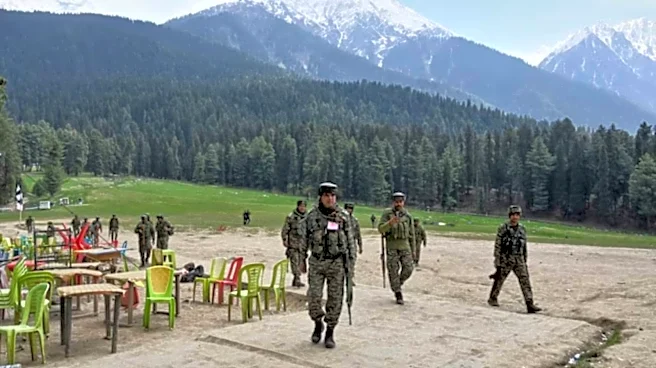
A year since the terror attack, Baisaran is closed to tourists. Many other spots closed in the aftermath of the Baisaran attack have been reopened, but lessons have been learned.
In Pahalgam itself, tourist hubs like Chandanwari remain closed. Movement is restricted in Gulmarg, and spots like Doodhpathri are out of bounds.
UT Chief Minister Omar Abdullah is pushing for the tourism lifelines of the valley to be restored. But the security grid, it seems, has learnt its lesson — full security audits and no rushing into opening up.
Area domination in high-altitude zones
Area domination over decades in Kashmir was focused around highways and urban centres. Mobile bunkers, Army and paramilitary patrols, and outposts inside the old city were the norm. Post the Pulwama attack, stopping traffic while military and paramilitary convoys moved was added to the SOP. But the drill remained focused on motorable roads.
As terrorists changed strategy, security forces too have adapted. More than 40 temporary operating bases have been set up by CRPF forces to dominate the upper ridges of the Pir Panjal. Started in July 2025, the snow-bound winter months too did not see any halt in patrolling of these high altitudes. This is significant, as natural caves in Poonch–Rajouri or abandoned dhoks (temporary shelters used by Gujjar-Bakarwals) in Anantnag and Tral were being used by Lashkar terrorists to hide while they waited for instructions from Pakistan to strike.
Tech-led security shift on the ground
Cross-checking the antecedents of locals, issuing ID cards, and police verification of pony operators, taxi operators, and hotel owners was always the norm. But post the Baisaran attack, security forces have started relying more on technology. QR code-based identification is being issued to service providers in tourist areas.
The Baisaran investigation by the NIA has revealed the role of two locals. Parvaiz Ahmad and Bashir Ahmad had not only harboured the three terrorists in their home but, as per reports, also spotted them near the fence of the Baisaran park. However, they chose to bring back their ponies and tourists who had travelled with them away from the spot, rather than raise an alarm.
The QR code and facial recognition technology currently used by the police have raised privacy concerns. But for now, the scales seem heavily tilted in favour of giving tourists a chance to scan the QR code to check if there are any pending police cases against their pony-wallah or taxi driver. For now, even the locals — whose livelihoods are at stake — are supporting a security-first approach.
A revelation for the security grid is also the use of Chinese technology by terror groups. A Chinese-made phone was recovered from the spot by investigators, perhaps used by terrorists to navigate the forest trek and inform their handlers. Recently, focus has also been on Chinese-origin CCTV systems which reportedly transmitted images of sensitive installations to Pakistan. No direct connection of these devices has been found to Operation Sindoor yet. But Chinese-origin tech is an imminent threat to India’s security grid.
The biggest takeaway, however, is intelligence gathering. Even before Baisaran, red flags about human intelligence gaps were being raised in internal deliberations. Post the attack, the way the grid combined human intelligence with technology like surveillance drones to carry out Operation Mahadev — where all three Baisaran terrorists were gunned down in the forests of Dachigam — showed a learning curve.
Operation Sindoor damaged Lashkar and Jaish launch pads. Tensions with Afghanistan and the Iran situation diverted Pakistan’s attention towards its western border. But infiltration remains the real elephant in the room for India’s security establishment.
Two major challenges to avoid another Baisaran would be finding answers to infiltration and to the domestic support that foreign terrorists continue to receive after crossing over.

/images/ppid_a911dc6a-image-177687653180485679.webp)

/images/ppid_a911dc6a-image-177687642974065468.webp)