
/images/ppid_a911dc6a-image-177507403104539426.webp)
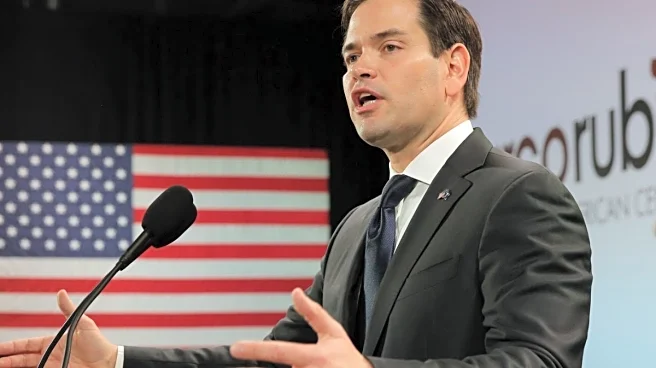
West Asia War: US Secretary of State Marco Rubio has said that the Strait of Hormuz will “reopen one way or another” in the wake of the eventual end of the US-Israeli war with Iran.
In an interview with Al Jazeera, Rubio asserted that the key global shipping route would either be reopened through Iran’s compliance with international law or through coordinated action by a coalition of nations, including the United States. He also warned of “real consequences” if Tehran continues to block the vital commercial waterway after the conflict.
“The Strait of Hormuz will be open when this operation is over … one way or another. It will be open because Iran agrees to abide by international law and not block the commercial waterway, or a coalition of nations
around the world and the region, with the participation of the United States, will make sure that it’s open,” he told the news outlet.
His remarks came as tensions remain high in the region, with the closure of the key waterway disrupting global oil markets and raising concerns about energy supplies.
Iran War Objectives Are Clear
The State Secretary further reiterated that Washington’s objectives in Iran are “clear,” including degrading its military capabilities and curbing its missile and drone programmes. He expressed confidence that the conflict could conclude within weeks, claiming significant damage had already been inflicted on Iran’s defence infrastructure.
“We have very clear objectives that we’re trying to achieve here. Those objectives are the destruction of their air force, which has been achieved; the destruction of their navy, which has largely been achieved; [and] a significant reduction in the number of missile launchers that they have, which we’re well on our way to achieving,” he said.
Meanwhile, US President Donald Trump has continued to mix diplomatic signals with strong warnings. While stating that he prefers a negotiated outcome, Trump has also threatened severe action if a deal is not reached, including potential strikes on key Iranian infrastructure.
Despite US claims that indirect talks are ongoing through intermediaries, Iranian officials have repeatedly denied any negotiations. Tehran has also rejected Washington’s demands as unrealistic, while insisting on guarantees and recognition of its rights as part of any agreement.
Iran’s New Supreme Leader Status Is Unclear
Rubio also said that the status of Iran’s new Supreme Leader, Ayatollah Mojtaba Khamenei, remains unclear, uncertain who is in control.
“We don’t even know he’s in power. I know they say he’s in power. No one has seen him. No one has heard from him. It’s very opaque right now. It’s not quite clear how decisions are being made inside of Iran,” Rubio said
Rubio criticised Tehran’s leadership for prioritising support to armed groups over domestic development. He said resources spent on groups such as Hezbollah, Hamas and Shia militias in Iraq could have instead been used to address issues like water shortages and economic challenges within Iran.
He added that while the Iranian people are capable and enterprising, it is the policies of the regime that have led to the current situation.
Iran Has Weakened, Says Rubio
Rubio also said that Iran’s relentless attacks on its neighbhours has “weakened” the Middle Eastern country.
“If you think about what they struck in the region – what has Iran gone after? It’s been energy infrastructure against countries that were not waging a war against them, but yet they went after these countries nonetheless,” he said.
“This is why they built these missiles and drones in the first place. But they’ve also attacked embassies, diplomatic facilities, which is unheard of. They’ve attacked airports, which is unheard of. This is what they’ve done, and this is a weakened Iran.”
West Asia War
The Iran–US–Israel war, launched on February 28 under Operation Epic Fury, has now entered its second month with no signs of de-escalation. The conflict, which saw the killing of Iran’s Supreme Leader Ayatollah Ali Khamenei in the initial strikes, continues to intensify across the region.
Efforts to end the war have so far failed to make progress. US President Donald Trump proposed a 15-point peace plan, but Iran rejected it and instead put forward five conditions, including war reparations, the lifting of sanctions, and recognition of its sovereignty over the Strait of Hormuz. Negotiations remain stalled.


/images/ppid_59c68470-image-177508752983655143.webp)

/images/ppid_59c68470-image-177508752486814628.webp)



/images/ppid_59c68470-image-177508503864452361.webp)
/images/ppid_59c68470-image-177508252889714840.webp)
/images/ppid_a911dc6a-image-177508108574373294.webp)

/images/ppid_a911dc6a-image-177508103607332581.webp)