


Reading is often called one of the most powerful habits a person can develop. It improves focus, builds imagination, reduces stress and strengthens the brain. In many countries, reading is a common way to relax after work or spend a quiet weekend. Recently, a report mentioned that India, despite of having rise in literacy rates, does not have a strong habit of reading for pleasure.
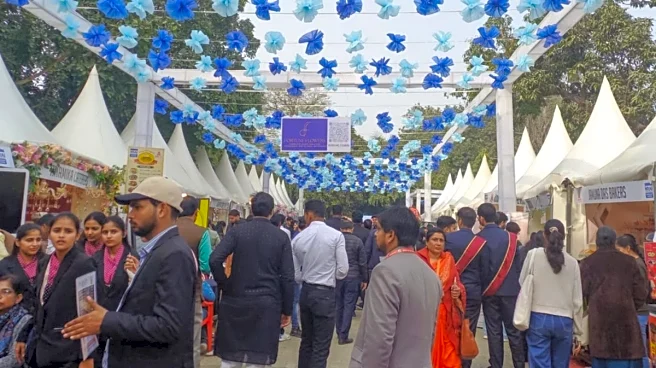
A report published in The Guardian pointed out a curious contradiction. India does not rely heavily on book reading as a leisure activity yet more than 100 literature festivals take place across the country every year even in small and unexpected towns.
Author and columnist Parsa Venkateshwar Rao Jr called this a puzzle worth deeper study. “Maybe it’s because of the
strong oral story-telling tradition? The epics are well known and passed down the generations and taken very seriously. I’m baffled by why so few Indians buy books and read,” he said as quoted by the outlet.
The report also mentioned an example involving Indian cricket legend Bishen Singh Bedi. When Bedi decided to publish his autobiography in 2021, Pramod Kapoor, the founder of Roli Books, planned to print 3,000 copies.
Bedi was taken aback by the number. “Only 3,000?” he asked and pointed out that he once played in stadiums filled with 50,000 to 60,000 spectators. Kapoor later explained that admiration “were unlikely to translate into book buyers.”
Kapoor noted that even today, an average English-language book in India sells only 3,000 to 4,000 copies. Crossing 10,000 copies is considered a bestseller.
Why Literature Festivals Still Draw Massive Crowds
“The answer is that festivals in India are only partly about books. They are a “spectacle” offering music, dance, handicraft sales and food. Even the T rex of them all, the Jaipur literature festival (which attracted 400,000 visitors last month according to its marketing team), would almost certainly attract fewer people without these extras,” the report mentioned.
The report further noted that while literacy rates in India have improved, the habit of reading for pleasure has not kept pace. For many families, a typical weekend outing involves visiting a mall or eating out and not going to books clubs.
Regional limitation is another important factor that has shaped India’s reading habits. While books in English often dominate conversations around publishing, they form only a small part of India’s actual literary world, the report noted.
For most Indians, English is used for exams, offices or official work not for personal expression or leisure. People think and feel in the languages they grow up with and that is where reading often happens.
Since English is seen as more prestigious, books written only in regional languages usually remain limited to their own states unless they are translated.
What Are The Historical Factors Affecting India’s Leisure Reading Habits?
During the colonial era, illiteracy in India exceeded 90 per cent. This prevented the growth of a broad reading public especially in middle-class. This is because printing technology at the time was limited and regional language publishing remained fragmented. Many publishing efforts were underfunded or censored.
Is Leisure Reading A Luxury In India?
For many Indians, leisure reading is seen as a luxury. This is because of low incomes and long working hours which means that free time is limited and usually spent resting.
When it comes to books, many people consider them as a non-essential expense. Even if some people are drawn to reading, they limit themselves due to high prices. They then look for alternative options like hand books, shared copies or pirated versions especially in rural and semi-urban areas.
Do Digital Mediums Affect India’s Reading Culture?
Nowadays, daily life is dominated by smartphones which give access to unlimited digital platforms such as YouTube, Netflix, Jio Hotstar and more that offer entertainment and constant stimulation. This leaves little room for focused reading.
Constant consumption of digital content has replaced older family habits such as reading newspapers or religious texts together.
What Are The Challenges That Arise From Limited Leisure Reading?
The approach towards reading is also another factor which leads to India’s limited exposure. Many Indian households see reading only as an academic activity and this is why children associate reading with exams and not enjoyment. Storybooks are something that can only be seen in urban settings or well-off families. Poor library infrastructure and wide urban-rural gaps have created “book deserts” where access to books is limited.
How Do Academic Priorities And Access Issues Affect Reading Habits?
More than 90 per cent of book sales in India are textbooks or exam preparation material. Fiction and non-fiction meant for enjoyment receive very little attention.
Public libraries are scarce especially in rural areas which limit free access to books and reduce exposure to leisure reading.
How Do Average Indian Households Approach Leisure Reading?
In most homes, “reading” means studying textbooks or preparing for exams. Reading for fun is not encouraged or prioritised. Children rarely grow up seeing adults read for pleasure. Free time is usually spent on screens rather than books.
What Is The Impact Of Declining Newspaper Readership?
Print newspaper circulation has dropped by 20–30 per cent after the coronavirus pandemic. Free news apps, short videos and social media updates have replaced daily newspaper reading.
Urban families just scan for headlines online while rural access to quality reading material remains limited.
How Do Gendered Work Burdens Affect Reading Habits?
Many men work 10–12 hours a day especially in informal sectors. This leaves them too exhausted to read.
Women manage household chores, childcare and paid work with little personal time. This constant fatigue pushes hobbies like reading out of daily life.
How Does Smartphone Addiction Contribute To Declining Reading Habits?
Smartphones compete directly with books for leisure time. Short videos and social media offer instant dopamine which makes attention span small and deep reading feels like an extra effort.
Reading on smartphones can reduce how well people understand what they read compared to reading on paper. Constant notifications and screen distractions keep the brain overly alert.
What Are Practical Steps To Promote Leisure Reading In Indian Homes?
Families can create small reading corners by using affordable or second-hand books. Parents reading regularly (even newspapers or magazines) can influence children through example. They can introduce them to comics and slowly build upon it. Using libraries, free e-books and setting phone-free reading time at night can slowly rebuild the habit of reading for pleasure.
/images/ppid_a911dc6a-image-177092774715746114.webp)

/images/ppid_a911dc6a-image-177092767520012684.webp)
/images/ppid_a911dc6a-image-177092763347449403.webp)
/images/ppid_a911dc6a-image-177092652580356823.webp)





/images/ppid_a911dc6a-image-177092306157991736.webp)