

/images/ppid_59c68470-image-176962504273933957.webp)
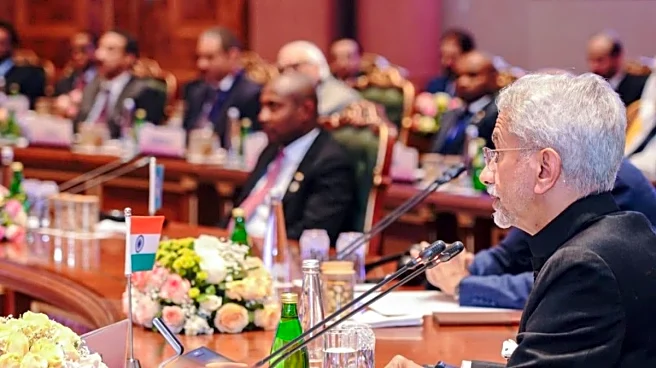
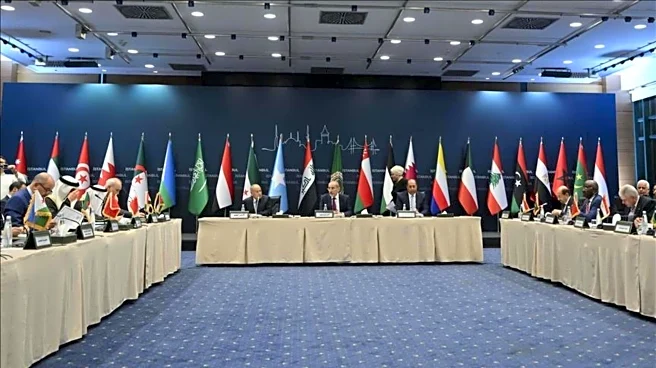
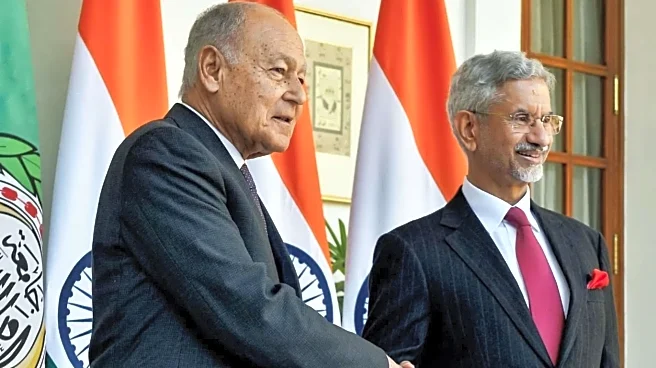
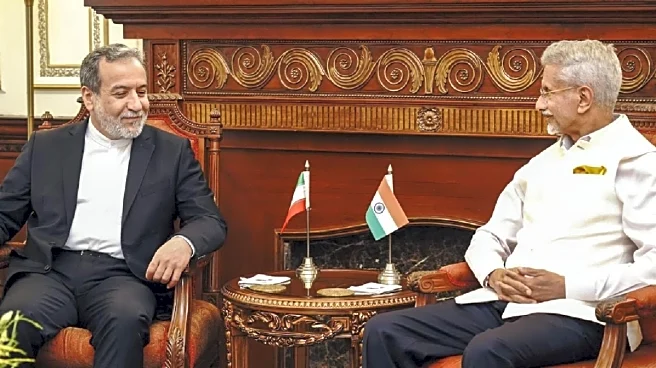
The second India–Arab Foreign Ministers’ Meeting was held in New Delhi on Saturday with the participation of External Affairs Minister S Jaishankar, the Foreign Ministers of Arab states, and the Secretary-General of the League of Arab States.
The ministerial meeting was preceded by a meeting of India–Arab Senior Officials on 30 January 2026.
The two sides reaffirmed their commitment to safeguard international peace and security. They discussed a wide range of regional and global issues of mutual concern including the question of Palestine, support for multilateralism and respect for the sovereignty of states, counterterrorism efforts, and reforms of United Nations Security Council.
The two sides emphasised the importance of international relations
being founded on respect for the Charter of the United Nations, particularly the principles of sovereignty, territorial integrity, and non-interference in internal affairs.
Both sides reaffirmed their commitment to a just, comprehensive, and lasting peace in the Middle East, in accordance with international law, relevant UN resolutions, and the Arab Peace Initiative. They called for the establishment of a sovereign, independent, and viable State of Palestine along the 1967 borders, coexisting peacefully with Israel.
Both parties also reiterated their support for the inalienable rights of the Palestinian people.
The two sides reaffirmed their steadfast support for the sovereignty, unity, and territorial integrity of the Republic of the Sudan, rejected any interference in its internal affairs. They also reaffirmed their support for efforts to restore peace and stability in Sudan, in a manner that contributes to ending the current crisis.
The two sides further expressed their condemnation of the grave violations committed against civilians, and called for the achievement of a humanitarian truce to ensure unimpeded delivery of humanitarian assistance throughout Sudan.
The two sides expressed their rejection of the announcement of any steps or entities that would jeopardize the safety, unity, and territorial integrity of the Sudan.
The two sides reviewed their mutual support in combating terrorism in all its forms, expressed appreciation for the initiatives undertaken by a number of Arab States in the areas of counter terrorism and transnational crime, and reaffirmed the principle of zero tolerance toward terrorism, which continues to constitute one of the most serious threats to international peace and security.
They also condemned cross-border terrorism and called on all States to refrain from using terrorism against other States, urging all States to work collectively to combat terrorism, dismantle terrorist infrastructures and terror financing networks wherever they exist, and bring the perpetrators of terrorist acts to justice without delay.
The two sides agreed to strengthen their joint efforts to counter terrorism in all its forms and manifestations. They expressed deep concern over the misuse by terrorist groups of new and advanced technologies for propaganda and disinformation, recruitment, fundraising and the transfer of funds, as well as for the planning and execution of terrorist activities.
The two sides further noted, with growing concern, the increasing use of unmanned aerial systems (drones) in trafficking of drugs, money, weapons, and explosives, as well as in the conduct of sophisticated attacks, posing a significant challenge to counter terrorism efforts in the region.
In this context, the Foreign Ministers of the Arab States strongly condemned the heinous terrorist attack in Pahalgam targeting innocent Indian tourists, and reaffirmed their full and steadfast support for the Republic of India and Arab States in confronting terrorism in all its forms and manifestations.
They also noted Iraq’s prominent and pivotal role in combating terrorism perpetrated by “Da’esh”, as well as by individuals, groups, institutions, and entities associated with it, in Iraq and the region.
Both sides also noted the efforts undertaken by the Syrian Government in the fields of counter-terrorism, including its joining the International Coalition against Daesh, as well as the measures taken to combat the production and trafficking of narcotics, and its zero-tolerance approach towards cross-border terrorism, thereby contributing to regional security and stability.

/images/ppid_59c68470-image-176987254251735938.webp)




/images/ppid_a911dc6a-image-176978107260957472.webp)