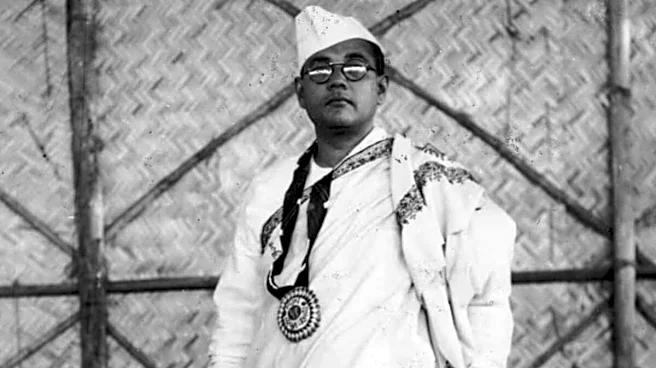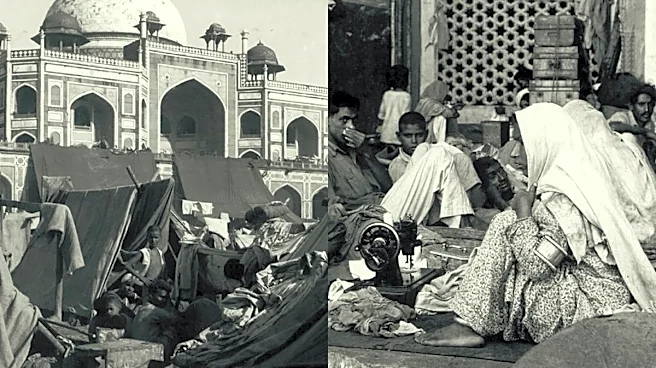


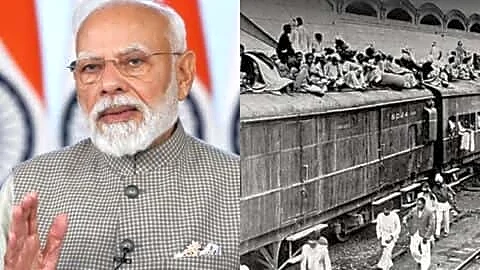
As India marks the 80th year of its Independence, what does the struggle for Azaadi mean to India’s youngest citizens? For many Gen-Z, 1947 can feel like distant history, a time that is so far removed from their lived experience that it can only ever be imagined as a sepia-tinted photo montage of mythical struggles by great souls. A relic in a museum of nostalgia, never experienced and only rarely ever viewed.
But as we know, “a people without knowledge of their past history, origin, and culture is like a tree without roots.” What follows, of course, is a rootless society without resilience. So, what lessons from the independence movement must Gen-Z draw to anchor Bharat in the shifting sands of time?
First, nationhood is more than a political
border; it is rooted in India’s civilisational and cultural continuity: though the freedom movement steered away from one single conception of nationhood, the freedom struggle drew heavily on India’s civilisational inheritance, including ideas of dharma, swaraj, cultural unity, and civilisational continuity. Gandhi, Aurobindo, Vivekananda, Savarkar, Tilak, and others articulated different versions of this. In a time when a deracinated liberalism is rebelling against the idea of India as a civilisational state, Gen-Z could do well to re-acquaint itself with the thoughts of the intellectual architects of Indian nationalism.
Second, don’t take national sovereignty for granted: protect the freedom that was won. The freedom struggle was fundamentally about ending foreign political domination and establishing India’s sovereignty. The lesson for Gen-Z is that sovereignty cannot be treated as something permanently guaranteed. Borders that we know today can easily change. India has been wracked by separatism, exclusionary sub-nationalisms, divisive identity politics. Many malcontents have raged against the nation-state, sometimes manufacturing ethnic, religious, linguistic faultlines to press their case and claims for secession. Gen-Z must resist the temptation of championing parochialism disguised as some higher cause. Doing so undermines the idea of Bharat, which imagines itself as a homeland for diversity. India has given the world a unique formulation: the world is one family. This is a literal translation of the Sanskritic phrase “Vasudhaiva Kutumbakam”, a slogan that can be traced back to India’s dharmic civilisational roots.
Third, dissent is a democratic right, but violence is not.
On the back of confrontational street politics in response to the CAA, farm laws, and the NEET paper leaks, Gen-Z needs to remember freedom movement legitimised dissent against unjust authority. But with an important caveat: Whatever the provocation, never resort to anarchic violence. That was the leitmotif of Mahatma Gandhi’s politics. It was the reason that India’s freedom movement acquired unchallengeable moral authority. And it was this commitment to Gandhian non-violence that shaped our constitutional view, which we must never forget, doesn’t give an unlimited right to civil disobedience. The Constitution protects speech and peaceful assembly within a framework subject to reasonable restrictions.