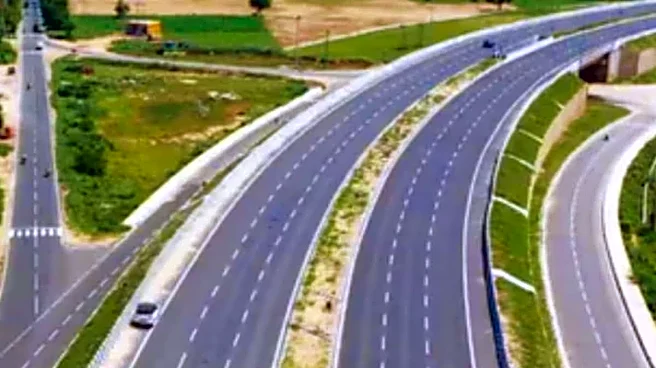




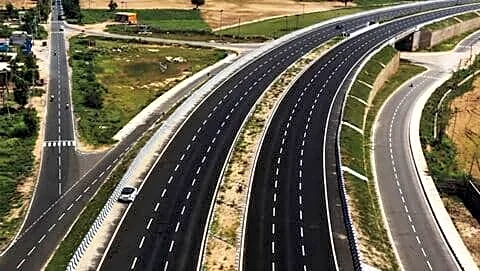
Road travel between Delhi and Chandigarh could soon become significantly faster as work on a major expressway corridor moves closer to completion. The Delhi-Amritsar-Katra Expressway, along with its connected highway network, is expected to reduce travel time between the two cities from the current 5-6 hours to nearly two hours once fully operational.
According to reports, most sections of the corridor are likely to open in phases between late 2026 and March 2027.
One Of India’s Biggest Expressway Projects
The Delhi-Amritsar-Katra Expressway is among the country’s largest highway infrastructure projects and is being developed at an estimated cost of around Rs 38,905 crore.
Designed for high-speed travel, the corridor will support vehicle speeds of up to 120 kmph, allowing faster and smoother
connectivity across multiple northern states, as reported by NDTV.
Revised Route Plan For Delhi-Chandigarh Travel
Under the revised connectivity plan, travellers heading from Delhi to Chandigarh will first use the Dwarka Expressway before connecting to the Urban Extension Road and the Kundli-Manesar-Palwal (KMP) Expressway.
Vehicles will then merge onto the Delhi-Amritsar-Katra Expressway and continue via the Trans-Haryana Expressway toward Ambala and Chandigarh.
Officials believe this integrated expressway network will dramatically reduce travel time while easing congestion on existing national highways.
Delhi – Katra Journey To Become Shorter
Apart from improving connectivity to Chandigarh, the project is expected to transform travel to Punjab and Jammu & Kashmir as well.
Once completed, the Delhi-to-Amritsar journey is expected to take nearly four hours, while travel between Delhi and Katra could reduce from around 14 hours to approximately six hours.
The corridor is expected to improve access to religious destinations, tourist hubs and industrial regions across North India.
Delays Caused By Land And Weather Issues
The project had earlier faced setbacks in several stretches of Punjab due to land acquisition challenges. Construction activity in parts of Jammu & Kashmir was also affected by flooding and adverse weather conditions.
Despite these delays, officials from the National Highways Authority of India (NHAI) have reportedly said that construction work has regained pace in recent months.
The entire corridor is now targeting completion by March 2027, with several important sections already nearing completion.
Expressway Expected To Boost Economy And Tourism
Officials believe the expressway network will significantly improve connectivity across Delhi-NCR, Haryana, Punjab and Jammu & Kashmir.
Faster travel times are expected to benefit tourism, logistics and freight movement, while also supporting industrial growth in areas located along the corridor.
Authorities also expect rapid commercial and real estate development near major interchanges once the expressway becomes fully operational. In addition to reducing travel time, the project is likely to ease pressure on existing highways and improve long-distance road transport efficiency across northern India.
/images/ppid_a911dc6a-image-177932825539782092.webp)



/images/ppid_a911dc6a-image-177915409133845800.webp)