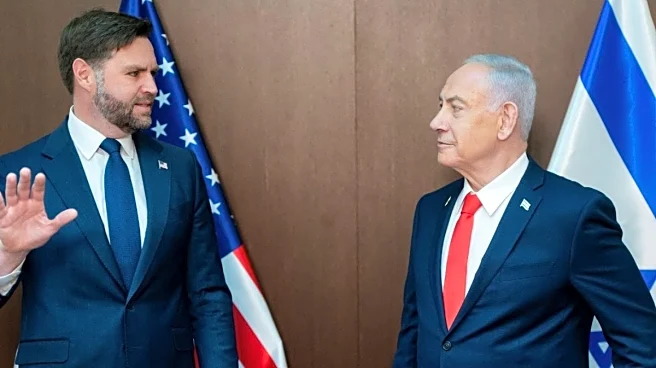



As the Iran war grinds on with no clear endgame, a private phone call between US Vice-President JD Vance and Israeli Prime Minister Benjamin Netanyahu has blown the lid off quiet but consequential differences between the two allies.
Far from routine diplomacy, the exchange reflects growing unease in Washington over how the conflict was initially framed and how realistic the expectations were. It also highlights a deeper question now shaping the war effort: whether early assumptions about Iran’s internal fragility and the prospects of regime change were misjudged.
What Happened During The Call?
According to sources cited by Axios, Vance directly challenged Netanyahu’s pre-war projections, particularly around the likelihood of internal upheaval in Iran.
“Before the war, Bibi really
sold it to the president as being easy, as regime change being a lot likelier than it was,” a US source told Axios. “And the VP was clear-eyed about some of those statements.”
ALSO READ | ‘Trump Getting Bored With Iran’: White House Divided On President’s Claims Of Victory In Iran
Vance is also said to have pointed out that several of Netanyahu’s predictions had proved “far too optimistic”, especially the expectation that the conflict could trigger a popular uprising against the Iranian regime.
The friction did not remain confined to the conversation.
A day after the call, a report in an Israeli right-wing newspaper claimed that Vance had “yelled” at Netanyahu over settler violence in the West Bank. The report was quickly disputed by multiple US and Israeli sources.
Behind the scenes, White House officials smelled a plot. According to Axios, “White House officials started suspecting that some in the Israeli government were trying to smear Vance” following the difficult call.
While an Israeli official denied any role by Netanyahu’s office in planting the story, the episode added to tensions at a delicate moment in the war.
Allies At Odds?
The exchange points to a subtle but significant divergence in outlook.
Israel had projected confidence early in the conflict that pressure on Iran could destabilise its leadership. The US, however, now appears more cautious.
ALSO READ | ‘Strait Of Trump’? Here’s Why Even The US President Can’t Rename The Hormuz Artery
As another source put it, Vance’s stance reflected a more “clear-eyed” assessment of the war’s trajectory—one that does not assume quick or inevitable regime change in Tehran.
The divergence is not new. According to yet another Axios report, US President Donald Trump had rejected Netanyahu’s proposal to publicly call on Iranians to rise up against their government, warning that such a move could lead to mass civilian deaths.
Trump’s blunt response, as cited in multiple reports, was that encouraging protests would only get people “mowed down”. “Why the hell should we tell people to take to the streets when they’ll just get mowed down,” Trump said to Netanyahu during their call, according to a US official briefed on the conversation.
Does This Signal Trouble?
It’s the timing of the disagreement that is critical.
ALSO READ | What Are Tomahawks? Why US Firing Over 850 Missiles At Iran Is Alarming The Pentagon
The Iran war has already expanded into a broader regional conflict involving the United States and Israel, raising fears of prolonged instability. At the same time, Washington is pursuing quiet diplomatic channels with Tehran to contain escalation.
Differences over core assumptions, especially something as consequential as regime change, could shape both military strategy and diplomatic calculations in the weeks ahead.
While it’s not unheard of that allies can disagree behind closed doors, the Vance-Netanyahu call reveals an ongoing recalibration of expectations, strategy, and the risks of a war that is proving more complex than initially anticipated.




/images/ppid_a911dc6a-image-177523856572888373.webp)

/images/ppid_a911dc6a-image-177523853259820369.webp)




/images/ppid_59c68470-image-17752375927802058.webp)
