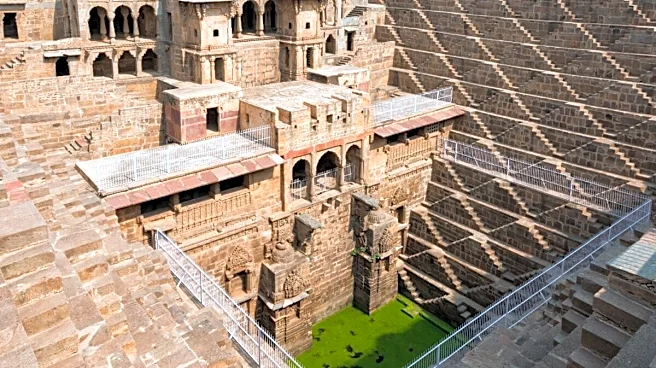






Imagine a water system so effective that some parts of it still work nearly 1,000 years later. That’s the story of India’s ancient stepwells—ingenious underground structures that helped entire communities survive in some of the country’s driest regions long before modern engineering existed.
Built across present-day Gujarat and Rajasthan, these weren’t ordinary wells. They were giant water-harvesting machines.
Every monsoon, rainwater flowed into the stepwells and seeped into the surrounding ground, replenishing underground aquifers. The deep reservoirs then stored that water for months, sometimes even years, providing a lifeline during long dry seasons.
It all lay in their construction. Unlike normal wells, the stepwells extended far underground
with several levels of stone steps. With changing water levels in the year round, people only had to go down to get the water. During droughts, the wells would never dry up.
Moreover, they were naturally temperature regulated. Built underground and with stone walls, the stepwells stayed cool and reduced evaporation and helped protect the valuable water from the harsh summer temperatures.
They turned out to be amazing works of engineering too. The famous stepwells in Gujarat and Rajasthan like the Rani Ki Vav, Chand Baori and Adalaj Stepwell had thousands of decorative stone sculptures on them, making them wonderful pieces of art. However, it is not art but survival that made these stepwells remarkable.
Being used to obtain water, grow crops, accommodate travelers, and serving as gathering spaces for whole villages, these stepwells played a vital role in people’s lives.
Nowadays, as modern cities face problems with water scarcity and low water table levels, stepwells gain a lot of attention once again. Engineers and environmentalists increasingly see them as examples of sustainable design that worked with nature instead of against it.
The idea is surprisingly simple: capture every drop of rain, store it underground and let the earth do the rest.
In an age obsessed with new technology, India’s stepwells offer a striking reminder that some of the smartest solutions were invented hundreds of years ago.
They weren’t just wells. They were medieval water banks—built so cleverly that many still hold water today.




/images/ppid_59c68470-image-178221756243362001.webp)
