
/images/ppid_a911dc6a-image-178229107292417053.webp)
/images/ppid_a911dc6a-image-178229108575743794.webp)
/images/ppid_a911dc6a-image-178229105730935025.webp)


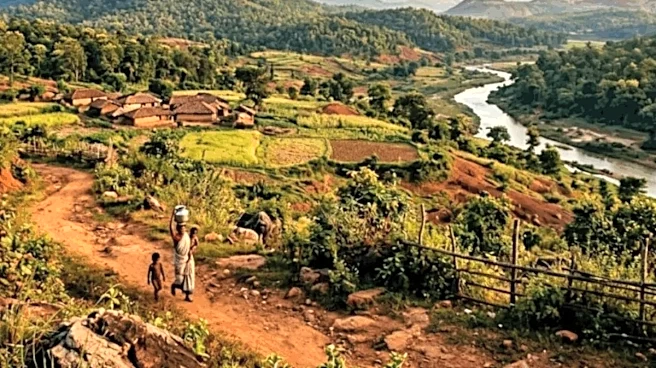
Jharkhand is widely known for its rich mineral reserves and natural resources, but scientists say the State may also hold a far more remarkable distinction. Geological research suggests that part of present-day Singhbhum could be among the earliest landmasses to emerge above the Earth’s oceans, making it one of the most important regions for understanding the planet’s ancient past.
The claim is linked to the Singhbhum Craton, a vast geological formation that researchers consider one of the oldest surviving pieces of continental crust on Earth. The discovery has drawn international scientific attention and placed Jharkhand prominently on the global geological map.
A Window Into Earth’s Earliest History
According to geologists, around 3.2 billion years ago, much of the Earth was covered
by oceans. During this period, intense volcanic activity and processes deep within the planet caused large quantities of magma to accumulate beneath what is now the Singhbhum region.
Over time, the build-up of magma led to the gradual uplift of the area, allowing parts of the region to rise above sea level. Geological studies suggest that this process may have made Singhbhum one of the first known landmasses to emerge from the oceans.
Scientists view the region as a natural laboratory that offers valuable insights into the Earth’s formative years, including the development of continents and oceans.
What Is The Singhbhum Craton?
The Singhbhum Craton extends across East Singhbhum, West Singhbhum and Seraikela-Kharsawan districts of Jharkhand. The region contains rock formations that are billions of years old and preserve evidence of geological events dating back to the early history of the planet.
Among the rocks found in the area are granite, greenstone, quartzite, schist and iron ore-bearing formations. By analysing these ancient rocks, researchers are able to reconstruct the environmental conditions that existed when the Earth was still in its infancy.
Rich In Minerals And Industrial Significance
Apart from its geological importance, Singhbhum is also one of India’s most mineral-rich regions.
The area contains significant deposits of iron ore, copper, nickel, chromite, manganese, uranium and quartz. Several major mining centres, including Noamundi, Gua, Kiriburu and Chiria, are located within the region and rank among the country’s most important iron ore-producing areas.
The abundance of mineral resources has contributed to the rise of Jamshedpur and surrounding areas as major industrial hubs.
Scientists Continue To Study The Region
Researchers from India and abroad continue to examine Singhbhum’s unique geological formations to better understand the evolution of the Earth’s crust and the emergence of the first continents.
Senior journalist and local history expert Vikas Srivastava said Singhbhum represents much more than a centre of mineral wealth.
According to him, the region serves as living evidence of Earth’s ancient past, with rock formations that preserve clues from a time when life on the planet was only beginning to develop. He described the area as an invaluable resource for scientists and researchers seeking to uncover the mysteries of early Earth.
A Natural Heritage Of Global Importance
Today, Singhbhum’s scientific and historical significance is increasingly being recognised beyond India’s borders. Its ancient geological formations continue to attract researchers attempting to piece together the story of how the Earth’s first landmasses formed billions of years ago.
Scientists believe the region’s unique geology could help answer some of the most fundamental questions about the planet’s evolution.
For Jharkhand, Singhbhum stands as a source of pride not only because of its mineral wealth but also because of its place in Earth’s geological history. Researchers say its ancient rocks make it a priceless natural heritage, offering humanity a rare glimpse into a world that existed billions of years before modern civilisation.