Rosolie, who is also an author, is a conservationist who has reportedly spent nearly two decades working in the Amazon.
Author Paul Rosolie has spent two decades working in the Amazon and says the moment was one of the most profound experiences he’s ever had.
“In order for any of this to make sense, I had to show you this footage … This has not been shown ever before. This is a world first,” he told Fridman.
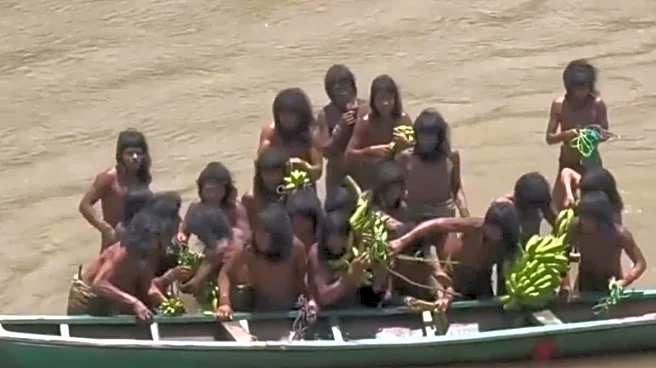
Until now, footage of uncontacted tribes has largely been grainy, typically captured from a distance using outdated camera equipment.
“The only thing you’ve ever seen are these blurry images … from 100 meters away … and we’re sitting there with, you know, 800mm with a 2x teleconverter,” Rosolie continues.
In the clip, members of the tribe emerge onto a beach through a cloud of butterflies, moving with coordinated caution as they scan the strangers and assess every detail to gauge any potential threat.
Rosolie remembers watching their body language closely as they grouped in formation with weapons.
“Look at the way they move. Look at the way they point. Look at him with his bow,” he says, pointing to one man nocking an arrow. He said that initially, the situation felt as though it could escalate into violence at any moment.
“I was looking in every direction, thinking, ‘Which way is the arrow coming from?’” he said.
But then the situation shifted. As the distance closed, members of the tribe began lowering their weapons.
“As they came closer, they started laying them down. See, he’s putting down his bow and arrow. They understood — no more.”
Researchers estimate that nearly 200 uncontacted groups remain worldwide, with most living in the Amazon rainforest across Brazil and Peru.
Because direct contact can be deadly, information about these communities is drawn largely from satellite imagery, aerial monitoring and accounts from neighbouring Indigenous groups.











/images/ppid_59c68470-image-177083253119523769.webp)
