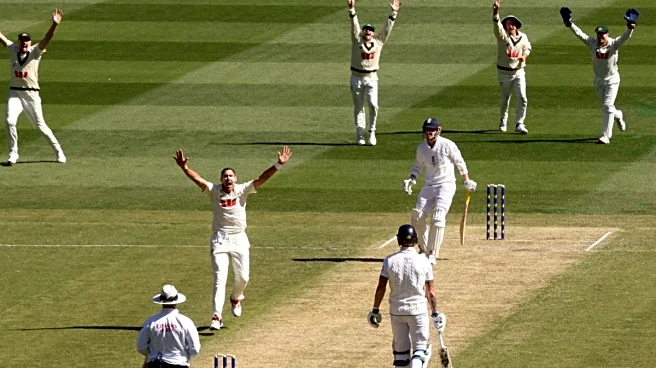



Cricket Australia chief Todd Greenberg on Saturday said that short Tests were detrimental to business as numerous prominent figures in the sport criticized the Melbourne Cricket Ground pitch’s condition. On Friday, twenty wickets fell on the first day of the fourth Test between Australia and England, with the hosts being bowled out for 152 and the visitors for just 110.
Six more wickets fell on the second morning, leaving Australia at 98-6 by lunch, resulting in a total of 26 wickets falling in 98 overs across four sessions. This marked the highest number of wickets to fall on the first day of an Ashes Test since 1909, following the 19 wickets that fell on the opening day of the series in Perth.
The Perth Test concluded in just two days, leading
to significant financial losses for Cricket Australia, and the Melbourne Test was also poised to impact the governing body’s finances adversely.
“I didn’t sleep well last night, to put it that way,” Greenberg commented on SEN radio after more than 94,000 spectators filled the MCG on Friday’s first day.
“It was an incredible day of Test cricket, so for the record number of people present, they certainly had an experience. However, our challenge is to ensure we can sustain those experiences day after day. That’s a challenge for all of us.”
The Melbourne pitch was prepared with 10 millimetres of grass, making it highly favourable for bowlers with significant movement and bounce under overcast skies. Greenberg remarked that the trend towards shorter Test matches was not beneficial for Cricket Australia.
“Simply put, short Tests are bad for business. I can’t be much clearer than that,” he said. “I would prefer to see a better balance between batting and bowling.”
Several former cricket greats have criticized the Melbourne pitch, with former England captain Michael Vaughan calling it “a joke” on Saturday.
“This is selling the game short,” he said, and another former England captain, Alastair Cook, described it as “an unfair contest.”
In Australia, curators generally operate independently when preparing pitches, without intervention from captains or Cricket Australia. Greenberg suggested that a more interventionist approach might be necessary.
“It’s difficult not to get more involved when you see the impact on the sport, especially commercially,” he said. “I’m not suggesting I’ll speak directly to ground staff, but we do need to carefully monitor our expectations over the summer.”