
/images/ppid_59c68470-image-178853514116921927.webp)

/images/ppid_59c68470-image-178851753084165145.webp)
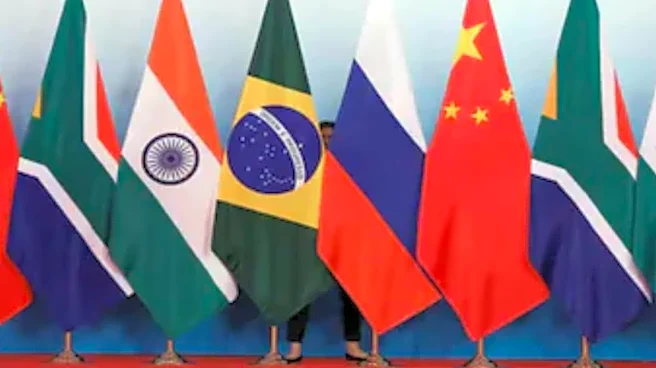
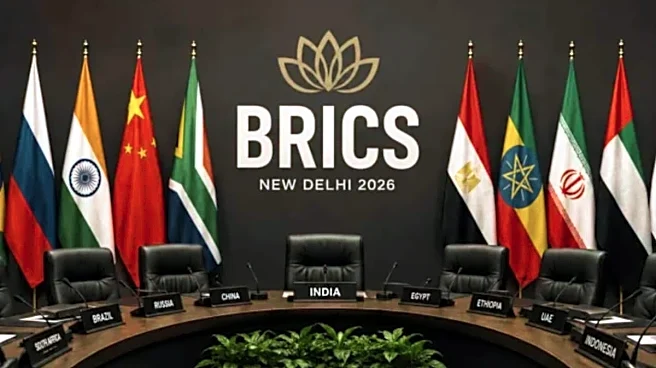
India is set to host the BRICS Summit in New Delhi on September 12-13, putting the grouping’s push for easier cross-border payments and greater use of local currencies firmly on the agenda. For India, the discussion is more than simply about building an alternative to the US dollar. It is about reducing transaction costs, making the rupee more usable in international trade and giving Indian payment infrastructure a larger global footprint.
The issue has gained momentum as BRICS members explore ways to connect their fast-payment systems and central bank digital currencies (CBDCs). RBI Governor Sanjay Malhotra said in August that cross-border payments were an area of interest for BRICS because there was “a lot of scope for reducing cost.” He said several
options, including CBDCs and linkages between fast-payment systems, were still under discussion.
Why BRICS Wants To Change How Countries Pay Each Other?
International payments can be slow and expensive because money often passes through a chain of correspondent banks, with different currencies, regulations and settlement systems involved.
For a business in India, paying a supplier in another country, the transaction can therefore involve currency conversion charges, intermediary bank fees and settlement delays. A payment architecture that directly connects national payment systems could potentially cut some of these costs and make cross-border transactions faster.
This is where India’s experience with the Unified Payments Interface, or UPI, becomes significant.
UPI has demonstrated that payments can be processed almost instantly within a large domestic financial ecosystem. India has already been working to extend UPI’s reach overseas through linkages with payment systems in several countries. The BRICS discussion could take that ambition to a much larger grouping.
But the proposal should not be confused with the creation of a single BRICS currency. India has repeatedly made clear that it is not seeking to replace the dollar as the world’s reserve currency. External Affairs Minister S Jaishankar said in 2025, “I don’t think there’s any policy on our part to replace the dollar.” He also pointed out that there was no unified BRICS position on de-dollarisation, given the very different economic interests of its members.
Is BRICS Trying To Move Away From The Dollar?
The immediate objective of BRICS is more practical than revolutionary. BRICS countries have been discussing greater use of national currencies for trade and settlement. Instead of converting every transaction into dollars, two countries could potentially settle more of their trade directly in their own currencies.
For India, that could mean expanding the use of the rupee in trade.
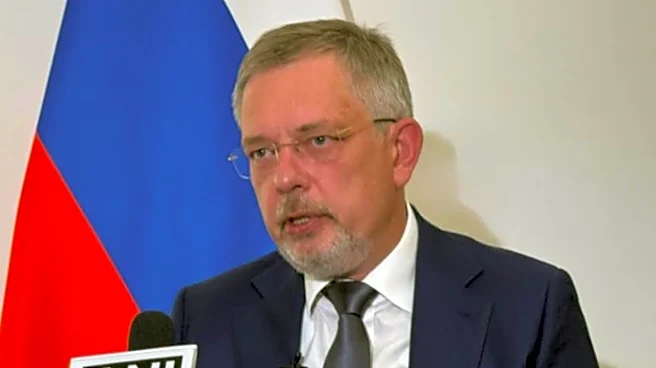
The India-Russia experience provides an example of what such arrangements could look like. Russia said in September that its payment infrastructure with India now allows 96 per cent of bilateral trade to be conducted using the rupee and rouble. According to Sberbank India head Ivan Nosov, the system has become highly efficient, with about 90 per cent of transactions completed within 10 minutes and more than half in under a minute.
The arrangement has become particularly important because India is a major buyer of Russian oil and Western sanctions have complicated traditional financial channels.
A broader BRICS payment architecture could potentially make such local-currency arrangements easier across more countries.
What Does India Gain?
The biggest potential benefit for India is greater international use of the rupee.
If more Indian exporters and importers can settle trade directly in rupees, demand for the currency could increase. It could also reduce their exposure to exchange-rate movements caused by having to route transactions through the dollar.
For Indian businesses, lower transaction costs and faster settlement could be particularly useful for smaller exporters, tourism and services.
There is another strategic advantage of greater resilience. The global financial system remains heavily dependent on the dollar and Western financial infrastructure. India’s effort is not necessarily to dismantle that system but to ensure it has alternatives when geopolitical tensions, sanctions or disruptions affect conventional payment channels.
That is why the RBI has been pushing both rupee internationalisation and greater use of local currencies in cross-border trade. Malhotra has said the central bank would continue these efforts while BRICS explores payment-system interoperability.
The CBDCs’ Role
Central bank digital currencies could take the idea further. India’s digital rupee, China’s digital yuan and other national digital currencies could potentially be connected so that a payment originating in one country can be settled digitally in another without relying on the same network of intermediaries used by conventional cross-border transactions.
India’s central bank had earlier proposed linking BRICS digital currencies to facilitate cross-border trade and tourism payments. The attraction is speed and efficiency. But creating such a system is far more complicated than simply connecting two apps.
Each country has different regulations, cybersecurity requirements, capital controls, privacy rules and monetary policies. There are also questions about how exchange rates would be determined, who would operate the infrastructure and how disputes or fraud would be handled.
Why India Will Have To Tread Carefully
India remains deeply integrated with the dollar-based global economy and the US is one of its most important trading and investment partners. New Delhi therefore has little incentive to pursue an abrupt break with the existing system.
Its approach is better described as diversification rather than de-dollarisation.
Recent developments underline that caution. India has reportedly stalled a proposed UPI-Alipay+ linkage over concerns relating to national security, data privacy, money laundering and cyber risks, showing that New Delhi wants greater payment connectivity but not at the cost of control over sensitive financial infrastructure.
For BRICS, therefore, the more realistic goal is not to “kill the dollar” but to create additional payment routes alongside the existing system.
And that could be where India’s biggest opportunity lies. As BRICS meets in New Delhi, India’s challenge will be to turn its domestic digital-payment success into international financial connectivity, while ensuring that the rupee gains a larger role without forcing India into a binary choice between the dollar and an alternative bloc-led system.
/images/ppid_59c68470-image-178877253322953873.webp)

/images/ppid_59c68470-image-17887475609955937.webp)