


/images/ppid_a911dc6a-image-178012383947683385.webp)
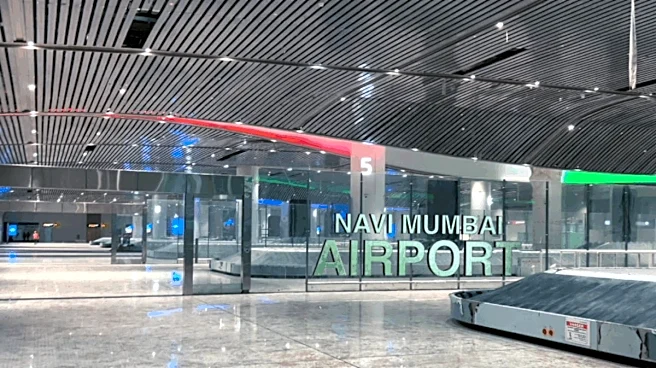
For millions of Mumbaikars who have spent years staring across the shimmering waters of Thane Creek wondering when Navi Mumbai’s gleaming new airport would truly feel within reach, CIDCO chief Vijay Singhal has an answer — and a timeline.
In an interview with The Indian Express, Singhal revealed that once the Ulwe Coastal Road is operational, travel time from the Atal Setu (Mumbai Trans Harbour Link) to the Navi Mumbai International Airport (NMIA) will drop to under five minutes. That is not a typo.
How Is This Possible?
The Ulwe Coastal Road is a direct connector being built by CIDCO from the Atal Setu to the airport. Currently, vehicles must navigate via Chirle Junction and Amra Marg — a circuitous route that adds significant time and frustration to the journey.
The new road eliminates this detour entirely, providing a straight, uninterrupted link between the bridge and the airport gates.
About 80 per cent of the construction is already complete. While the road was originally expected to open by August or September this year, disruptions linked to the West Asia conflict have caused delays in materials and logistics. CIDCO now expects the road to be completed by November 2026.
On the northern and eastern sides of the airport, connectivity is already in place. A six-kilometre road from Kalamboli is operational, and the road from Panvel connecting the airport’s eastern flank is also ready.
A third road from the Panvel Express Highway is nearly done — of its three bridges, two are complete and the third should be finished within months. Travellers from Pune will use the MSRDC cloverleaf interchange, also nearing completion, to feed into these roads.
Who Benefits The Most?
The sub-five-minute connection from Atal Setu is a game-changer primarily for residents of South Mumbai, parts of Central Mumbai, and areas directly accessible from the 21.8-kilometre sea bridge — including Sewri, Wadala, Chembur, and Kurla.
For someone driving from, say, Dadar or Matunga, the airport could now be closer in time than Chhatrapati Shivaji Maharaj International Airport in Santacruz.
For Navi Mumbai residents in nodes like Kharghar, Belapur, Nerul, and Vashi, the airport was always relatively nearby, but the Ulwe Coastal Road makes the final stretch seamless. Those from Panvel, Uran, and Ulwe are already practically at the airport’s doorstep.
What Is The State of NMIA Today?
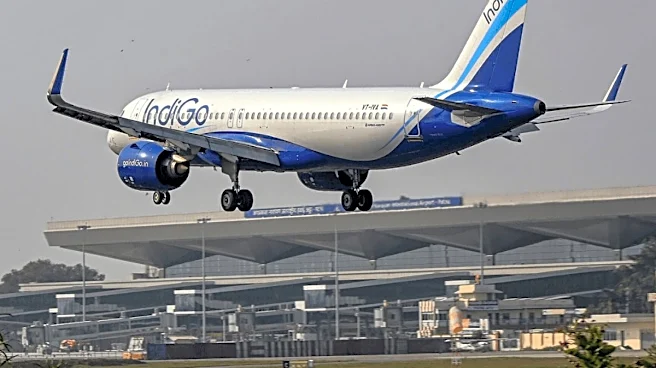
NMIA was formally inaugurated on October 8, 2025, and commercial passenger flights began on December 25, 2025. Initial services are operated by IndiGo, Air India Express, and Akasa Air, linking the new airport with key destinations including Bengaluru, Delhi, Hyderabad, Kochi, and Ahmedabad.
The early numbers have been encouraging. Between December 25 and January 12, the airport handled 1,09,917 passengers — 55,934 arriving and 53,983 departing — with January 10 recording its busiest day at 7,345 passengers. According to Singhal, around 35 international flights are expected to operate daily from NMIA starting May 2026.
The Connectivity Problem That Won’t Go Away — Yet
Despite the airport’s promise, passengers have not been shy about voicing frustrations. NMIA faces a last-mile connectivity crisis, with passengers dealing with high cab fares, inconsistent taxi services, and bus schedules that stop running by 11 PM.
App-based taxis use a token system that means long waits, with fares hitting Rs 6,000 at night.
The complaints have piled up on social media. As forum members on Team-BHP have flagged, the “ridiculously steep cab fares” from NMIA are a cause of growing concern, with users reporting fares of Rs 3,000 just to reach Andheri — roughly the cost of a short domestic flight.
One passenger from Santacruz noted that her flight from Kolhapur to Navi Mumbai took under 50 minutes, but her journey from the airport to her home took 1 hour and 17 minutes. She reported that Ola, Uber, and Rapido were either unavailable or charging Rs 3,000–₹3,500 for the trip, with only SUVs available.
Passengers have called for affordable AC bus services or a rapid metro connecting NMIA to the rest of the city.
That metro — Metro Line 8 — is on the way, but as Singhal confirmed to The Indian Express, tenders are still a couple of months away following the completion of a Detailed Project Report peer review. The 32-km line connecting NMIA to CSMIA, with 9.5 km underground, will eventually transform cross-city airport travel — but it remains years from completion.
For now, the Ulwe Coastal Road represents the most imminent relief. When it opens, likely by November, that under-five-minute dash from Atal Setu to the terminal will offer a preview of what Mumbai’s airport future is meant to look like — fast, direct, and long overdue.



/images/ppid_a911dc6a-image-178030302811516977.webp)



/images/ppid_a911dc6a-image-178022956089312216.webp)