

/images/ppid_a911dc6a-image-178326726951027395.webp)


My parents still don’t understand why I own three bags in different colours and sizes. Growing up, we had two suitcases in the house, and they were touched maybe once a year, then wheeled back under a bed. So when I turned up last year with a blue hard-shell for a work trip, and showed them a neon weekender I’d been gifted, my mother asked, not unkindly, why I needed all this when the old soft-sided ones she’d had since before I was born still worked fine. I didn’t have a great answer at the time. I think I do now.
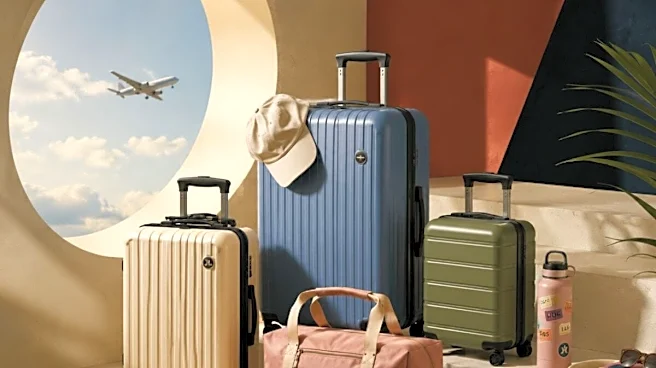
There was a time when a suitcase was bought once and inherited twice. It was expected to outlive the person who bought it. But now, suitcases are quite akin to wardrobes, in quality if not quantity. They are colour-coded, purpose-built.
And worth enough to make our grandparents really question our choices.
The numbers back the feeling. In metros, the average luggage replacement cycle has fallen from eight to ten years down to two to three, according to industry estimates cited by Escape Plan. Non-core, experimental colours — beiges, olive greens, dusty pinks — now make up nearly 30% of sales, a share that would have been unthinkable in a category once dominated by black, navy and the occasional maroon. And it isn’t just what Indians are buying — it’s how often, and increasingly, how impulsively, with quick-commerce platforms already accounting for a meaningful share of luggage orders in metro markets, a number expected to climb sharply over the next year.
Why Today’s Traveller Wants More Than One Bag
Naina Parekh, Co-Founder of EUME, traces it back to what travel itself has become for a younger buyer. “Earlier, luggage was bought for functionality alone. Today, especially among Gen Z travellers, a travel suitcase is also a style statement. They want premium luggage that is lightweight, durable, thoughtfully designed, and reflects their personality. At EUME, we combine smart engineering with contemporary design to create luggage that’s as expressive as it is functional.” It’s a line that could describe my own bag drawer fairly precisely; none of my three suitcases are interchangeable, and that’s rather the point of owning them.
Abhinav Pathak, Co-Founder & CEO of Escape Plan, goes further and names the comparison outright. “Luggage is increasingly being viewed the way consumers think about sneakers, watches or other lifestyle accessories,” he says. “Earlier luggage used to be perceived as an item that one purchases once in every ten years or so — modern travellers want luggage to match not only their travelling demands but their personal style as well.” Escape Plan’s own range is built around exactly this instinct to let one customer want several different things at once — the HRX line’s Kyoto collection for someone who wants clean, minimalist, timeless colours, and Helium for someone who wants the opposite; at the premium end, Rare Rabbit’s Gallardo aimed at “consumers who want a premium look in everything they wear and carry, with its sleek matte finish, geometric detailing and refined design language,” while Tony is built for those who “appreciate understated luxury with refined textures and elegant gold-finish detailing.” Four bags, four different people you might be depending on the week.
But no brand wants to be seen selling a trend. Every single one insists what looks like fashion is actually engineering. Anuj Sawhney, Managing Director of Swiss Military, is emphatic that the two were never in competition to begin with. “At Swiss Military, we don’t see design and durability as a trade-off — they are two sides of the same value proposition.” On the shrinking replacement cycle specifically, he reframes it as less a design failure and more a lifestyle acceleration: “The shorter replacement cycle is less about products wearing out and more about consumers evolving faster than ever before. Travel itself has changed — people are travelling more frequently, across different purposes, whether it’s business, leisure, workations, or weekend getaways.”
EUME makes the same argument through colour itself. For a brand where palette is close to a signature, Parekh is careful to frame it as substance, not surface. “For EUME, colour is part of our identity, not just a trend. Every shade is backed by premium engineering, including German Bayer polycarbonate, silent spinner wheels, and TSA-approved security.” Beige, incidentally, is Swiss Military’s best-performing non-traditional shade, with olive green close behind — proof, if any were needed, that even “safe” colours are being reinvented as statements.
Function Still Matters—But So Does Personality
This is really the trick the entire category has pulled off. Nobody sells the consumer a shorter shelf life. What they sell instead is a reason to upgrade that still sounds responsible—better wheels, better polycarbonate. Sawhney puts it plainly: “We believe consumers should choose to upgrade because they see meaningful improvements in design, functionality, and travel experience—not because their existing suitcase has failed.” It’s a distinction that matters enormously to how these brands see themselves, and matters rather less to a consumer who, ten years ago, would have kept the same suitcase through three job changes and two cities, and today swaps it out before the wheels have even worn thin.
Parekh’s closing thought captures where the category is actually headed—not a single purchase, repeated, but an accumulating collection. EUME, she says, is building products “that inspire customers to build a travel wardrobe that reflects their evolving lifestyle and love for travel.” A wardrobe, not an appliance.


/images/ppid_59c68470-image-178342002617958809.webp)



/images/ppid_59c68470-image-178325253350888380.webp)
/images/ppid_a911dc6a-image-178323342924988701.webp)
