
/images/ppid_59c68470-image-178825505564710094.webp)
/images/ppid_59c68470-image-178833005224221516.webp)
/images/ppid_59c68470-image-178826256589492916.webp)
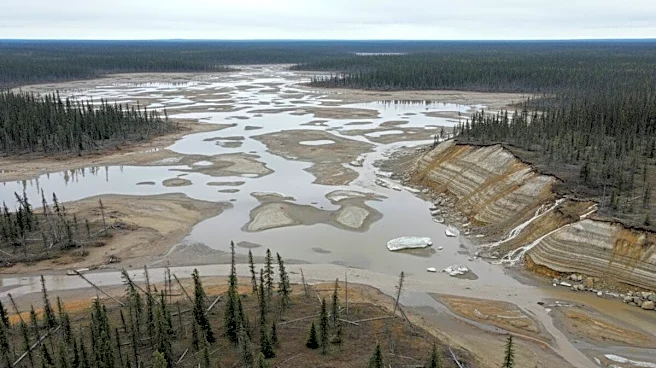
Permafrost is ground consisting of rock, soil, and ice that remains at or below 0°C (32°F) for at least two consecutive years. Essentially, it acts as a “cryospheric glue” that binds steep mountainsides and high-altitude terrains together.
In the catastrophic Nepal-Tibet floods of late August 2026, thawing permafrost played a critical, destabilising role, say experts.
WHAT IS PERMAFROST?
Permafrost is ground that remains completely frozen at or below 0°C (32°F) for at least two consecutive years. It consists of rock, soil, sediment, and varying amounts of ice that act as a “cement” holding the landscape together. Permafrost can be found either on land (mostly in high-latitude regions like the Arctic) or under the ocean floor (sub-sea permafrost). Permafrost landscapes
are generally split into two distinct layers: The top layer of soil that thaws during the summer and refreezes in the winter. It can range from a few centimetres to several metres deep. Plants can only grow in this layer. The permanently frozen ground beneath the active layer. It can extend deep into the Earth’s crust—ranging from a few metres to over a kilometre thick.
WHY IS IT IMPORTANT?
Permafrost acts as a massive global carbon sink. It traps ancient organic matter—like dead plants and animals—frozen in time. If it thaws, microbes break down this matter, releasing massive amounts of greenhouse gases (carbon dioxide and methane) into the atmosphere, which accelerates global warming.
In mountainous areas like the Himalayas or the Alps, permafrost acts as a structural “glue.” When it melts, steep mountainsides lose their stability, leading tocatastrophic rockfalls, landslides, and floods.
Many cities, pipelines, and roads in northern regions (like Alaska, Siberia, and Canada) are built directly on top of permafrost. When it thaws, the ground sinks and shifts, causing roads to buckle and buildings to collapse.
DID IT TRIGGER NEPAL-TIBET FLOODS?
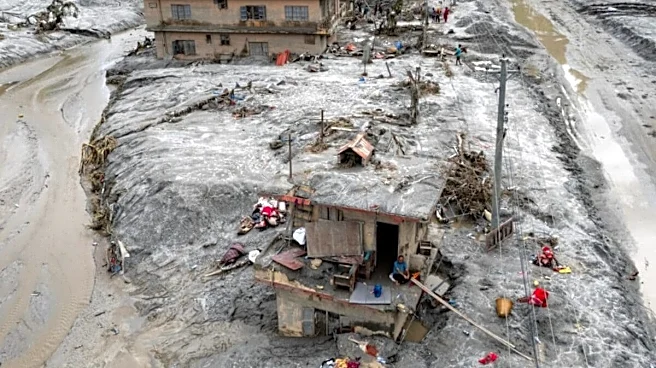
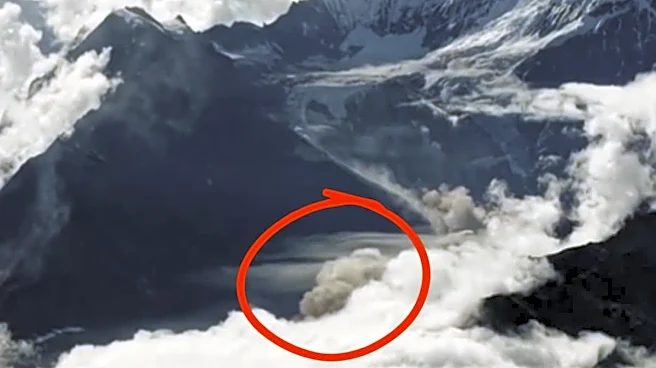
As climate change drives up temperatures in the Himalayas (the “Third Pole”), centuries-old permafrost deep within the rock begins to thaw and degrade. When the internal ice melts, the ground transitions from solid rock to an unstable, muddy mix, heavily reducing its structural integrity. This loss of structural “glue” on steep slopes is a primary suspect behind the massive chunk of bedrock and glacier that broke away from the Langtang Lirung peak area. The weakened mountainside collapsed, sending a violent cascade of rock, mud, and ice tumbling into the valley below.
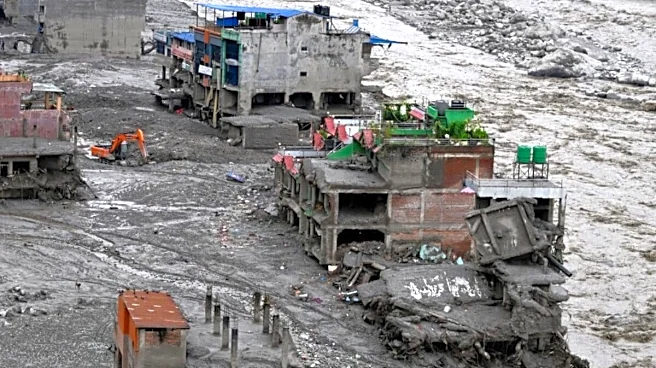
The debris from the permafrost-thaw landslide temporarily dammed the local river system. When these unstable debris dams or surrounding glacial lakes breached, they unleashed a second, highly destructive wave of flash flooding downstream, obliterating infrastructure and wiping out entire communities.
Geologists warn that as permafrost continues to warm and turn to “soup,” these cascading high-mountain hazards will become increasingly frequent.

/images/ppid_59c68470-image-178845010575726563.webp)