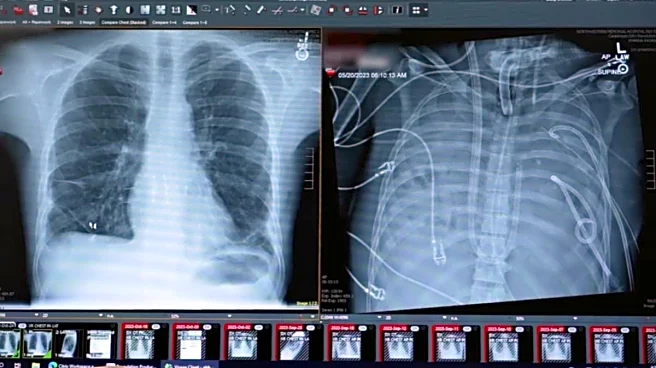




A 33-year-old patient at Chicago’s Northwestern Memorial Hospital was kept alive for 48 hours using artificial lungs after surgeons removed both organs. This gave them time for a successful double lung transplant.
The patient was admitted in 2023 after contracting Influenza B, which developed into acute respiratory distress syndrome (ARDS) and necrotizing pneumonia.
Despite being on a ventilator and extracorporeal membrane oxygenation (ECMO), the patient experienced refractory septic shock, multiple cardiac arrests, and kidney failure. The infection could not be cleared while the diseased lungs remained in his body, as reported in the journal Med.
‘Artificial Lungs’
He was faced with an extremely high risk of death.
Dr Ankit Bharat, chief of thoracic
surgery at Northwestern University Feinberg School of Medicine, and his team performed a bilateral pneumonectomy, removing both lungs to eliminate the source of infection.
To replace lung function, they developed a custom extracorporeal total artificial lung (TAL) system. The device oxygenated the patient’s blood, removed carbon dioxide, and regulated circulation to maintain heart function.
He said the patient’s heart stopped but “we got him back.”
“He was critically ill. His heart stopped as soon as he arrived.” “It was very clear that we had to do something right away,” Bharat said, as per Scientific American.
“When the infection is so severe that the lungs are melting, they’re irrecoverably damaged,” he said as per Precision Medicine.
The team then built “artificial lungs” that could help pump blood from the right side of the patient’s heart to the organ’s left side, oxygenate it, and send it on to the rest of the body.
Recovery And Transplant
Within 48 hours, the patient’s condition improved. Blood pressure stabilised, kidney function returned to normal, and medications to support the heart were no longer required. Examination of the removed lungs confirmed irreversible damage, showing that a transplant was necessary.
The patient was listed for a double-lung transplant and received the organs shortly afterward. More than two years later, he has normal lung function and no signs of organ rejection.
“For the first time, biologically, we are giving molecular proof that some patients will need a double lung transplant, otherwise they will not survive,” says Bharat. “In my practice, young patients die almost every week because no one realised that transplantation was an option. For severe lung damage caused by respiratory viruses or infections, even in acute settings, a lung transplant can be lifesaving.”
Dr Natasha Rogers, a nephrology specialist at Westmead Hospital in Sydney, said the procedure requires a large, specialised team and can currently only be performed at major medical centres, as per CGTN News.
About Influenza B
Influenza B is a strain of the influenza virus that primarily affects the respiratory system, causing fever, cough, sore throat, and body aches. In severe cases, the infection can trigger acute respiratory distress syndrome (ARDS), a condition in which the lungs become severely inflamed and fluid fills the air sacs, reducing oxygen levels in the blood and making breathing difficult.