



The release of thousands of pages of documents linked to the late sex offender Jeffrey Epstein has left lawmakers, legal experts and survivors frustrated, with many saying the disclosure falls short of the transparency promised by US authorities.
The documents were released after an act of Congress directed the US Justice Department to make public records related to Epstein’s crimes. However, many of the files are heavily redacted, while thousands of other documents have yet to be disclosed.
Lawmakers who championed the legislation said the release was incomplete and accused the department of failing to comply with both the spirit and the letter of the law. Some legal experts warned that the extensive redactions could further fuel conspiracy theories
surrounding Epstein’s network.
What was released
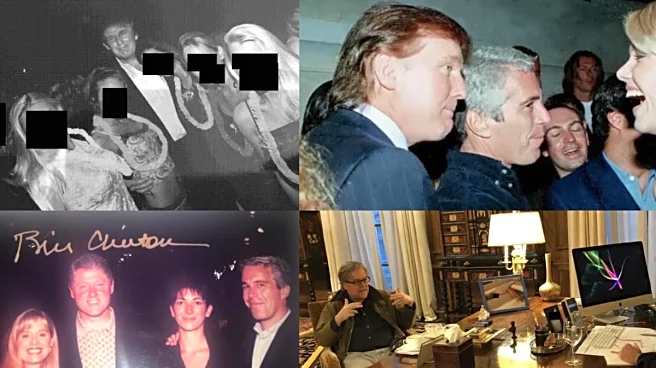
Among the materials made public are photographs of Epstein associate Ghislaine Maxwell outside Downing Street, images of Epstein’s properties and overseas travel, and photos featuring several high-profile public figures.
The documents also include claims that Epstein introduced a 14-year-old girl to Donald Trump at Mar-a-Lago. Trump has consistently denied any wrongdoing and has not been accused of crimes by Epstein’s victims. Images of former president Bill Clinton also appear in the files; Clinton has denied knowledge of Epstein’s abuse and has not been accused by survivors.
Other individuals pictured include celebrities and public figures such as Prince Andrew, Mick Jagger, Michael Jackson, Diana Ross and Peter Mandelson. Officials stressed that being named or photographed in the files does not imply wrongdoing, and many of those mentioned have previously denied any involvement in Epstein’s crimes.
Heavy redactions raise concerns
Large portions of the released material are blacked out. The Justice Department said the redactions were legally required to protect victims’ identities, prevent the release of child sexual abuse material, avoid compromising ongoing investigations, and safeguard classified information linked to national security or foreign policy.
Deputy US Attorney Todd Blanche said the department had identified more than 1,200 victims or their relatives and withheld information that could expose them. In a post on X, the DOJ said it was not redacting the names of politicians unless they were victims, adding that all redactions applied were required by law.
However, criminal defence attorney John Day said the scale of redaction was unexpected. “This is just going to feed the fire if you are a conspiracy theorist,” he told the BBC, adding that questions remain about what exactly is being withheld. Under the law, the department must provide Congress with a detailed log explaining the redactions within 15 days.
US Attorney Jay Clayton said the department chose to redact faces of women appearing in photographs with Epstein to protect potential victims, acknowledging that the approach could be seen as “over-redaction” but arguing it was necessary given time constraints and victim safety.
Survivors express frustration
Epstein survivors were among the most disappointed by the release. Marina Lacerda, who said she was abused by Epstein at the age of 14, said survivors had waited years for full disclosure and feared a prolonged, piecemeal release of incomplete information.
“We are worried this will continue with the same level of redaction,” she said.
Another survivor, Liz Stein, accused the Justice Department of undermining the Epstein Files Transparency Act, saying survivors want “all of the evidence of these crimes out there.”
Human rights lawyer Baroness Helena Kennedy said authorities face a difficult balance between transparency and protecting victims from further harm, noting that some survivors may not fully realise how distressing the unreleased material could be.
Political backlash
Democratic Congressman Ro Khanna, who led the push for the files’ release alongside Republican Congressman Thomas Massie, called the disclosure “incomplete” and said lawmakers were considering options including contempt proceedings and referrals for prosecution.
Massie said the release “grossly fails” to meet legal requirements and warned that senior Justice Department officials could face consequences under future administrations.
The White House defended the disclosure, describing the Trump administration as the most “transparent in history” and saying it had done more for Epstein’s victims than previous governments.
Asked whether all documents mentioning Trump would eventually be released, Blanche said any material consistent with the law would be made public, stressing there was no effort to withhold information because of the names involved.
“We’re not redacting the names of famous men and women associated with Epstein,” he said.


/images/ppid_59c68470-image-177084004043125742.webp)

/images/ppid_a911dc6a-image-177083903258342419.webp)




/images/ppid_59c68470-image-177083752855419301.webp)
/images/ppid_59c68470-image-177083752668871927.webp)