
India has taken another step towards cleaner transportation and lower crude oil imports with the launch of E85 fuel, a high-ethanol petrol blend designed for flex-fuel vehicles.
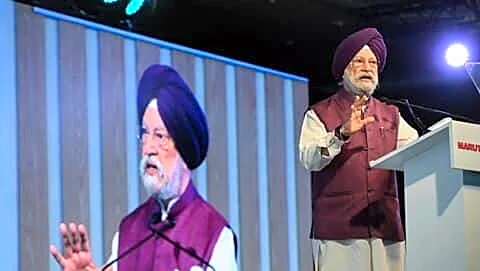
Union Petroleum and Natural Gas Minister Hardeep Singh Puri formally launched E85 at an Indian Oil Corporation fuel station in New Delhi on World Environment Day 2026. The fuel is initially being made available at 48 public-sector fuel stations and will be rolled out across the country in phases.
What Is E85 Fuel?
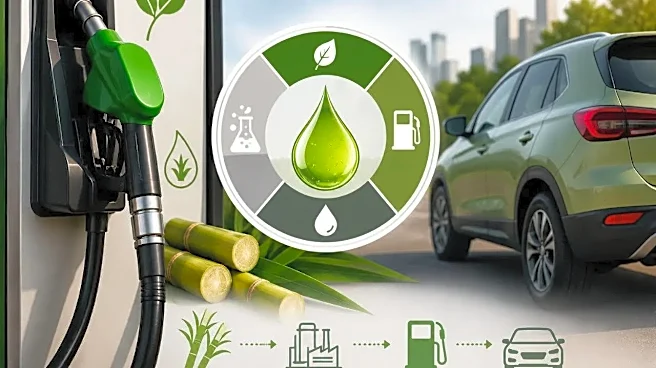
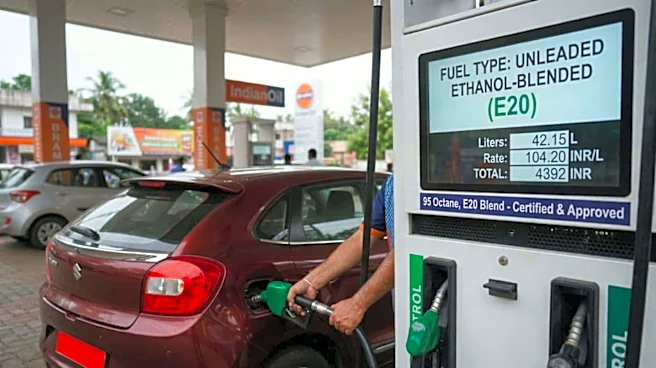
E85 is a fuel blend containing 80-85 per cent ethanol and 14-19 per cent petrol. Unlike conventional petrol, it is intended for specially designed flex-fuel vehicles capable of operating on varying ethanol blends, ranging from E20 to E100.
Ethanol is a renewable fuel produced primarily
from agricultural feedstocks such as sugarcane and maize. Since it burns cleaner than petrol, higher ethanol usage is expected to help reduce vehicle emissions and support India’s energy transition goals.
Why Is E85 Cheaper Than Petrol?
One of the biggest attractions of E85 is its lower cost. The fuel has been priced nearly Rs 20 per litre below regular petrol, offering potential savings for motorists using compatible vehicles.
The government also sees wider ethanol adoption as a way to cut India’s dependence on imported crude oil and reduce foreign exchange outflows.
What Are Flex-Fuel Vehicles?
Flex-fuel vehicles (FFVs) are equipped with engines and fuel systems that can run on different ethanol-petrol blends without requiring modifications. These vehicles can use fuel blends ranging from E20 to E100, depending on their design.
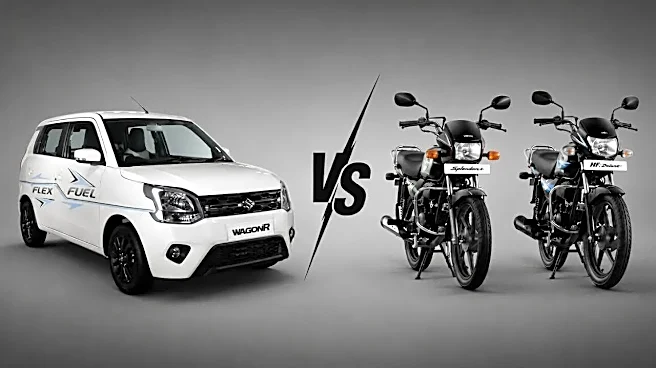
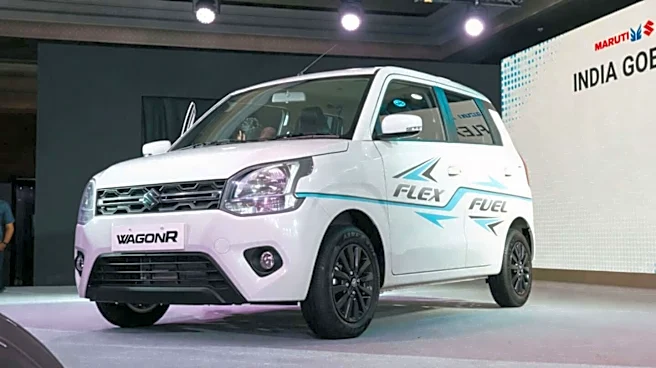
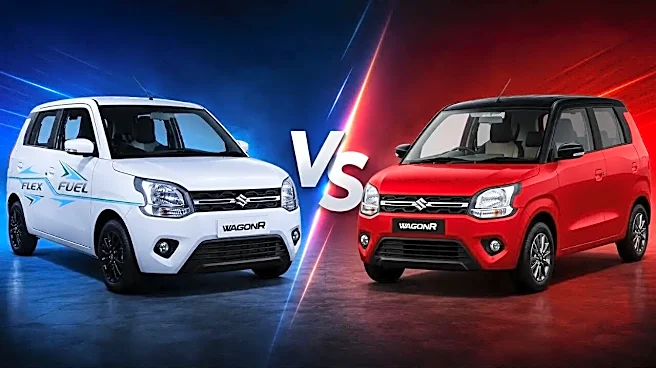
India’s flex-fuel vehicle ecosystem received a boost this week when Maruti Suzuki unveiled the WagonR Flex Fuel prototype. The company said it is the country’s first passenger vehicle capable of operating on E100, or 100 per cent ethanol.
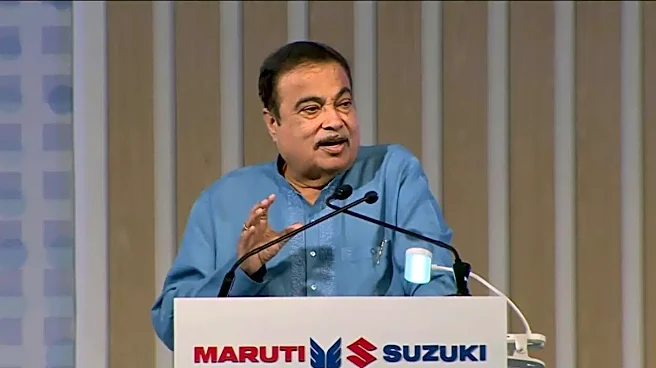
The prototype was unveiled in the presence of Union Road Transport and Highways Minister Nitin Gadkari and Petroleum Minister Hardeep Singh Puri.
India Looking Beyond E20
The launch of E85 comes as the government seeks to expand ethanol usage beyond the E20 blending programme. According to Puri, India currently has ethanol production capacity of around 19 billion litres, while the existing blending programme consumes about 11.5 billion litres.
In May, the Centre notified fuel standards for higher ethanol blends, including E22, E25, E27 and E30, laying the groundwork for broader adoption of flex-fuel technologies.
Ethanol Blending Growth Since 2014
The government says ethanol blending in petrol has risen sharply from 1.53 per cent in 2014 to 20 per cent currently, allowing India to achieve its blending target five years ahead of schedule.
According to the petroleum minister, the programme has helped the country save more than Rs 1.84 lakh crore in foreign exchange while reducing crude oil imports and supporting domestic biofuel production.