
/images/ppid_59c68470-image-177065003034833331.webp)
/images/ppid_a911dc6a-image-177065004706485908.webp)
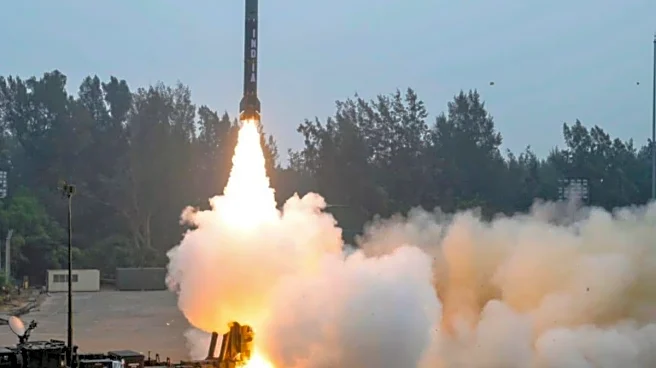
India has taken a significant step forward in tactical strike capability with the Defence Research and Development Organisation (DRDO) successfully carrying out a salvo launch of the indigenous Pralay missile. The user-trial was conducted on December 31, 2025, from the Integrated Test Range at Chandipur in Odisha, with two missiles being fired in quick succession from the same launcher. Both successfully hit their designated targets with precision.
According to officials, the trial validated the missile’s accuracy, reliability and battlefield readiness. Advanced tracking systems monitored the trajectory, while telemetry data from ships positioned in the Bay of Bengal confirmed that the missiles followed the intended flight path before striking
the targets.
Pralay is a surface-to-surface, solid-fuel, quasi-ballistic missile with a strike range of 150 to 500 km. Unlike traditional ballistic missiles that follow predictable high-arc flight paths, Pralay can manoeuvre during its course at lower altitudes, making interception significantly harder for enemy air defence systems.
Defence sources said the missile features a ring-laser gyro navigation system and advanced terminal guidance technology, ensuring high accuracy. Earlier tests were carried out in 2021 and 2022, but this salvo launch is being seen as crucial because it proves that multiple missiles can be launched rapidly from the same platform. With the latest success, the missile system is now close to induction into the Indian Army.
Private industry participation has also been substantial, with companies such as Larsen & Toubro developing the canisterised launcher system to support large-scale production and quicker deployment. Defence Minister Rajnath Singh congratulated DRDO scientists, saying the success strengthens India’s preparedness and reinforces PM Modi’s ‘Atmanirbhar Bharat’ push in strategic defence systems.
How Pralay Compares With Global Tactical Missiles
| Feature | Pralay (India) | Iskander-M (Russia) | DF-12 (China) |
| Range | 150-500 km | Up to 500 km | Up to 420 km |
| Top Speed | Over Mach 6 (7,500 km/h) | Mach 6-7 (8,000 km/h) | Hypersonic (estimated) |
| Warhead Capacity | Up to 1,000 kg | Up to 800 kg | Around 480 kg |
| Propulsion | Solid fuel, two-stage | Solid fuel, single stage | Solid fuel, single stage |
| Manoeuvrability | High; quasi-ballistic with mid-course manoeuvres | High | Moderate |
Pralay, weighing about five tonnes, can carry up to a one-tonne conventional warhead. At full payload the missile can strike approximately 350 km, while a lighter payload extends its reach up to 500 km. Officials say its circular error probable (CEP) is less than 10 metres, with further improvements underway to enhance precision.
The missile’s high speed, faster than the BrahMos cruise missile, and ability to alter trajectory mid-flight make it extremely difficult for enemy defence systems to track and neutralise. Defence analysts say the system strengthens India’s deterrence posture at a time when tactical battlefield missiles are gaining strategic importance worldwide.
Key Questions Answered
What is the range of the Pralay missile?
Pralay can strike targets between 150 km and 500 km, depending on payload configuration.
How was the missile tested?
Two missiles were launched from the same platform during a user-evaluation trial on December 31. Tracking systems confirmed that all mission objectives were achieved.
Who developed Pralay?
The missile has been developed by the Research Centre Imarat (RCI) in collaboration with several DRDO laboratories, including the Defence Research and Development Laboratory and Advanced Systems Laboratory, among others.







/images/ppid_59c68470-image-177065002910375399.webp)

/images/ppid_59c68470-image-177065011898615254.webp)
/images/ppid_59c68470-image-177065016592864742.webp)
/images/ppid_59c68470-image-177065007287531197.webp)