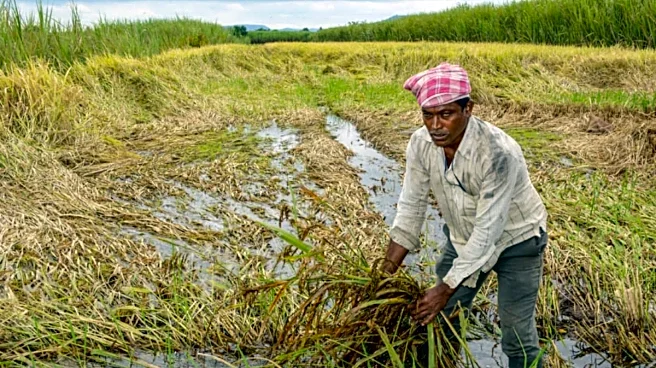



A study conducted by scientists at the ICAR institute has found that El Niño conditions have significantly affected the production of major kharif crops across several districts in India.
The research showed that paddy yields declined by more than 10% in 77 districts, while maize production saw a similar fall in 65 districts during El Niño years.
Over 77 Districts Saw Sharp Paddy Yield Decline During El Niño: Study
The impact was particularly severe in major rice-growing states such as Andhra Pradesh, Bihar, Chhattisgarh, Madhya Pradesh, Maharashtra, Uttar Pradesh, Jharkhand and Odisha. The study also reported over 10% decline in sorghum and pearl millet yields in 36 districts each, underlining the risks faced by monsoon-dependent farming.
El Niño
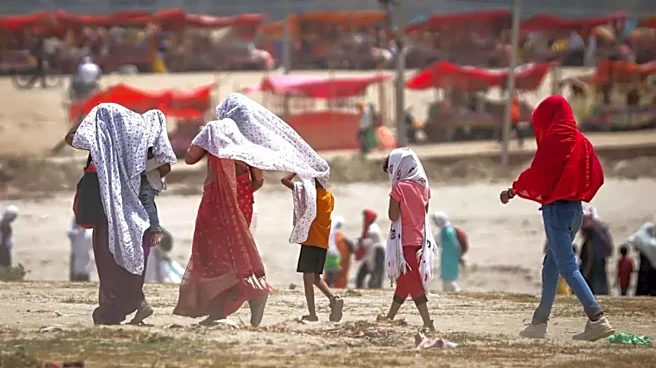
refers to the warming of sea surface temperatures in the central and eastern tropical Pacific Ocean and is generally linked to weaker monsoon rainfall in India.
Published in Elsevier’s Climate Services journal in 2023, the study examined the El Niño years of 2002, 2004 and 2009. Researchers said the findings could help authorities prepare better short- and long-term strategies to reduce agricultural losses.
“The study revealed that El Niño years cause significant spatial and temporal variability in Indian summer monsoon rainfall, leading to substantial reductions in the productivity of major kharif crops such as rice, maize, pearl millet and sorghum across several districts of India. It identified many highly vulnerable districts where crop yields declined by more than 10% during recent El Niño years, emphasizing the need for climate-resilient agricultural planning at the district level,” Subash N Pillai, currently serving as head of the division of Agricultural Physics at ICAR-Indian Agricultural Research Institute, told The Times of India.
He added, “As El Niño conditions are likely to prevail this year, policymakers should strengthen contingency planning through promotion of drought-tolerant crop varieties, weather-based agro-advisory services, efficient water management and location-specific adaptation strategies to minimise agricultural losses and safeguard farmers’ livelihoods.”

/images/ppid_a911dc6a-image-177915409133845800.webp)





/images/ppid_59c68470-image-177918004776877980.webp)