
/images/ppid_a911dc6a-image-177086843137395252.webp)
/images/ppid_59c68470-image-177086764282223684.webp)
/images/ppid_59c68470-image-177086759373551157.webp)
As the Union Budget 2026 draws closer, experts across agriculture, climate policy and real estate are urging the government to move beyond incremental fixes and focus on long-term resilience, sustainable growth and efficient market mechanisms. From climate shocks hitting farm output to the need for stable housing demand, the expectations are clear: policy certainty and targeted spending will matter more than headline numbers.
Climate resilience emerges as a priority for agriculture
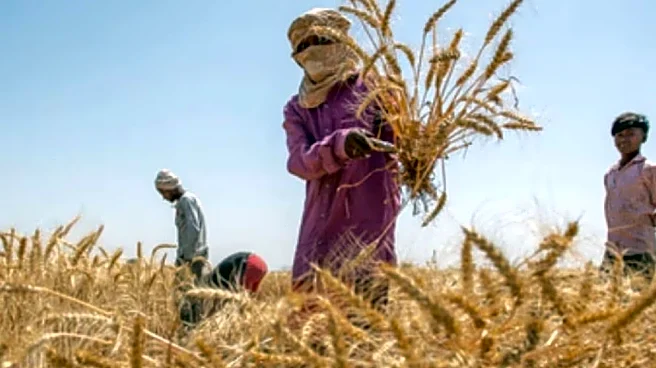
Climate-linked risks are no longer theoretical for Indian agriculture. According to Pushan Sharma, Director at Crisil Intelligence, even a 1 degree Celsius rise in temperature can reduce crop yields by 4.5–9%, potentially causing economy-wide losses of up to 1.5% of GDP
annually.
To counter this, Sharma stresses the need for sustained funding for the National Innovations in Climate Resilient Agriculture project, which supports climate-resilient technologies and on-ground adaptation. He also flags the need to scale up irrigation resilience under PMKSY schemes like Per Drop More Crop and Har Khet Ko Pani, noting that funding remains limited despite steady growth in micro-irrigation coverage.
Balanced fertiliser use and price support need sharper focus
Experts also point to the urgent need to rationalise fertiliser usage. India’s urea consumption remains well above the global average, with wide regional disparities. While schemes such as PM-PRANAM and Market Development Assistance aim to promote balanced and organic inputs, Sharma notes that these account for just 0.1% of the fertiliser budget in FY26, calling for higher allocations to ensure sustainability without hurting yields.
On farm incomes, low utilisation of price support schemes under PM AASHA remains a concern. Sharma suggests higher budgetary allocation, faster DBT settlements and stronger state-level incentives to improve uptake.
Housing and post-harvest reforms in focus
From the real estate side, Ashok Kapur, Chairman of Krishna Group and Krisumi Corporation, expects continued thrust on infrastructure spending and policy stability. He believes an extension of the Credit Linked Subsidy Scheme and incentives for green housing could support demand and sustainable urban growth.
Meanwhile, Aditya Sesh, Founder & MD of Basiz, highlights the potential of e-Negotiable Warehouse Receipts to improve farm liquidity. He calls for higher spending on micro-warehouses, cold storage and farmer awareness to prevent distress sales.
/images/ppid_a911dc6a-image-177087053131643236.webp)

/images/ppid_a911dc6a-image-177087044282517405.webp)
/images/ppid_59c68470-image-177087014371143011.webp)

/images/ppid_59c68470-image-177087017200267944.webp)
/images/ppid_59c68470-image-177087004149940990.webp)
/images/ppid_59c68470-image-177087010932517580.webp)
/images/ppid_59c68470-image-17708702765728080.webp)
/images/ppid_59c68470-image-177087024475928062.webp)
/images/ppid_59c68470-image-17708703135504496.webp)
/images/ppid_59c68470-image-177087020950860856.webp)