
Bangladesh’s current crisis could lead to Rohingya spillover for India, said top intelligence sources. “The instability has reduced border coordination. Indian real-time intelligence sharing is not working
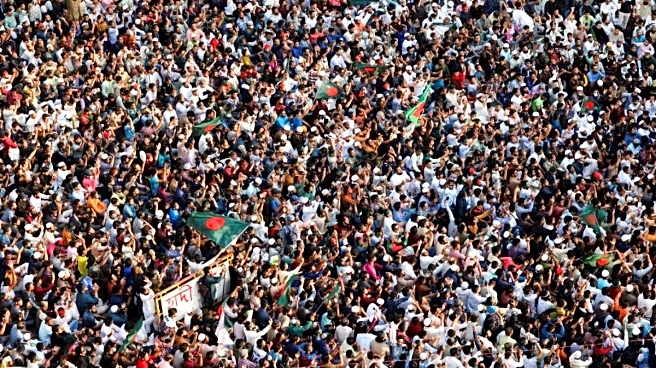
these days. Hostility from Dhaka could add to Rohingya spillover risk for India,” they said. Bangladesh is facing unrest, with protests and violence, following the death of student leader Sharif Osman Hadi. Hadi, convenor of Inqilab Moncho, a prominent student activist and a parliamentary candidate for the upcoming February 2026 national elections, on December 18, 2025. Amid the chaos, Dipu Chandra Das, a 27-year-old Hindu youth, was beaten to death by a mob over alleged blasphemy, and his body was set on fire. The incident sparked widespread outrage and condemnation.
#Exclusive | Inputs from Dhaka flag a Rohingya spillover risk, with sources warning that shelter bases may be used to target India, while forged Aadhaar networks are making detection harder as illegal Rohingyas remain embedded in urban clusters.
INPUTS: @manojkumargupta |… pic.twitter.com/ojPY0fkAIy
— News18 (@CNNnews18) December 21, 2025
How Rohingya enter India
“Most infiltrators use low-visibility routes and riverine gaps in West Bengal, forest corridors in Assam and Tripura. These groups no longer see the camps as temporary shelters but as permanent operational bases,” they said.
Security agencies have flagged the risk of secondary radicalisation, where economically desperate Rohingya become soft targets for Islamist recruiters. “The recruiters use forged documents and trafficking routes to move cadres toward India, Malaysia, and the Gulf. Indian agencies have seen repeated Rohingya-linked arrests across Assam, West Bengal, Jammu, Delhi and Hyderabad. This confirms that Bangladesh camps are already functioning as feeder zones for illegal entry into India. These groups are offering protection, money or ideological purposes,” they said.
Another easy entry is forged Aadhaar networks which make detection in India tougher. “Rohingya migrants get increasingly embedded in urban clusters. They work in informal labour markets where verification is weak and radical preachers can operate under the radar,” said sources.
Even small Rohingya-linked incidents can trigger diplomaticpressure, social tension, and security diversion. “Any law and order action against Rohingya inside India quickly attracts international scrutiny. This is creating a humanitarian versus security dilemma that hostile actors exploit deliberately,” they said.
SC’s firm stance
The Supreme Court on December 2 took a sharp stance while hearing a habeas corpus petition alleging the disappearance of Rohingya refugees, questioning whether the judiciary was expected to extend extraordinary protections to those who enter the country illegally.
Chief Justice of India Surya Kant, heading the bench, said, “Do you want us to roll out a red carpet for them?” The Court noted that Rohingya were entering India through underground routes and then demanding rights such as food and shelter.
“We have a very sensitive border in North India. If an intruder enters illegally, do we have the obligation to keep them here?” the CJI said, highlighting the national-security side of the issue.


/images/ppid_a911dc6a-image-177092774715746114.webp)

/images/ppid_a911dc6a-image-177092767520012684.webp)
/images/ppid_a911dc6a-image-177092763347449403.webp)
/images/ppid_a911dc6a-image-177092652580356823.webp)




/images/ppid_a911dc6a-image-177092306157991736.webp)