
India observes Partition Horrors Remembrance Day, or Vibhajan Vibhishika Smriti Diwas, on August 14 every year to remember the suffering, sacrifices and struggles of people affected by the Partition of 1947.
The day was officially announced by Prime Minister Narendra Modi on August 14, 2021. The Government of India said the observance would commemorate those who lost their lives and those who were displaced from their homes during Partition, while reminding present and future generations of the human cost of the division.
The observance falls a day before India celebrates Independence Day, making August 14 a day of remembrance before the country marks its freedom on August 15.
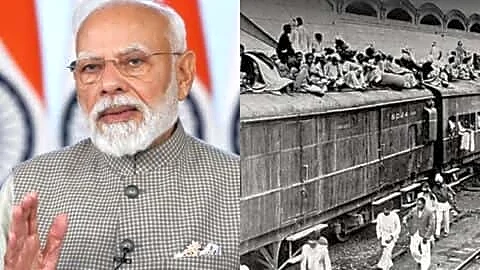
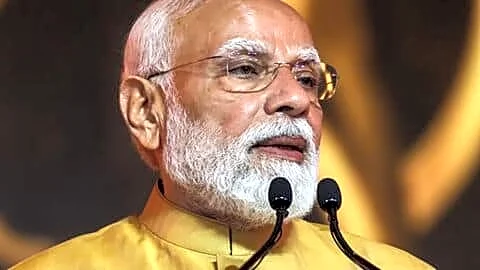
On Friday, Prime Minister Narendra Modi remembered the victims of Partition
on Partition Horrors Remembrance Day and called for harmony and brotherhood.
Taking to social media platform X, formerly Twitter, PM Modi wrote: “On Partition Horrors Remembrance Day, heartfelt salutations to all those compatriots who, emerging from that horrific era, made invaluable contributions to the nation’s progress. With their courage and strength, they demonstrated how resolutions are fulfilled even in adverse circumstances. Let us further strengthen the national spirit of goodwill and unity.
By the grace of enterprise, diverse arts are manifested.
Only the timid prattle—what is to be, will be.”
विभाजन विभीषिका स्मृति दिवस पर उन सभी देशवासियों का हृदय से नमन, जिन्होंने उस वीभत्स दौर से निकलकर देश की प्रगति में अमूल्य योगदान दिया। उन्होंने अपने साहस और सामर्थ्य से दिखाया कि कैसे विपरीत परिस्थितियों में भी संकल्पों को सिद्ध किया जाता है। आइए, सद्भावना और एकजुटता की… pic.twitter.com/lzLu5wbiXb
— Narendra Modi (@narendramodi) August 14, 2026
What Is Partition Horrors Remembrance Day?
Partition Horrors Remembrance Day is an annual national observance in India dedicated to remembering the victims and survivors of the 1947 Partition of British India.
The day is officially known in Hindi as Vibhajan Vibhishika Smriti Diwas. The government announced August 14 as the remembrance day in 2021, stating that it would serve as a tribute to those who suffered during Partition and help remind future generations of the consequences of social division, hatred and violence.
Why Is August 14 Observed?
August 14 was chosen because it falls on the eve of India’s Independence Day. India became independent from British rule on August 15, 1947, while Pakistan came into existence as a separate dominion in August 1947.
The Partition divided British India into India and Pakistan and led to the division of major regions. The final boundaries, known as the Radcliffe Line, were announced on August 17, 1947, two days after India and Pakistan became independent.
The timing meant that millions of people were suddenly confronted with uncertainty about where they would live and whether their homes would fall on one side or the other of the newly drawn border.
What Happened During the 1947 Partition?
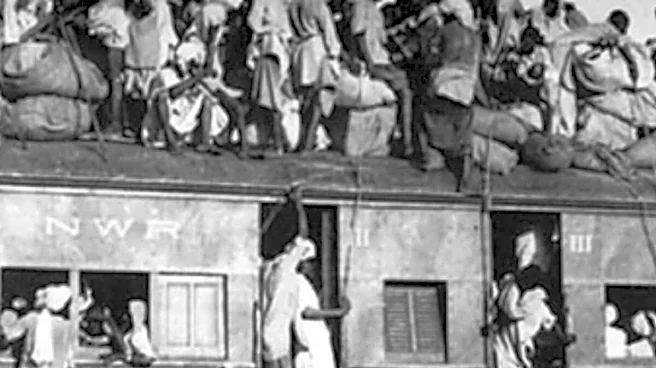
The Partition triggered one of the largest mass migrations in modern history. Around 15 million people moved or were forced to move across the newly created borders, according to historical estimates.
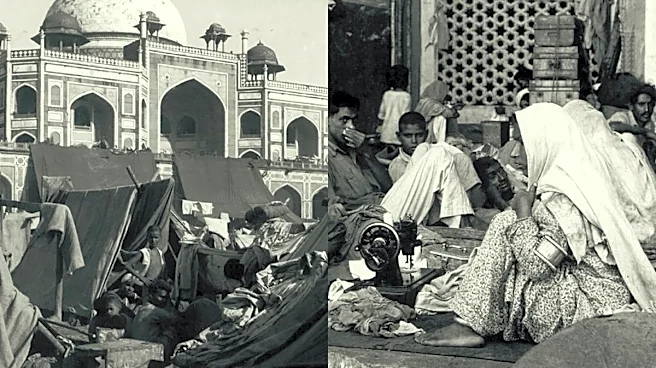
Hindus, Muslims and Sikhs were among the communities caught up in the upheaval. Large numbers of people left homes and communities where their families had lived for generations. Refugees travelled by trains, road and foot, often under extremely difficult and dangerous conditions.
Punjab witnessed some of the worst violence, while Bengal and other regions also experienced displacement and communal unrest. The violence included killings, attacks on villages and refugee groups, destruction of property and widespread trauma.
The exact death toll remains disputed because no comprehensive record was maintained during the upheaval. Scholarly estimates commonly range from about 200,000 to 2 million deaths.
Human Cost Of Partition
The numbers associated with Partition represent only part of its human cost.
Families were separated, homes and property were abandoned, and millions had to rebuild their lives in unfamiliar surroundings. Women and children were particularly vulnerable during the violence and displacement.
The movement of people also placed enormous pressure on newly independent governments, which had to establish refugee camps, provide food and shelter, arrange transportation and rehabilitate displaced families.
The Partition Museum in Amritsar, for example, documents personal memories, photographs and objects connected with the upheaval, preserving individual stories behind the enormous historical statistics.
Why Is Partition Horrors Remembrance Day Important?
The stated purpose of the observance goes beyond remembering the violence itself.
When the day was announced in 2021, the Prime Minister said it should remind people of the need to remove social divisions and disharmony and strengthen oneness, social harmony and human empowerment.
It is also a day to recognise the resilience of survivors. Many people who lost homes, livelihoods and loved ones during Partition eventually rebuilt their lives in India, Pakistan and elsewhere.
In 2024, PM Modi again described the day as an occasion to remember those affected by Partition and honour their courage and resilience.
In 2025, the Prime Minister similarly paid tribute to the grit and resilience of those affected, highlighting how many survivors rebuilt their lives after experiencing immense loss.
Partition Horrors Remembrance Day And Independence Day
The two observances are closely connected but serve different purposes.
August 14 is observed as Partition Horrors Remembrance Day, focusing on the suffering, displacement and sacrifices associated with Partition.
August 15 is India’s Independence Day, commemorating India’s independence from British rule in 1947.
Together, the two dates reflect both sides of a defining moment in India’s modern history: the achievement of independence and the enormous human suffering that accompanied Partition.
How Is Partition Horrors Remembrance Day Observed?
Government institutions and cultural organisations have organised programmes to preserve memories of Partition, including exhibitions, discussions, silent marches, book releases, plays and displays of archival material.
In 2025, the Indira Gandhi National Centre for the Arts (IGNCA), under the Ministry of Culture, held an observance in New Delhi featuring an exhibition, silent march, book and DVD releases, and a staging of the play Batawara.
Such initiatives focus on preserving personal testimonies and historical memories so that the experiences of those who lived through Partition are not forgotten.
The Message Of Partition Horrors Remembrance Day
Partition Horrors Remembrance Day carries a message of remembrance, resilience and social harmony.
The observance asks subsequent generations to remember the suffering caused by communal violence and displacement while recognising the courage of survivors who rebuilt their lives. Its official purpose also stresses the importance of unity, social harmony and human values.
As India marks Independence Day 2026, August 14 provides an opportunity to remember the millions whose lives were transformed by Partition and to reflect on one of the most consequential and painful chapters surrounding India’s independence.

/images/ppid_59c68470-image-178670002596897550.webp)
