


/images/ppid_a911dc6a-image-177668792882233976.webp)
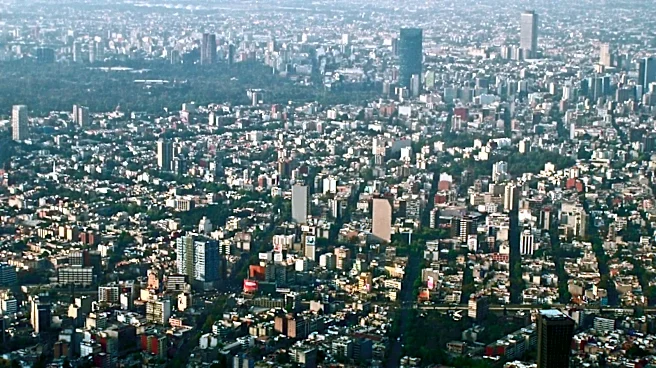
There’s a city where the ground beneath your feet isn’t as stable as it looks. In Mexico City, parts of the city are slowly sinking, in some areas by as much as several centimetres every year. The reason goes back centuries. The modern city was built on the ruins of Tenochtitlan, which once stood on an island in the middle of a vast lake system. When the Spanish arrived in the 16th century, they drained much of the water to expand the city. What remained underneath wasn’t solid ground. It was soft, waterlogged clay. That foundation has shaped everything that followed. As the population grew, so did the demand for water. To meet that need, large amounts of groundwater have been extracted from beneath the city for decades. That’s where the problem
begins. When water is removed from the soil, the clay compresses. Over time, this causes the ground to sink, a process known as subsidence. And once that compression happens, it can’t be reversed. The effects are visible across the city. Buildings tilt. Roads crack. Infrastructure like pipelines and drainage systems become harder to maintain. In some areas, the sinking is uneven, which creates additional stress on structures. In extreme cases, entire neighbourhoods have dropped significantly compared to others. Flooding has also become a bigger risk. Because the city was originally part of a lake, water naturally flows toward it. But as the ground sinks, drainage systems struggle to keep up, especially during heavy rains. Despite this, the city continues to function. Mexico City is one of the largest urban centres in the world, home to millions of people. Efforts are being made to manage water use more sustainably and reduce further damage, but the scale of the problem is enormous. The challenge is built into the ground itself. A city that rose from a lake is now slowly settling back into it, one small shift at a time.


/images/ppid_a911dc6a-image-177685556407798141.webp)

/images/ppid_a911dc6a-image-177685903323094682.webp)