



Hopes of a potential breakthrough in talks between the United States and Iran are lifting global market sentiment, with reports suggesting fresh negotiations could take place in Pakistan in the coming days.
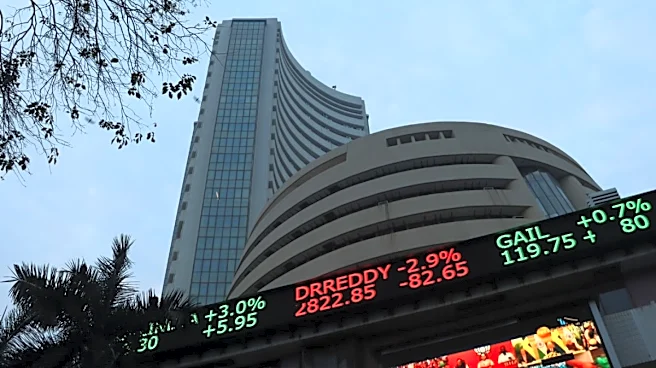
On Tuesday, April 21, the BSE Sensex climbed nearly 800 points, or about 1%, to an intraday high of 79,293, while the Nifty 50 rose over 200 points to around 24,571.
Both indices have extended gains for three straight sessions since April 17. During this period, the Sensex has advanced over 1,300 points (1.7%), while the Nifty 50 has gained close to 400 points (1.5%).
What’s driving the rally?
The primary catalyst behind the recent upmove is optimism around a possible de-escalation in US-Iran tensions. According to media reports, fresh talks could resume soon, ahead
of the expiry of the two-week ceasefire announced earlier this month.
Easing geopolitical risks have also pushed crude oil prices lower. Brent Crude slipped nearly 1% on Tuesday, offering relief to import-dependent economies like India. Lower oil prices help ease inflationary pressures and improve corporate margins, which in turn supports equity markets.
“Any progress on a US-Iran deal would significantly reduce macroeconomic concerns, especially those linked to elevated crude prices and input costs,” said Pankaj Pandey of ICICI Securities.
Vinod Nair of Geojit Investments added that the rally could sustain if a truce is finalised, as it would remove a key overhang for markets.
Another positive factor is the moderation in foreign institutional investor (FII) outflows. After heavy selling in March, the pace of outflows has slowed in April, indicating improving investor confidence.
Can Sensex hit 85,000?
Market experts believe a formal peace deal between the US and Iran could unlock further upside for Indian equities.
Pandey estimates that benchmark indices could rise by around 10% from current levels if geopolitical tensions ease, with the Nifty 50 potentially moving beyond 25,000.
Ajit Mishra of Religare Broking sees the Sensex climbing towards the 85,000 mark if crude oil prices drop sharply—from current levels near $95 per barrel to around $86.
Nair also remains constructive, noting that while there could be some earnings downgrades due to earlier oil price spikes, a peace deal would significantly reduce downside risks. He expects the Nifty 50 to potentially reach 27,000 by December, advising investors to adopt a buy-on-dips strategy.
Earnings outlook remains key
While geopolitical developments are currently driving sentiment, analysts caution that corporate earnings will remain a critical factor.
The fourth quarter is expected to be relatively subdued due to base effects, and any impact of higher input costs is likely to reflect more clearly in Q1 FY27. However, if crude prices remain stable or decline further, pressure on margins could ease, supporting earnings growth.
Overall, markets appear poised for further gains, but the trajectory will largely depend on the outcome of US-Iran negotiations and the direction of global crude oil prices.







/images/ppid_a911dc6a-image-177668663625483738.webp)


/images/ppid_a911dc6a-image-177657236896341999.webp)