

/images/ppid_59c68470-image-177046255390026736.webp)
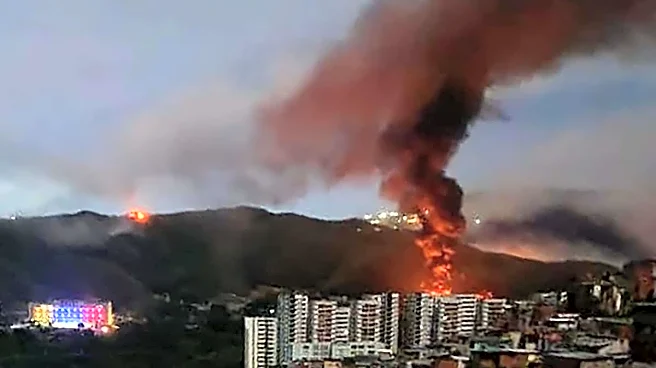
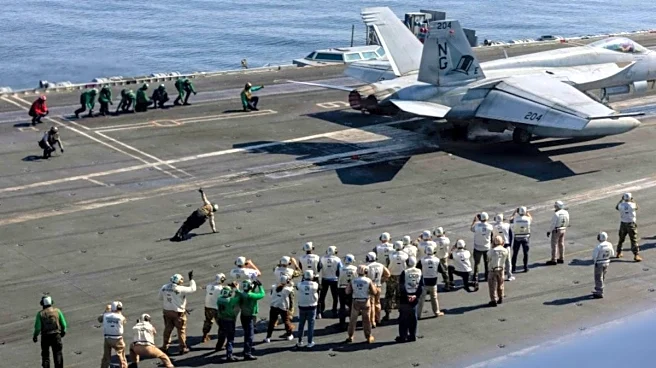
The United States carried out what President Donald Trump described as “large-scale strikes against Venezuela” on Saturday, marking a major escalation in tensions with Caracas. Trump said the operation was conducted “in conjunction with US law enforcement”.
The action followed weeks of mounting pressure from Washington aimed at removing Venezuelan President Nicolás Maduro, whom US authorities accuse of allowing drug trafficking networks and criminal gangs to operate and move into the United States. Maduro and his government have consistently denied the allegations.
The strikes represent the first direct US military intervention in Latin America since 1989, when American forces invaded Panama to overthrow military ruler Manuel Noriega. That operation
remains one of the most striking chapters in modern US military history.
In December 1989, then US President George HW Bush ordered troops into Panama under an operation known as Operation Just Cause. The stated aim was to “protect the lives of American citizens” and bring Noriega “to justice”. More than 20,000 US troops were deployed to take control of key locations across the country.
The invasion came after a US serviceman was killed by Panamanian forces and amid allegations that Noriega had interfered in Panama’s 1989 election. At the time, Noriega was already under indictment in the United States on drug trafficking charges.
Official figures later said 514 Panamanian soldiers and civilians were killed during the operation, though local human rights groups claimed the death toll may have been closer to 1,000. Twenty-three US military personnel also lost their lives.
As US forces closed in, Noriega took shelter inside the Vatican’s diplomatic mission in Panama City. What followed became one of the most unusual moments in modern warfare.
US troops stationed outside the building played loud rock music in an attempt to force him to surrender, a tactic that drew worldwide attention.
The playlist included songs such as “Give It Up” by KC And The Sunshine Band, “No More Mister Nice Guy” by Alice Cooper, “Paranoid” by Black Sabbath, “Welcome to the Jungle” by Guns N’ Roses, “Wanted Dead or Alive” by Bon Jovi, and “The End” by The Doors.
The approach was controversial, even within Washington. The music was eventually turned off after several days, with Bush’s national security adviser Brent Scowcroft later describing the move as “undignified”.
After 11 days inside the embassy, Noriega surrendered on 3 January 1990. He was flown to Miami by US Drug Enforcement Administration officials, where he was tried and convicted on charges including drug trafficking, racketeering and money laundering.
Noriega spent the rest of his life in detention in the United States and France before returning to Panama, where he later died in 2017 at the age of 83 following complications from surgery.
/images/ppid_59c68470-image-177061753355263188.webp)

/images/ppid_59c68470-image-177064754954424074.webp)


/images/ppid_a911dc6a-image-177042843334695369.webp)

/images/ppid_59c68470-image-177043759131247173.webp)
/images/ppid_59c68470-image-177044253969765152.webp)