
The first morning of the autumn session of the Jammu and Kashmir Legislative Assembly on Monday brought an unexpected focus on a question often overlooked in the design of public institutions: How accessible are legislative spaces to those elected to serve in them?
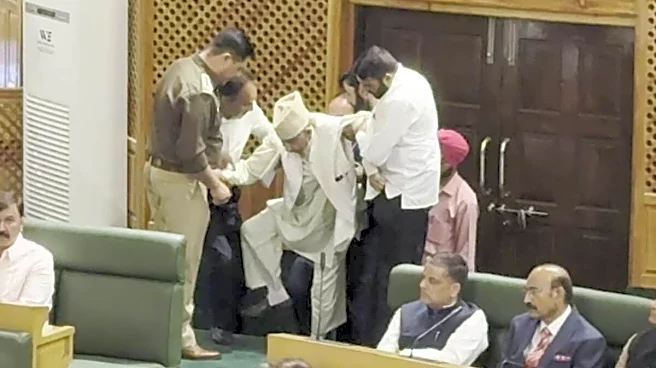
Congress MLA from Anantnag, 71-year-old Peerzada Mohammad Syed, was seen struggling to reach his designated seat inside the Assembly, with several people assisting him as he climbed the stairs leading to the House.
The scene was particularly noticeable from the media gallery, where aides could be seen helping Syed move his legs and climb the steps towards his seat.
Peerzada initially received assistance from two people. When they struggled to help him up the stairs, more people joined
in, including a marshal. Wearing a traditional karakul cap, Syed eventually made his way to his seat, though the effort took some time.
The episode has drawn attention to the accessibility of the Assembly premises, particularly for legislators who may have difficulty negotiating stairs or require mobility assistance.
The question assumes added significance given the age profile of the House. According to an analysis by the Association for Democratic Reforms of the 2024 Assembly election results, 61 of the 90 elected MLAs were between 51 and 80 years of age. The oldest member was Speaker Abdul Rahim Rather, then 80, while Peerzada Mohammad Syed was among the septuagenarians elected to the House.
Following subsequent by-elections and changes in the composition of the House, available current age records indicate that around 58 of the Assembly’s 90 members are now above the age of 50.
For a legislature representing people across Jammu and Kashmir, accessibility extends beyond convenience. Legislative premises need to accommodate elected representatives with reduced mobility, whether due to age, disability, injury or other physical limitations, allowing them to enter the House and participate in proceedings without having to depend on multiple people to negotiate stairs.
The Union government’s Department of Empowerment of Persons with Disabilities also includes government offices and public buildings among spaces where barrier-free access is to be ensured.
The incident raises a broader question: Should an elected representative have to rely on several people to climb a flight of stairs simply to reach the chamber where they are required to perform their legislative duties?
Its physical infrastructure, correspondingly, must ensure that elected representatives can reach the chamber, take their seats and participate in proceedings with as much independence as possible.