
/images/ppid_a911dc6a-image-177103642565816962.webp)
/images/ppid_a911dc6a-image-177103504309993710.webp)
/images/ppid_a911dc6a-image-177103508492594205.webp)
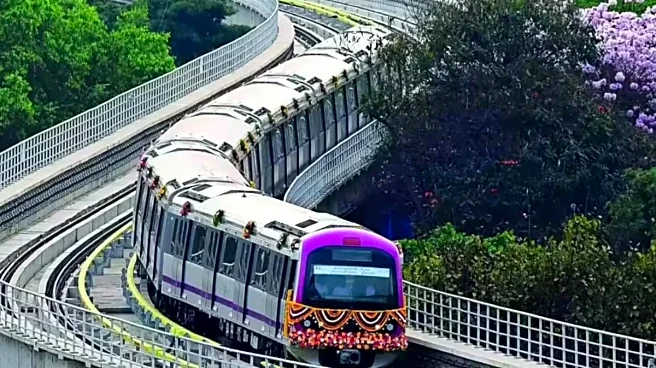
The Bangalore Metro Rail Corporation Limited (BMRCL) has officially announced its first annual fare revision, which is scheduled to take effect from February 9, 2026. The move follows the guidelines set by the First Fare Fixation Committee (FFC), established under the Metro Railways (Operation & Maintenance) Act, 2002.
The transition to an annual update marks a shift in policy intended to prevent the steep price hikes seen in previous years, such as the average increase of 51.55 per cent that occurred after a seven-year gap. By implementing smaller, more frequent adjustments, the BMRCL aims to ensure financial sustainability while protecting passengers from sudden, significant financial impacts.
Under the new transparent Annual Automatic Fare
Revision Formula, adjustments are linked to operation and maintenance costs or capped at a maximum of 5 per cent per annum, whichever is lower. Although audited financial data for the 2024-25 period indicated a cost increase of 10.20 per cent, the BMRCL has strictly adhered to the FFC stipulation by restricting this year’s fare hike to just 5 per cent. Consequently, commuters will see a marginal increase ranging from a minimum of Re 1 to a maximum of Rs 5 across the various fare zones of the current 96.10-kilometer network.
BMRCL says this methodical approach is designed to align fares gradually with inflation and the rising costs of providing high-quality transit services.
The revised fare structure impacts all ten fare zones, with short-distance travel in the F1 zone increasing from Rs 10.00 to Rs 11.00, while the longest journeys in the F10 zone will now cost Rs 95.00 instead of the previous Rs 90.00. Mid-range travel, such as the 10 to 15-kilometer slab in zone F6, will see a revision from Rs 60.00 to Rs 63.00. Despite these changes, the BMRCL is maintaining its existing commuter-friendly incentives to encourage the use of digital payments. Smart card and NCMC users will continue to receive a 5 per cent discount during peak hours and a 10 per cent discount during non-peak hours, as well as on Sundays and designated national holidays.
The 5 per cent annual increase also extends to specialised ticketing options, including tourist cards and group tickets. A one-day pass for smart card users will now cost Rs 263, while the mobile QR version is priced at Rs 313. For those utilising longer-term options, the five-day pass has been adjusted to Rs 893 for smart cards and Rs 943 for mobile QR users.
BMRCL officials emphasised that these revisions are essential for maintaining the high standards of safety, punctuality, and reliability that citizens expect as the metro network continues to expand across Bengaluru.
However, the BJP blamed the Congress government for the fare hike, with BJP MP PC Mohan telling CNN-NEWS18 that the state had failed to allocate enough money to Bengaluru Metro. “The state government has failed to give a matching grant, hence the BMRCL was forced to pass the burden on to commuters. The fare revision is with the state government; the Union government has no say.”


/images/ppid_59c68470-image-177104254494215325.webp)

/images/ppid_a911dc6a-image-177104210287325129.webp)

/images/ppid_a911dc6a-image-177104202793221357.webp)
/images/ppid_a911dc6a-image-177104206710214315.webp)
/images/ppid_a911dc6a-image-177104202907093694.webp)
/images/ppid_59c68470-image-177104014803952296.webp)
/images/ppid_59c68470-image-177104006389961167.webp)
/images/ppid_a911dc6a-image-177103853218557950.webp)