
/images/ppid_59c68470-image-178152003530792182.webp)
/images/ppid_59c68470-image-178133002326852996.webp)


Trends come and go. Restaurants open with great fanfare and disappear within a few years. Yet across India, a select few dining institutions have done something extraordinary: they’ve survived for decades, in some cases more than a century, while continuing to attract loyal customers.
These legendary eateries have witnessed colonial rule, Independence, economic reforms and the digital revolution. They’ve seen horse-drawn carriages give way to ride-hailing apps, and handwritten bills replaced by QR codes. Through it all, they’ve remained culinary landmarks, preserving flavours that have stood the test of time.
If walls could talk, these restaurants would have some of India’s most fascinating stories to tell.
1. Leopold Cafe, Mumbai (1871)
Long before
Colaba became a tourist hotspot, Leopold Cafe was already serving customers in the heart of Mumbai. Founded during the British era, the iconic cafe has evolved into one of the city’s most recognisable landmarks, attracting everyone from travellers and artists to Bollywood enthusiasts.
2. Indian Coffee House, Kolkata (1876)
Few places capture Kolkata’s intellectual spirit quite like the Indian Coffee House on College Street. For generations, the cafe has served as a meeting ground for writers, academics, students and political thinkers, earning a reputation as one of India’s most influential cultural spaces.
3. Dorabjee & Sons, Pune (1878)
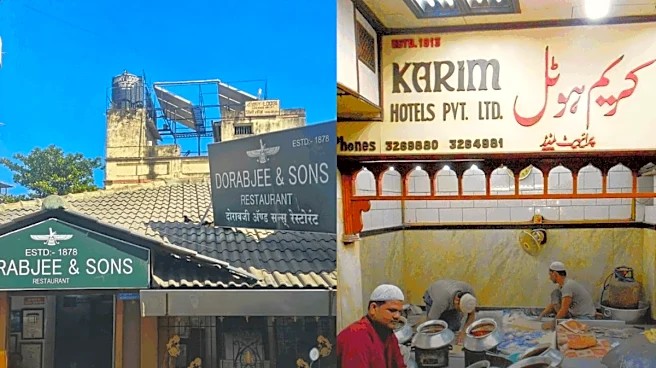
Tucked away in Pune, this beloved Parsi establishment has spent nearly 150 years serving traditional comfort food. What keeps patrons returning isn’t just nostalgia, it’s a commitment to recipes that have remained largely unchanged across generations.
4. Glenary’s, Darjeeling (1885)
Perched amid Darjeeling’s picturesque hills, Glenary’s combines history with spectacular views. Known for its baked goods, desserts and colonial-era charm, it remains one of the hill station’s most cherished dining destinations.
5. Tunday Kababi, Lucknow (1905)
Lucknow’s culinary identity would be incomplete without Tunday Kababi. Famous for its melt-in-the-mouth galouti kebabs, the restaurant has spent more than a century perfecting a recipe that continues to draw food lovers from across the country.
6. Karim’s, Delhi (1913)
Situated near Jama Masjid, Karim’s is often regarded as a living reminder of Delhi’s Mughal culinary heritage. Its rich gravies, kebabs and slow-cooked delicacies have earned it legendary status among generations of diners.
7. Britannia & Co., Mumbai (1923)
Stepping into Britannia & Co. feels like entering a different era. The iconic Parsi restaurant is celebrated not only for its berry pulao and heritage recipes but also for preserving a slice of old Bombay that is increasingly difficult to find.
8. MTR, Bengaluru (1924)
For many Bengaluru residents, MTR is more than a restaurant, it’s a ritual. The historic eatery has played a significant role in shaping South Indian breakfast culture and remains famous for classics such as rava idli and filter coffee.
9. Koshy’s, Bengaluru (1940)
For over eight decades, Koshy’s has served as Bengaluru’s unofficial living room. Politicians, journalists, artists and entrepreneurs have all gathered here, making it one of the city’s most enduring social and cultural institutions.
More Than Just Restaurants
What makes these establishments remarkable isn’t simply their age. It’s their ability to remain relevant in an industry where survival itself is a challenge. While menus have evolved and cities have transformed around them, these restaurants continue to offer something increasingly rare: a direct connection to India’s culinary past.
Dining at one of these iconic eateries isn’t just about the food. It’s about experiencing a piece of living history, one plate at a time.

/images/ppid_59c68470-image-178150251977244986.webp)

/images/ppid_59c68470-image-178151255623987713.webp)




/images/ppid_a911dc6a-image-178150002650182648.webp)