
/images/ppid_a911dc6a-image-177066504785467952.webp)


Bacteria lifted from the western deserts are travelling thousands of kilometres through the air and reaching the eastern Himalayas, potentially affecting the health of people living in high-altitude regions, a new scientific study has found. The research offers fresh insight into how environmental processes link distant parts of the country and raises concerns about emerging public health risks intensified by climate change.
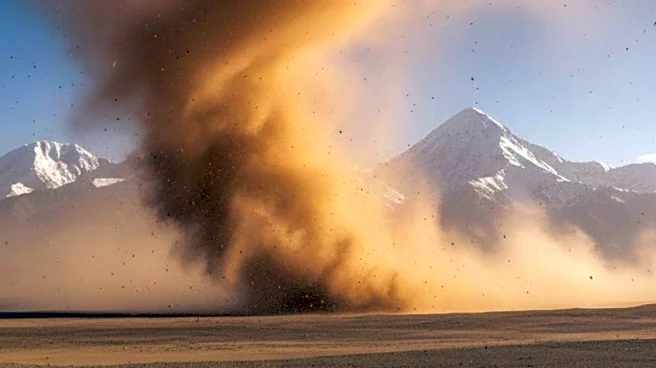
The study, published by the Ministry of Science and Technology in the international journal Science of the Total Environment, is the first of its kind to examine how dust from western deserts travels long distances and alters the bacterial composition of the Himalayan atmosphere. Scientists found that massive dust plumes
act as carriers for disease-causing bacteria, enabling them to move from polluted plains and arid regions to remote mountain ecosystems.
By analysing air samples collected at high-altitude locations, researchers established a clear connection between desert dust events and shifts in the bacterial makeup of the Himalayan air. The findings show that dust particles rise from both urban plains and mountainous regions, transporting microbes over long distances through prevailing wind patterns. Increasing air pollution in lower-altitude areas was found to further intensify this process, allowing harmful bacteria to survive the journey and reach regions previously considered relatively pristine.
The study underlines how closely interconnected geographic regions are, with environmental activity in dry western areas influencing atmospheric and biological conditions in the Himalayas. Researchers warn that the arrival of airborne pathogens in high-altitude regions could increase the risk of respiratory and skin diseases among local people. In remote Himalayan communities, where access to healthcare is often limited, such exposure could worsen existing public health challenges.
Scientists have called for improved monitoring of air pollutants and airborne microbes, noting that the findings have direct implications for public health planning. The research also strengthens India’s push towards developing advanced health forecasting systems capable of predicting environmental health risks before they escalate.
As climate change contributes to more frequent dust storms and rising pollution levels, the study highlights the growing urgency of understanding long-range atmospheric transport. In line with the ‘Developed India 2047’ vision, researchers argue that environmental science must be more closely integrated with public health policy. They recommend early warning systems and coordinated pollution control strategies to protect vulnerable populations across regions.
Beyond its scientific contribution, the study serves as a reminder that climate-linked health risks do not respect regional boundaries, making cooperation between states and sectors essential to safeguard both ecosystems and human health.


/images/ppid_a911dc6a-image-17708908284999862.webp)