

/images/ppid_a911dc6a-image-177726642646749137.webp)


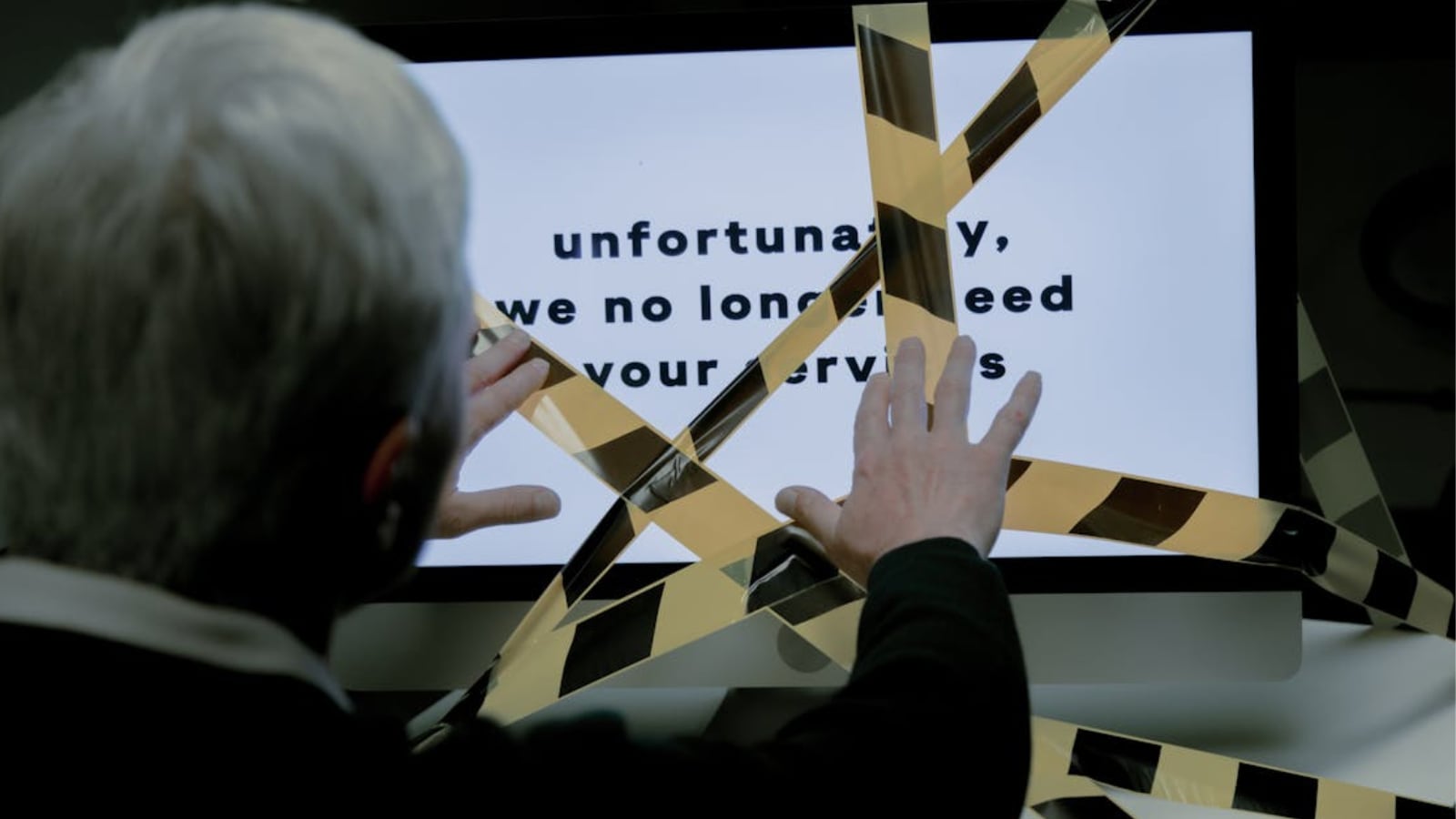
In a shocking, sweeping round of layoffs that took place on April 1, the tech giant shocked the entire industry by letting go of around 30,000 employees globally with just one cold email.
What has drawn more attention is not just the scale of the cut altogether, but the profiles of those affected, which included seasoned professionals, some with over a decade of service, all shown the door abruptly. Among them was a veteran security expert, Nina Lewis, with more than 33 years of experience at the company. Like all others, she too received the 6 am email unexpectedly on a random day.
Veteran Shares Her Experience
“Well, after 30+ years at Oracle, I join the 30,000 or so laid off today. Quite a shock,” Lewis wrote on LinkedIn. “Many of the absolute
best colleagues were laid off as well.” Her reaction captured the obvious disbelief that was felt across the workforce.
Her career over the years reflected deep institutional knowledge. Lewis joined Oracle in the early 1990s and spent much of her career embedded in the company’s database and security stack. In her longest recent role, as a security alert manager from 2012 to March 2026, she authored and delivered customer‑facing security alerts, translating vulnerabilities and emerging threats into concise, actionable guidance for enterprise users.
Earlier, she held roles as senior principal ethical hacker and principal security analyst, conducting offensive security assessments and translating findings into risk insights for leadership. Before that, Lewis worked on database security design and development, contributing to products such as Enterprise User Security and earning four patents along the way. Her background also includes network security research for government contracts. Her journey reflects Oracle’s own evolution in security infrastructure.
What added another layer of curiosity and a little concern was the speculation about how these layoffs were determined. The former employee suggests that the process might not have been random and writes, “It seems (BUT I DON’T KNOW), maybe, layoffs follow an algorithm of high-level individual contributors and mid‑level managers — especially those with outstanding stock options,” she wrote, adding that she was unsure what to do next and was “open to ideas.”
Internet Reacts
The post largely struck a chord as it could be seen in the comments. Similar concerns surfaced for other former employees like Debbie Steiner, who also contributed a decade of service to the company. She responds, “I was just shy of my 30-year anniversary,” Steiner wrote to Lewis on LinkedIn. “While I never directly worked with you, I know of your work and reputation. Whether you retire or take on a new endeavor, I know you’ll land.”
Steiner spent nearly 30 years at Oracle, moving through roles in technical writing, information architecture, systems analysis, and management. When she got “the email,” she was director of user assistance for Oracle TimesTen, leading documentation and user assistance teams across the U.S., India, and Mexico.
Before that, she was central to Oracle’s developer and customer documentation. As an information architect, she helped build http://docs.oracle.com, defining the product taxonomy, overhauling the site’s search, setting standards for self-publishing, and creating a REST API documentation tool still used by many Oracle teams today.
While evaluating the reactions to Lewis’s post, an increasing discomfort comes to light about these large-scale workforce reductions in global technological firms. The idea that these layoffs were a result of a speculated structured data-driven system and not based on individual performance or tenure.
Iliia Karin, director of DevSecOps, AI and platform engineering, brought forward the operational risks of cutting long-serving staff.
“30+ years of institutional knowledge doesn’t just disappear because a spreadsheet says so,” he wrote. “The people who built the systems are often the only ones who truly understand the ‘why’ behind them — not just the ‘what’.”
Another LinkedIn user, Modi Fahad, said, “I wish you all the best, but your story sends a clear message: no one should dedicate their entire life to a company they don’t own. Thirty-four years of dedication ended with a single decision. It’s a harsh but real reminder that job security is an illusion when it depends on others. It’s always better to invest in yourself, your skills, and build multiple sources of income rather than relying entirely on one entity.”
Oracle has not officially disclosed the criteria behind the layoffs, leaving much of the narrative to be shaped by employee accounts and other professional guesses.


/images/ppid_a911dc6a-image-17772825259875927.webp)



/images/ppid_a911dc6a-image-177726123770360359.webp)

/images/ppid_a911dc6a-image-177729163223549088.webp)
/images/ppid_a911dc6a-image-177729693497843994.webp)