
/images/ppid_a911dc6a-image-177077043838376354.webp)


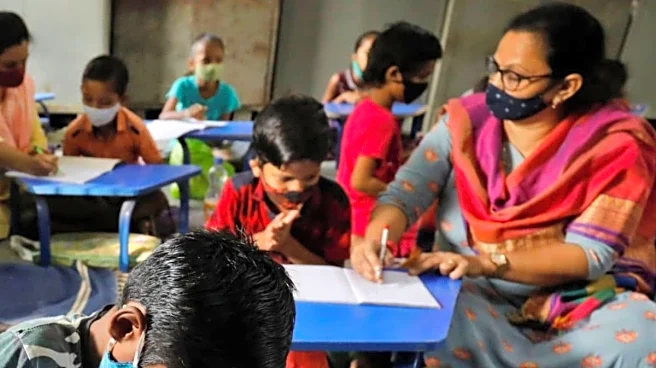
Karnataka is experiencing a severe shortage of teachers, with 45,590 vacancies in primary schools out of the 1,78,935 sanctioned posts for 41,088 government primary schools, as stated by State School Education and Literacy Minister Madhu Bangarappa, reported PTI. In response to BJP MLA Harish Poonja’s query, Bangarappa also revealed a deficit of 12,134 teachers in government high schools, with only 32,010 of the 44,144 sanctioned posts filled.
To combat this issue and ensure uninterrupted education for students, the state has recruited 40,000 guest teachers for primary schools and 11,000 for high schools for the academic year 2025–2026. Additionally, special teachers have been appointed to support students with disabilities.
“At present, to address
the vacancies and for the academic year 2025–2026, 40,000 guest teachers in primary schools and 11,000 guest teachers in high schools—totalling 51,000—have been appointed to overcome the shortage of teachers and to ensure that students’ education is not affected,” the minister replied.
“There are 41,088 government primary schools in the state, for which 1,78,935 posts have been sanctioned. Of these, 1,33,345 posts have been filled, while 45,590 posts remain vacant. Further, there are 5,024 government high schools in the state, for which 44,144 posts have been sanctioned. Of these, 32,010 posts have been filled and 12,134 posts are vacant,” the minister added.
Poonja raised concerns about the low salaries for guest lecturers compared to permanent staff, to which the minister responded that their pay has been increased by Rs 2,000. Poonja also noted the rising costs of eggs and bananas under a government scheme, now priced at Rs 7.5 per egg, with the financial burden shifting to school staff, the report added.
The minister mentioned that a charitable organisation has committed Rs 1,591 crore to ensure the provision of eggs to students. Addressing concerns about the safety of egg consumption, Health Minister Dinesh Gundu Rao assured that there is no cause for alarm, as only one out of 147 egg samples tested in 2024 contained banned antibiotics.
/images/ppid_a911dc6a-image-177077603394625504.webp)

/images/ppid_59c68470-image-177077512106794299.webp)

/images/ppid_59c68470-image-177077504615982639.webp)
/images/ppid_59c68470-image-177077515851590090.webp)
/images/ppid_59c68470-image-177077508321758455.webp)
/images/ppid_a911dc6a-image-177077322976413782.webp)
/images/ppid_59c68470-image-177077258165510745.webp)
/images/ppid_59c68470-image-177077272281824806.webp)
/images/ppid_59c68470-image-177077276056749159.webp)
/images/ppid_59c68470-image-177077261155977594.webp)