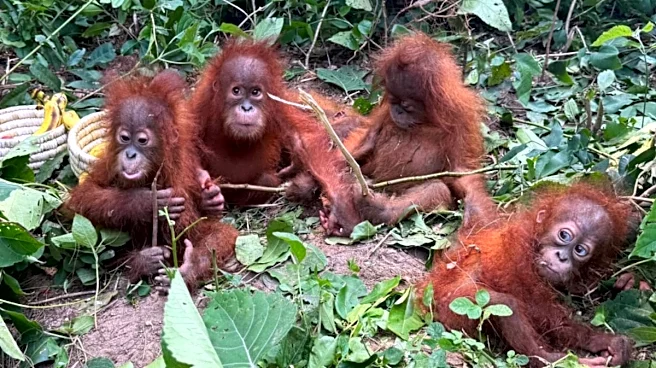

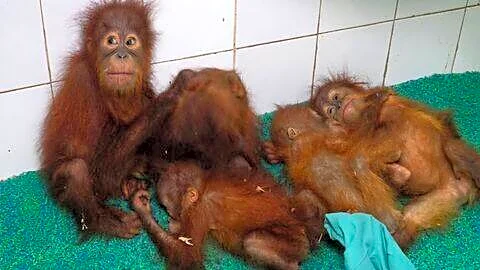


Five baby orangutans, estimated to be between six months and one year old, were rescued from a forest in Odisha’s Balasore district after being illegally brought more than 4,000 km from their natural habitats in Southeast Asia.
The critically endangered great apes, native only to the rainforests of Borneo and Sumatra, were found far from any known wild population, prompting authorities to suspect an organised smuggling network that likely used sea and inland routes. The infants are now under intensive care at Nandankanan Zoological Park near Bhubaneswar.
Separated from their mothers at a stage when orangutans normally stay dependent for six to eight years, the young apes arrived stressed, disoriented and vulnerable. Zoo officials and wildlife
health experts immediately focused on stabilising both their physical condition and their psychological state.
Alongside medical checks, deworming and a carefully planned diet of mashed fruits, baby food and milk, the park has introduced an unusual but research-backed intervention: music therapy. Soft Indian classical and light instrumental music is being played during feeding sessions and quiet periods to help the orangutans feel calmer in their new surroundings.
Maternal Separation Can Be A Major Source Of Stress
For an infant orangutan, being separated from its mother is not a minor disruption. Orangutan youngsters typically remain with their mothers for around six or seven years while learning the skills needed to survive independently. The five rescued infants have therefore experienced a major break from the social and environmental conditions in which young orangutans normally develop.
Stress in a rescued animal is not only about visible fear or agitation. Changes in appetite, activity, social behaviour and the ability to settle into a new environment can all provide clues about how an animal is coping.
How Music Therapy Is Helping Deal With Stress?
The music therapy being introduced at Nandankanan is intended to make the new environment less stressful rather than serve as a medical treatment. Nandankanan deputy director Pradeep Mirase said the decision to play classical and soft music was taken after consulting biologists and reviewing studies on animal enrichment.
The music is kept at a low volume so it does not startle the animals. Soft toys, cloth slings for swinging and hanging, and other enrichment items have also been provided to encourage natural play and reduce fear.
Even though there is no suggestion that music alone can treat trauma or resolve the effects of wildlife trafficking. Instead, the idea is to introduce a familiar, non-invasive sensory stimulus that may help create a more settled environment while the animals undergo rehabilitation.
The early differences between the five orangutans are already offering the caretakers useful information. While three have shown playful behaviour, two have displayed anxiety. Such variations can occur when animals respond differently to the same stressful event or environment.
Close observation can help zoo teams understand whether the infants are gradually becoming more comfortable. Changes in activity, interaction, feeding and response to their surroundings can help caregivers assess how well an animal is acclimatising.
The Long Road To Recovery and Possible Repatriation
Indonesian authorities have been contacted regarding eventual return of the orangutans. The process is complex, involving CITES permits, quarantine protocols, health clearances and gradual rehabilitation.
Even after reaching Indonesia, the infants would likely spend years in specialised care and “forest school” programmes before any attempt at reintroduction into the wild. In the meantime, the priority at Nandankanan remains reducing stress, supporting healthy development and preventing secondary health complications.