
/images/ppid_59c68470-image-177094504615411398.webp)
/images/ppid_a911dc6a-image-177094403738091205.webp)

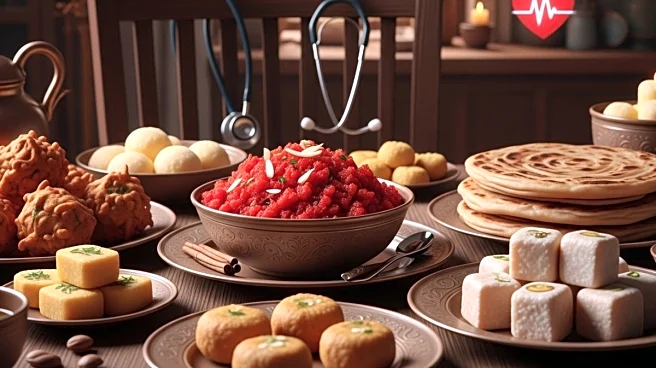
Winter in India means comfort food season. From gajar halwa to pakoras and ghee-rich sweets, indulgence is everywhere. But these seasonal favourites can also drive up cholesterol levels, increasing the risk of heart disease.
To understand the link between rising cholesterol levels and the winter season, and how people can continue to enjoy fat- and sugar-rich winter delicacies while keeping their cholesterol in check, CNN-News18 spoke to Dr Binay Kumar Pandey, Director & HOD, Interventional Cardiology and Electrophysiology, at Yatharth Super Speciality Hospital, Faridabad.
Dr Pandey confirms that many people show a noticeable rise in cholesterol levels during the winter months. He explains that while cold weather can have some impact on cholesterol,
seasonal lifestyle changes play a far bigger role.
“Reduced physical activity, larger portion sizes, and increased consumption of fried and comfort foods contribute far more to rising cholesterol levels than cold weather itself,” he says.
What Happens When Your Cholesterol Level Rises?
Dr Pandey explains that when cholesterol levels rise, excess fat circulates in the bloodstream and gradually gets deposited along the walls of arteries. Over time, this build-up narrows the blood vessels, restricting blood flow and increasing the risk of heart disease.
He adds that low-density lipoprotein (LDL) is commonly known as “bad cholesterol” because it promotes plaque formation in the arteries. High-density lipoprotein (HDL), on the other hand, is considered “good cholesterol” as it helps remove excess cholesterol from the bloodstream, offering protection against heart-related conditions.
Do All Winter Foods Harm Your Heart?
Dr Pandey points out that while foods like ghee and butter often receive negative attention, they can still be part of a well-balanced diet when consumed in moderation. He explains that completely avoiding traditional fats is not always necessary, as long as portion sizes are controlled.
“Mustard oil contains heart-healthy fats when used and heated appropriately. Peanuts also provide healthy fats along with protein. The real concern is excessive consumption of these foods, which becomes more common during winter cooking,” he says.
Dr Pandey advises that fried snack foods should ideally be limited to once or twice a week. Consuming fried items daily, even in small portions, can significantly increase the intake of unhealthy fats.
From a health perspective, he notes that eating smaller portions occasionally is far better than consuming larger quantities of fried snacks regularly throughout the winter months.
Warning Signs Your Cholesterol May Be Rising
Dr Pandey explains that high cholesterol usually does not cause any noticeable symptoms in its early stages, which is why it often goes undetected.
As cholesterol levels rise over time, some people may begin to experience fatigue, shortness of breath during physical exertion, or episodes of chest discomfort. “However, these symptoms tend to appear much later, once the condition has already progressed.”
A blood lipid profile test remains the only reliable way to detect cholesterol imbalance at an early stage, especially for those with a family history of high cholesterol, obesity, or diabetes, or for individuals who follow a largely sedentary lifestyle, he says.
How To Enjoy Winter Foods Without Hurting Your Heart
Dr Pandey advises cutting down on trans fats and excess saturated fats, which are commonly found in deep-fried foods, baked items, and processed snacks.
Natural fats such as ghee, mustard oil, and groundnut oil can still be included in the diet, but only in moderation. Moderation, he explains, is key when using these fats and must be supported by overall dietary balance, portion control, and avoiding the repeated reheating of cooking oils.
Choosing healthier cooking methods can also make a significant difference. Roasting, steaming, and cooking with minimal oil are better options than deep-frying.
Paying attention to portion sizes, increasing fibre intake through vegetables and whole grains, and maintaining regular physical activity all contribute to better heart health.
Traditional winter foods are best enjoyed occasionally and in moderation, rather than being consumed frequently as everyday comfort foods.
/images/ppid_59c68470-image-177094778070247070.webp)

/images/ppid_59c68470-image-177094774796122738.webp)
/images/ppid_59c68470-image-177094760561149068.webp)
/images/ppid_59c68470-image-177094753760312086.webp)
/images/ppid_59c68470-image-17709476750941928.webp)
/images/ppid_59c68470-image-177094757431594714.webp)
/images/ppid_59c68470-image-177094764650175790.webp)
/images/ppid_59c68470-image-177094770953263948.webp)
/images/ppid_59c68470-image-177094761449961991.webp)
/images/ppid_59c68470-image-177094753833787776.webp)