


/images/ppid_a911dc6a-image-177598414703028208.webp)
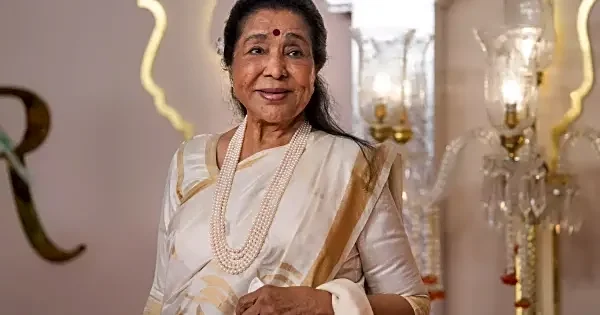
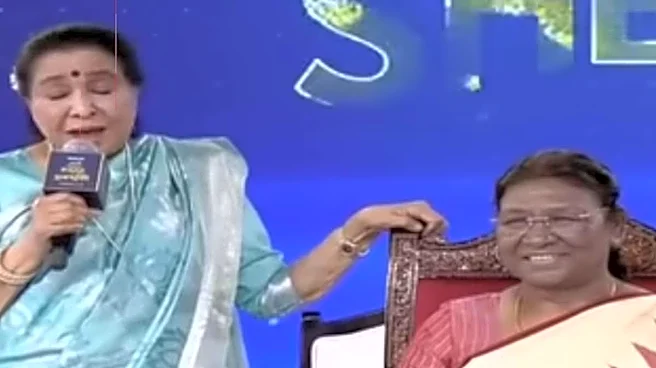
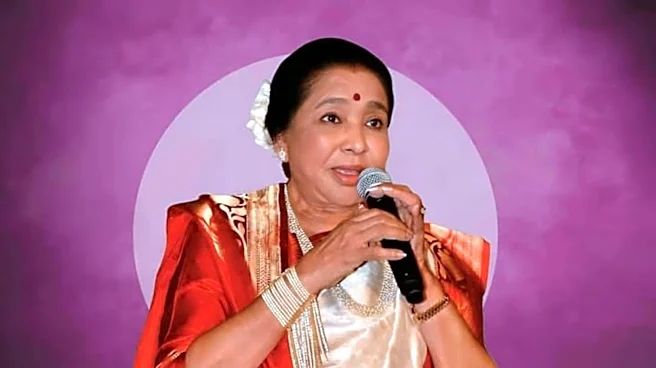
In the wake of Asha Bhosle’s passing on April 12, 2026, moments from her long, luminous life continue to resurface, offering glimpses of the warmth, spontaneity, and quiet grace that defined her beyond the recording studio. One such memory comes from Network18’s Rising India – She Shakti conclave, where the legendary singer shared a heartfelt and intimate exchange with Droupadi Murmu.
A Spontaneous Musical Moment On Stage
At the event, which celebrated women achievers across fields, Asha Bhosle was felicitated for her immense contribution to music. As she walked onto the stage, President Murmu greeted her warmly before making an impromptu request that turned the evening into something unforgettable. Taking to the podium, the President asked the veteran
singer to perform a song of her choice. Without hesitation, Asha obliged, her voice filling the hall with a rendition of “Radha Kaise Na Jale” from Lagaan, drawing an immediate emotional response from the audience.
A Crowd-Pleasing Classic
Moments later, when invited to pick another song, Asha Bhosle turned to one of her most beloved tracks, “Chura Liya Hai Tumne Jo Dil Ko” from Hum Kisise Kum Naheen.
As soon as she began singing, the room erupted in applause. The song, which played a pivotal role in cementing her popularity decades ago, remains a cult favourite, and the audience’s reaction reflected just how deeply it continues to resonate.
A Quiet, Poignant Exchange
What followed was a softer, more personal moment. After the impromptu performances, Asha Bhosle and President Murmu shared a brief off-mic conversation, away from the spotlight.
In a gesture that stood out for its simplicity and warmth, the President then walked alongside the singer, escorting her to the edge of the stage. It was a small moment, but one that captured the respect and affection Asha commanded across generations and positions.
A Career That Spanned Generations
Asha Bhosle’s journey began in the late 1940s, when she lent her voice to songs like “Chupke Chupke Mast Nigaahen,” “Baadal Ghir Aaye,” and “Rimjhim Paani Barse.” Over the decades, she went on to deliver an astonishing range of hits, including “Kehdoon Tumhen” (Deewar), “Yeh Vaada Raha” (Yeh Vaada Raha), “Nahin Nahin, Abhi Nahin” (Jawani Diwani), “Kitaabein Bahut Si” (Baazigar), “Yeh Raat Aur Yeh Doori” (Andaz Apna Apna), “Zara Sa Jhoom Loon Main” (Dilwale Dulhania Le Jayenge), and “Dil Le Gayi Le Gayi” (Dil To Pagal Hai).
Each song added to a catalogue that continues to define Hindi film music across eras.
/images/ppid_a911dc6a-image-177599242382955341.webp)

/images/ppid_a911dc6a-image-177598411889114194.webp)


/images/ppid_a911dc6a-image-177598761184088287.webp)